
Chief Blair also announced that police had on Thursday taken into custody the mayor’s friend, Alexander Lisi, and charged him with extortion. Lisi will appear in court today.
The police chief said he was “disappointed” after viewing the video.
Chief Blair said the video was recovered as part of the Project Traveller raids on alleged gang activity in the city’s northwest end this summer.
“I think it’s fair to say the mayor does appear in that video but I’m not going to get into the detail of what activities is depicted in that video,” Chief Blair said in a news conference at a police headquarters.
He said it is “consistent with what had been previously described in various media reports.”
The Toronto Star and Gawker.com reported earlier this year that they saw video of the mayor smoking crack cocaine and making a homophobic slur about Liberal Leader Justin Trudeau.
“We’ve done our job here,” says Chief Blair. He said a second digital file that was “relevant” had also been recovered.
“I have been advised that we are now in possession of a recovered digital video file relevant to the investigations that have been conducted. That file contains video images which appear to be those images which were previously reported in the press, with respect to events that took place, we believe at a house on Windsor Road in Etobicoke.”

THE CANADIAN PRESS/ho-Toronto Police ServiceToronto
Police Service released documents Thursday morning, Oct. 31, 2013 that
show police surveillance photos of Toronto Mayor Rob Ford (left) and
Alexander Lisi, Ford's friend and occasional driver.
Toronto police assigned one of its most senior detectives to specifically investigate allegations that Ford is captured on a cell phone smoking crack cocaine, according to the documents.
Details of the probe are contained in a lengthy “information to obtain” (ITO) used by police to obtain a search warrant in the case of Alexander Lisi, a friend of the mayor’s who is accused of drug trafficking. A judge ordered portions of the ITO released to media.
“On May 18th, 2013 Detective Sergeant [Gary] Giroux was assigned to investigate the matter brought forth by the Toronto Star and gawker.com and their allegations against Mayor Rob Ford. Specifically to investigate the existence of a cellular phone containing a video of Ford smoking crack cocaine,” the sworn affidavit states.
The massive document includes pictures of Ford interacting with Lisi. The pair would often meet in parking lots and once met in “the woods.”
Payman Aboodowleh, a volunteer football coach at Don Bosco Catholic Secondary School, where Ford coached the team, told police that Lisi met Ford through him. He told police he was “mad at Lisi because he was fuelling the mayor’s drug abuse,” the document says.
The document alleges that Ford visited an Esso gas station and when Ford was inside, Lisi placed an envelope inside the mayor’s vehicle.
In July, police obtained a “production order” which allowed it to view a list of the telephone calls that Lisi made on his Rogers cell phone with a number of people, including Mayor Ford, Richview Cleaners, Fabio Basso, Liban Sayad and three people in the mayor’s office: Brooks Barnett, Thomas Beyer and Isaac Ransom.
The court file shows that Mayor Rob Ford repeatedly called Lisi in March, 2013. One line notes: “March 28, 2013: (Anthony Smith is killed). Lisi and Mayor Ford speak 7 times.”
In March, 2013, Mayor Ford called Lisi’s cell phone 44 times. On March 30, Ford called Lisi twice; the same day, Lisi phoned Fabio Basso, a man whose house appeared in a photo of the mayor connected to an alleged crack video, five times.
Police found four numbers associated with Mayor Ford in Lisi’s phone records, including the mayor’s OnStar, cellphone, home line and a fourth number believed to be a second home landline.
Between June 25 and July 19, Mayor Ford called Lisi 27 times, records indicate; 19 of those calls were from the OnStar number in the mayor’s Escalade.
During the same time period, Lisi called the mayor 18 times, but only called his cellphone once — a “dramatic change” from previous phone records, police say.
On July 11, police allege, Lisi placed a package in the mayor’s Escalade at an Esso gas station without speaking to him, after the pair exchanged brief phone calls earlier in the afternoon.
“Lisi can be seen walking around near the Mayor’s Escalade still holding onto the manila envelope,” the ITO states. “Lisi appears to be looking around, possibly scoping out the area. Shortly after this image he walks along the passenger side of the Mayor’s Escalade and walks out of frame… Mayor Ford exits the Esso Station, gets back into his Escalade and exits the parking lot.”
Under a heading called “Project Traveller and the Rob Ford connection”, the police affidavit details surveillance that occurred at 15 Windsor Road, a home “believed to be a “Trap House” (crack house) for the named parties to sell drugs from.”
15 Windsor is believed to be the backdrop of a now infamous photo that shows Mayor Ford with a man who was later murdered [Smith], and two other men who were later arrested. It alleges that surveillance crew observed activity consistent with drug trafficking and that “no known persons” were seen. “There were no arrests or seizures made during this operation.”
Then, large swaths of information are blacked out, but there is a first reference in the document to Lisi, with his address and a brief description of his interactions with Toronto police. A subsequent line states “a unified search query of Mayor Rob Ford does not reveal that his phone was reported stolen.”
Also interviewed by police in the document was Nico Fidani, a former junior member of Ford’s staff. Two detectives spoke with him on June 26, at the police 22 Division station. Much of what he told them is redacted from the document before it was released to the media.
“If the Mayor is obtaining illegal narcotics then it is probably Sandro who is taking him to get them,” Fidani told police, according to the affidavit.
Lisi, Ford met in secluded woods area, left behind vodka, juice bottles, police document says
On Aug. 12, police allege, Lisi’s Range Rover was parked in a lot on Royal York Road, and investigating officers discovered the mayor’s Escalade in a nearby parking lot for the Scarlett Heights Entrepreneurial Academy. The Escalade is “heavily tinted,” and neither of the two men were seen inside, the ITO says, noting Lisi was seen walking back to his vehicle from the area of the school a short time later.
A day later, on Aug. 13, police say they observed Lisi at home loading a large cooler bag into his Range Rover. Later in the day, he allegedly received a call from a cellphone associated with Deco Adhesive Products; Deco, an Etobicoke company founded by the Ford family. A short time later, the ITO says, Lisi left his home in the Range Rover.
“Lisi travelled to and parked on Westmount Park Road, he parked near a foot path that leads north into Weston Wood Park,” the ITO states, noting Mayor Ford was observed at the same time leaving a local gas station and parking near a footpath that leads south into Weston Wood Park. “Lisi and Mayor Ford eventually met and made their way into a secluded area of the adjacent woods where they were obscured from surveillance efforts and stayed for approximately one hour.”
They left separately in their own cars, the ITO says. Police later seized a vodka and juice bottle from the spot where the two had met, and left replacement bottles behind to conceal the fact officers had been there.
Ford refused to answer reporters’ questions about the documents Thursday morning at his home in Etobicoke. He screamed at media to “get off my property.”

Toronto PoliceSurveillance photos from the court documents.
Several media outlets filed an application to access the massive ITO (information to obtain a search warrant) after police this month raided a west-end dry cleaners, arresting owner Jamshid Bahrami and Lisi, the mayor’s friend and occasional driver.
The document, called an Information to Obtain a Search Warrant, referred to as an ITO, is a lengthy compendium of information used by police to convince a judge to issue a warrant that will allow them to search private property to further a drug investigation.
While not facts proven in court, it is information that officers swear gives them “reasonable and probable grounds to believe” there is evidence of a crime.
This ITO was used by Toronto police to search Lisi’s home at 5 Madill Street, and was sworn before a judice of the peace on Oct. 2 by Detective Constable Ali Nader Khoshbooi.
This ITO is unusually long and detailed for such a document.
For months, police have been investigating the mayor and a number of his associates, including Lisi, as part of Project Brazen 2, an offshoot of the June guns-and-gangs sweep dubbed Project Traveller.
Although it began when Lisi was allegedly caught trying to trade drugs for the mayor’s stolen cellphone, Brazen 2 was far from a simple drug probe. Toronto police put veteran homicide detective Gary Giroux in charge of the sensitive investigation, and cast a blanket of silence over his squad’s work.
Before Wednesday’s ITO release, few details of the project had emerged; there were reports that a Cessna was employed to track the mayor’s movements, and a leaked police document shed some light on Brazen 2′s genesis. The document revealed that police first picked up on Lisi’s name in March — two months before reports of an alleged video showing Mayor Ford smoking a crack pipe — when he was captured on an intercepted communication related to Project Traveller.
“Lisi was heard to be brokering the return of a cellular phone stolen from an associate of his, with a payment of marihuana,” the document states. Although the document does not name the associate, it was allegedly Mayor Ford.
In June, after rounding up dozens of suspected gang members in the Project Traveller sweep, police began conducting surveillance on Lisi and discovered his connection to Mr. Bahrami’s dry cleaning business in Etobicoke. Investigators allege the pair, both charged with drug trafficking, were working together to sell marijuana out of the dry cleaners.
Lisi — who has multiple previous convictions dating back to 2001, including assault and threatening death — has been described by Mayor Ford as a “good guy” who is on the “straight and narrow.” The two are friends, and Lisi, who was angling for a job with the city of Toronto, sometimes drove the mayor around in his Range Rover.
Mayor Ford also wrote a character reference this past June when Lisi was being sentenced for threatening to kill a former girlfriend, touting the accused’s “tact and diplomacy” and lauding him as “an exemplary member of my campaign team.”
One of Lisi’s neighbours said she frequently saw Mayor Ford stop by; he parked at the curb and interacted with Lisi through the window of the car, neighbour Carol Peck said. A report in the Toronto Star said Lisi made “aggressive attempts” to retrieve the alleged crack video after the story broke in May.
In one of his only public responses to the ongoing scandal, Mayor Ford has said he does not smoke crack cocaine, and “I cannot comment on a video that I have never seen or does not exist.” He has repeatedly declined to comment on Brazen 2 or on the specifics of the Lisi case, saying the matter was “before the courts.”
Faced Wednesday with the imminent release of the ITO, Councillor Doug Ford, the mayor’s brother, said only: “I am not even paying attention to all that… Rob is the most honest politician in the country.”
Please share this





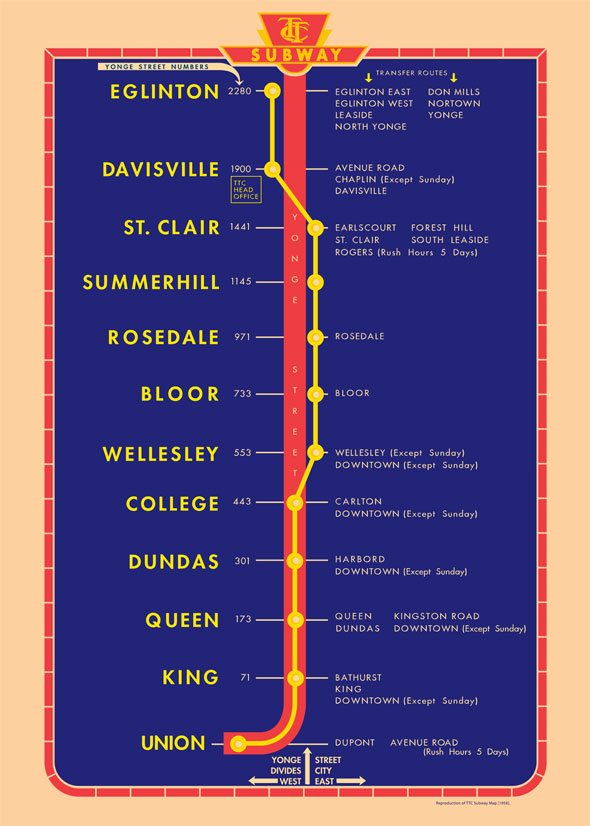 Toronto's
glacial transit expansion passed a major milestone late last week: for
the first time in more than a decade, the TTC released an updated
version of its subway map. Though it makes assumptions about the Finch
and Sheppard LRTs, the updated design includes the Spadina extension and
Eglinton-Crosstown for the first time, which feels very exciting indeed
and is a perfect excuse to take a peek in the archives.
Toronto's
glacial transit expansion passed a major milestone late last week: for
the first time in more than a decade, the TTC released an updated
version of its subway map. Though it makes assumptions about the Finch
and Sheppard LRTs, the updated design includes the Spadina extension and
Eglinton-Crosstown for the first time, which feels very exciting indeed
and is a perfect excuse to take a peek in the archives.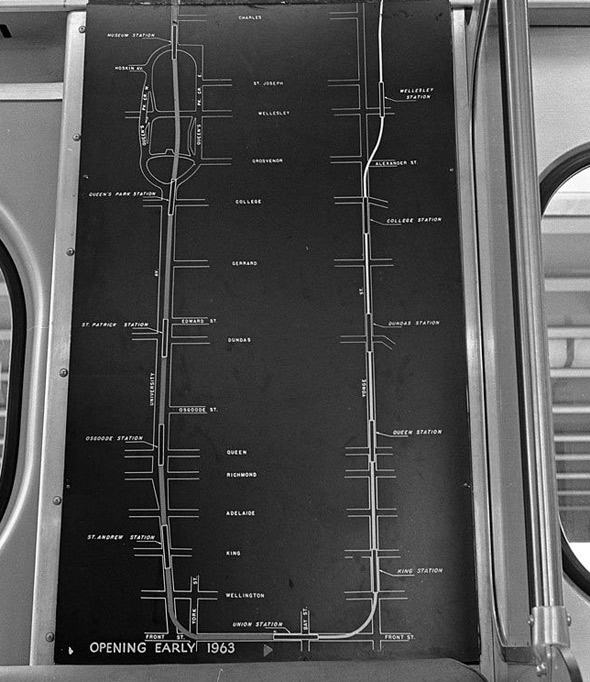 The first Toronto subway map, shown at the top of the page,
 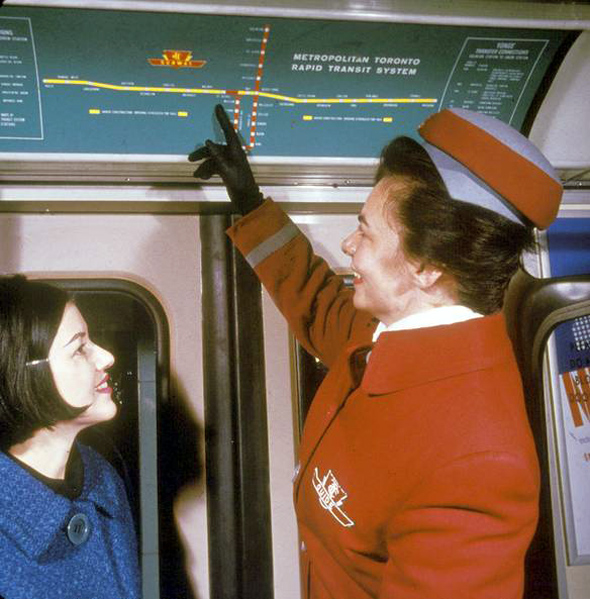 The Bloor-Danforth line wasn't always marked in green. Early on-board subway maps used red for the Yonge-University line - matching the original red Gloucester trains - from Eglinton to St. George and yellow for subway from Keele to Woodbine, the original kick-off points.
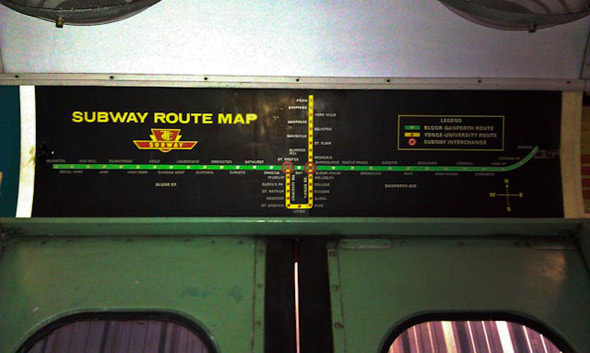 The
Bloor-Danforth line appears to have gone green with its first
expansion, which took trains to Islington and Warden - into Etobicoke
and Scarborough - in 1968.
The
Bloor-Danforth line appears to have gone green with its first
expansion, which took trains to Islington and Warden - into Etobicoke
and Scarborough - in 1968.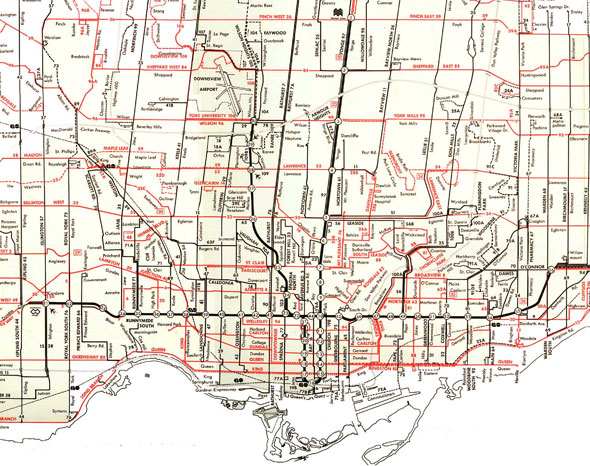 The
rapid pace of transit expansion continued in the The 1970s. The
Yonge-University line was extended to York Mills, then Finch, and the
Spadina line opened in 1978, the legacy of a bitter and protracted battle against running a highway from Eglinton down Spadina Avenue.
The
rapid pace of transit expansion continued in the The 1970s. The
Yonge-University line was extended to York Mills, then Finch, and the
Spadina line opened in 1978, the legacy of a bitter and protracted battle against running a highway from Eglinton down Spadina Avenue.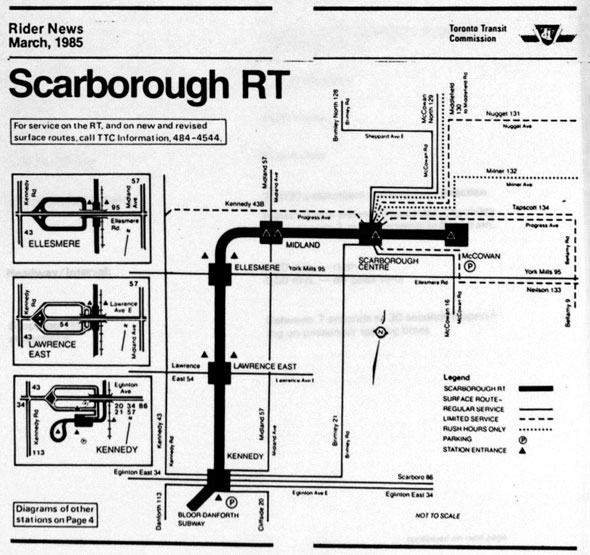 The
first new splash of colour to the two-toned map came with the
Scarborough RT in 1985, which heralded a slowing of Toronto's once
frenetic rapid transit building. Over the next 18 years - more than the
time it had taken to dig out tracks under University Avenue and complete
and expand the Bloor-Danforth line - the TTC would add only two more
stations, North York Centre in 1987 and Downsview in 1996, which
resulted in only minor tweaks to the wayfinding material.
The
first new splash of colour to the two-toned map came with the
Scarborough RT in 1985, which heralded a slowing of Toronto's once
frenetic rapid transit building. Over the next 18 years - more than the
time it had taken to dig out tracks under University Avenue and complete
and expand the Bloor-Danforth line - the TTC would add only two more
stations, North York Centre in 1987 and Downsview in 1996, which
resulted in only minor tweaks to the wayfinding material.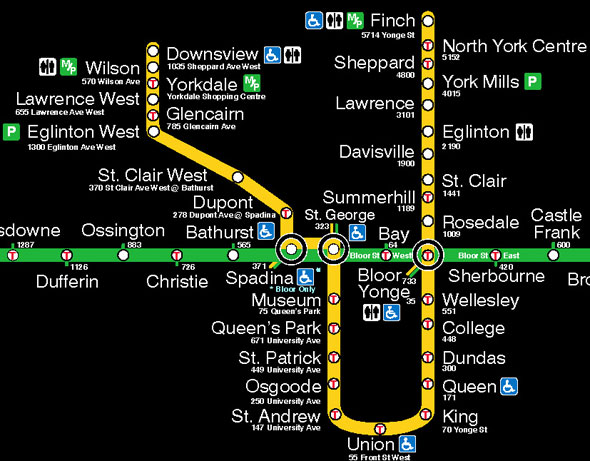 The
most recent map addition came in 2002 with the controversial Sheppard
line. Originally intended to bridge the gap between Sheppard and
Downsview (the latter built partially in anticipation of the new subway)
and continue east to Scarborough Centre, the line was eventually
completed to an abbreviated design with the support of PC premier Mike
Harris and Toronto mayor Mel Lastman.
The
most recent map addition came in 2002 with the controversial Sheppard
line. Originally intended to bridge the gap between Sheppard and
Downsview (the latter built partially in anticipation of the new subway)
and continue east to Scarborough Centre, the line was eventually
completed to an abbreviated design with the support of PC premier Mike
Harris and Toronto mayor Mel Lastman. 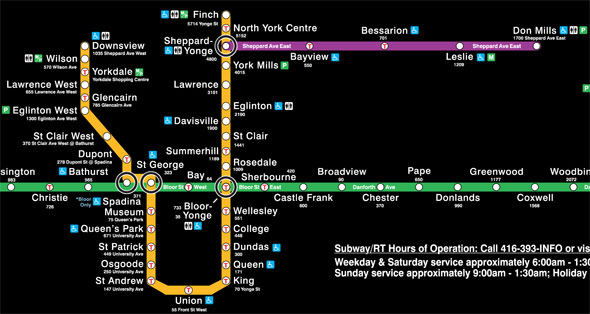 And
now we move into a new era, one with numbered lines and a rainbow of
underground transit. Assuming the new map is built as currently planned
(insert lengthy caveats here) the TTC will find itself in charge of 41
new stops - an increase of 65% - within the next decade.
And
now we move into a new era, one with numbered lines and a rainbow of
underground transit. Assuming the new map is built as currently planned
(insert lengthy caveats here) the TTC will find itself in charge of 41
new stops - an increase of 65% - within the next decade.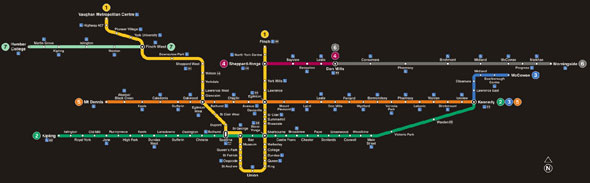 BONUS MAPS:
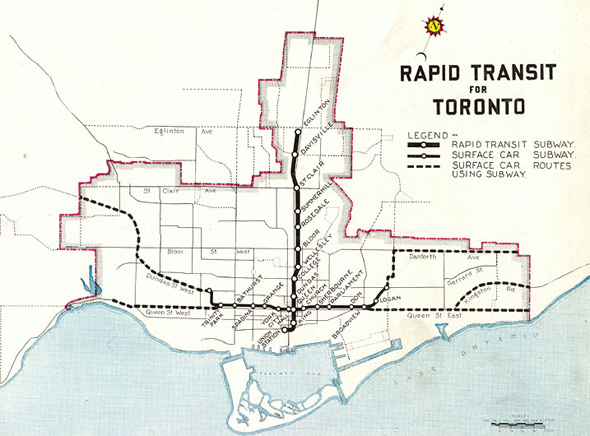 It's tempting to picture the Queen subway line, first proposed in 1942,
as a missed chance to anticipate the need for a Downtown Relief Line
but it was only ever seriously considered as an alternative to the
Bloor-Danforth subway. Had it been built as originally conceived, the
line would have been designed with streetcars in mind and had stops at
City Hall, Grange Park, Spadina, Bathurst, Trinity Park, and Dundas
West. Some drawings show it running at grade.
It's tempting to picture the Queen subway line, first proposed in 1942,
as a missed chance to anticipate the need for a Downtown Relief Line
but it was only ever seriously considered as an alternative to the
Bloor-Danforth subway. Had it been built as originally conceived, the
line would have been designed with streetcars in mind and had stops at
City Hall, Grange Park, Spadina, Bathurst, Trinity Park, and Dundas
West. Some drawings show it running at grade.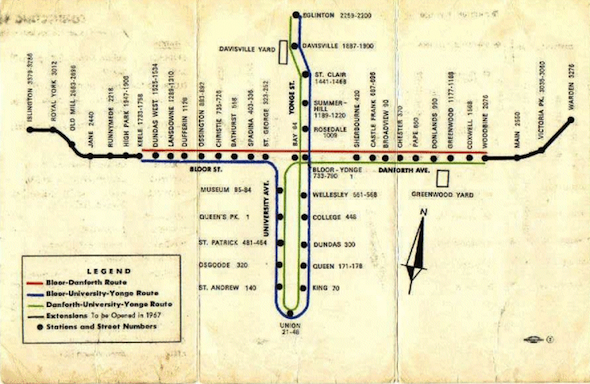 It's no secret that there is a bona fide abandoned platform beneath Bay station.
Lower Bay, as it's come to be known, was built along with a complex
(and very expensive) track intersection north of Museum with the idea of
running trains directly downtown via Union station from the
Bloor-Danforth line.
It's no secret that there is a bona fide abandoned platform beneath Bay station.
Lower Bay, as it's come to be known, was built along with a complex
(and very expensive) track intersection north of Museum with the idea of
running trains directly downtown via Union station from the
Bloor-Danforth line.


+and+TCHC+board+chairman+Bud+Purves+at+TCHC+headquarters.jpg)

 It's
tough to picture the tony streets of Yorkville as a pastoral
independent village north of Toronto, but it was once so. Before Hermes,
Gucci, and Prada, Yorkville was populated by Jarvises and Bloores, by
blacksmiths and painters, "cabin'd, cribb'd, and confined within its
narrow limits."
It's
tough to picture the tony streets of Yorkville as a pastoral
independent village north of Toronto, but it was once so. Before Hermes,
Gucci, and Prada, Yorkville was populated by Jarvises and Bloores, by
blacksmiths and painters, "cabin'd, cribb'd, and confined within its
narrow limits."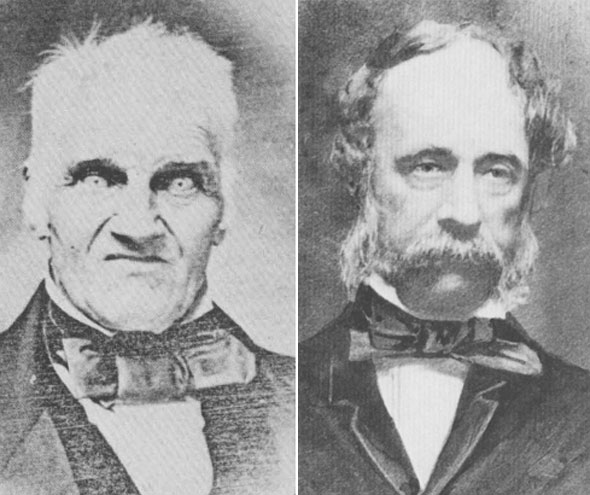 The
most famous image of Yorkville co-founder Joseph Bloore is a difficult
one to forget. Clad in a smart suit and large bow tie, Bloore stares -
positively pierces - with eyes bleached white by an unfortunate
overexposure. His manic, bewildered expression and crop of wild blonde
hair makes him look like a lost cousin of the Addams Family.
The
most famous image of Yorkville co-founder Joseph Bloore is a difficult
one to forget. Clad in a smart suit and large bow tie, Bloore stares -
positively pierces - with eyes bleached white by an unfortunate
overexposure. His manic, bewildered expression and crop of wild blonde
hair makes him look like a lost cousin of the Addams Family.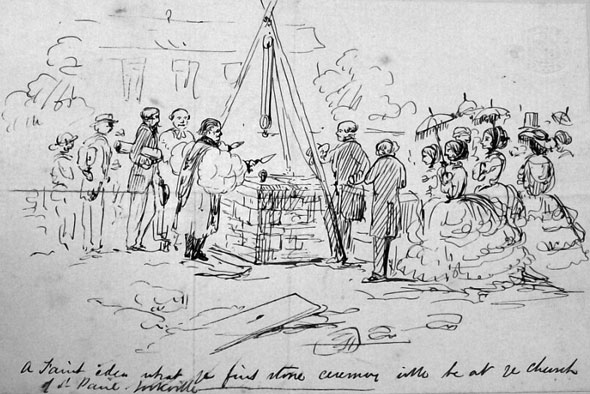 Jarvis
was an important member of society in early Toronto. As the elected
sheriff of the Home District, an early sub-region that included York, he
would later temporarily snuff out an uprising against the close-knit
group in charge of Upper Canada, the Family Compact. The Upper Canada
Rebellion culminated in a bloody battle at Montgomery's Tavern just north of Yonge and Eglinton, presently the home of Postal Station K.
Jarvis
was an important member of society in early Toronto. As the elected
sheriff of the Home District, an early sub-region that included York, he
would later temporarily snuff out an uprising against the close-knit
group in charge of Upper Canada, the Family Compact. The Upper Canada
Rebellion culminated in a bloody battle at Montgomery's Tavern just north of Yonge and Eglinton, presently the home of Postal Station K.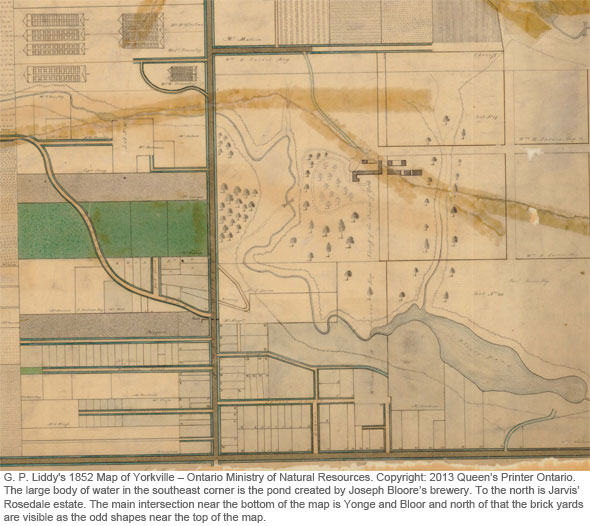 In
1858, English builder George Tate was in charge of erecting the town's
parish church. During his time in Canada he helped build the Don Jail at
Gerrard and Broadview and worked to lay the tracks of the Grand Trunk
Railway east to Quebec. In his spare time, Tate liked to collect
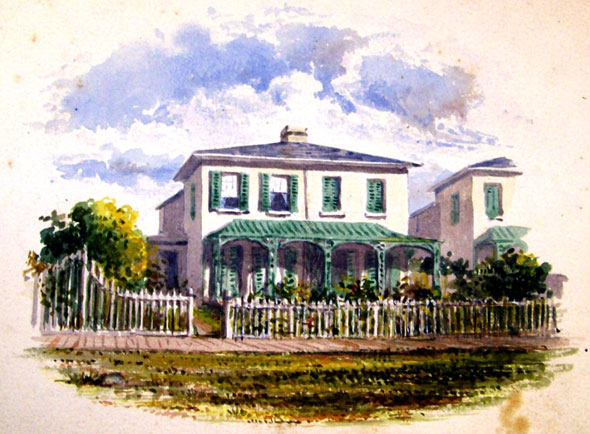
watercolours of the streets and houses in Yorkville and Toronto.
In
1858, English builder George Tate was in charge of erecting the town's
parish church. During his time in Canada he helped build the Don Jail at
Gerrard and Broadview and worked to lay the tracks of the Grand Trunk
Railway east to Quebec. In his spare time, Tate liked to collect
watercolours of the streets and houses in Yorkville and Toronto.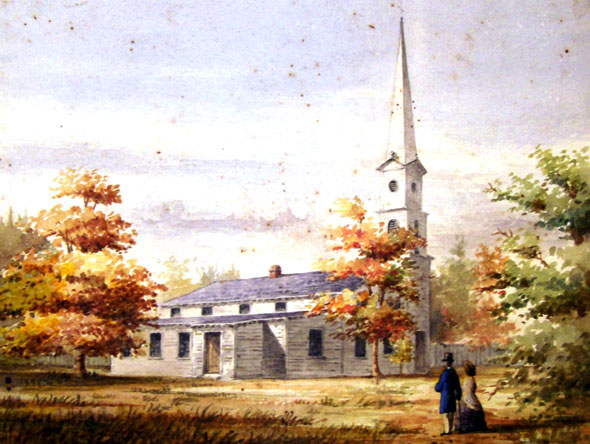 The
white wood frame of St. Paul's Anglican Church, Yorkville's first place
of workship, was hammered together near Yonge and Church on land
donated by Samuel Peters Jarvis, the namesake of the north-south street,
in 1842. Its design was prepared Canada's official surveyor and civil
engineer, John George Howard, one of the major land donors that helped
create High Park.
The
white wood frame of St. Paul's Anglican Church, Yorkville's first place
of workship, was hammered together near Yonge and Church on land
donated by Samuel Peters Jarvis, the namesake of the north-south street,
in 1842. Its design was prepared Canada's official surveyor and civil
engineer, John George Howard, one of the major land donors that helped
create High Park.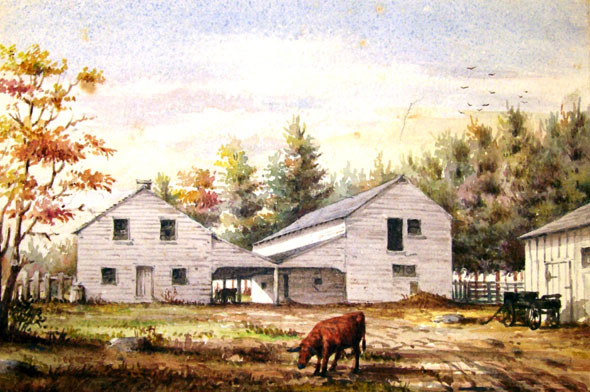 Yorkville
had its own water works, town hall, fire hall, and cemetery, the York
General Burying Ground, more commonly known as Potter's Field, located
on a grassy plain at the northwest corner of Bloor and Yonge. The
non-sectarian burial ground was funded by a group of citizens concerned
about the limited options for non-religious burials in the Toronto area.
Yorkville
had its own water works, town hall, fire hall, and cemetery, the York
General Burying Ground, more commonly known as Potter's Field, located
on a grassy plain at the northwest corner of Bloor and Yonge. The
non-sectarian burial ground was funded by a group of citizens concerned
about the limited options for non-religious burials in the Toronto area.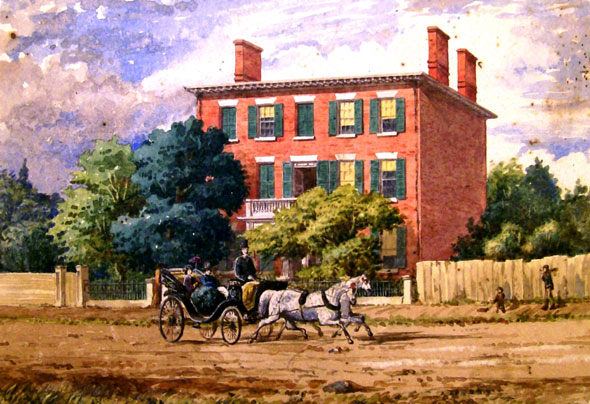 The
off-white bricks of King Street's St. Lawrence Hall, St. Michael's
Cathedral, St. James Cathedral, and University College all owe their
look to Yorkville's biggest industrial concern, the Yorkville Brick
Yards.
The
off-white bricks of King Street's St. Lawrence Hall, St. Michael's
Cathedral, St. James Cathedral, and University College all owe their
look to Yorkville's biggest industrial concern, the Yorkville Brick
Yards. 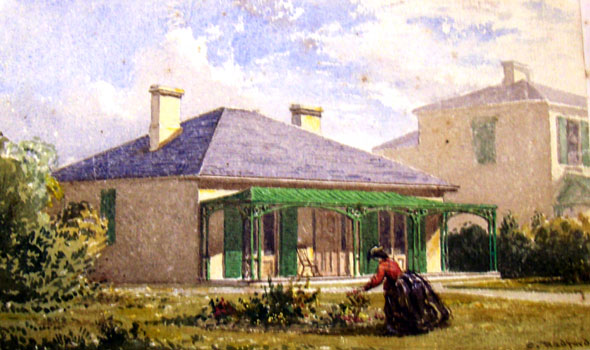 Apart
from the brick yards, the Yorkville of the mid-19th century was mostly
quiet and residential. The community was an ideal outpost for people who
preferred to live away from the clamour of Toronto, which at the time
was largely confined to a few blocks directly adjacent to the lakeshore.
Apart
from the brick yards, the Yorkville of the mid-19th century was mostly
quiet and residential. The community was an ideal outpost for people who
preferred to live away from the clamour of Toronto, which at the time
was largely confined to a few blocks directly adjacent to the lakeshore.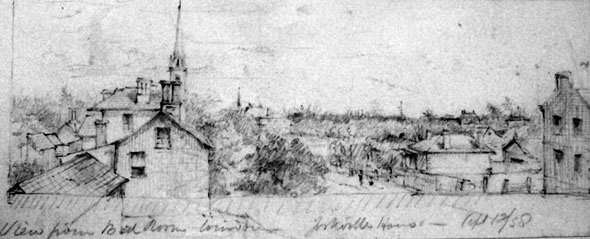 A sketch of the Yorkville skyline in 1858.
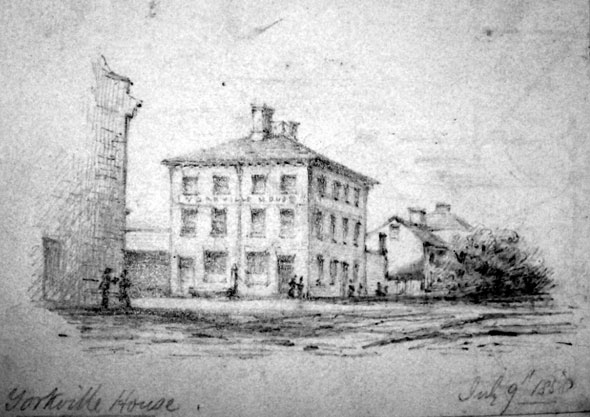 The exterior of Yorkville House.
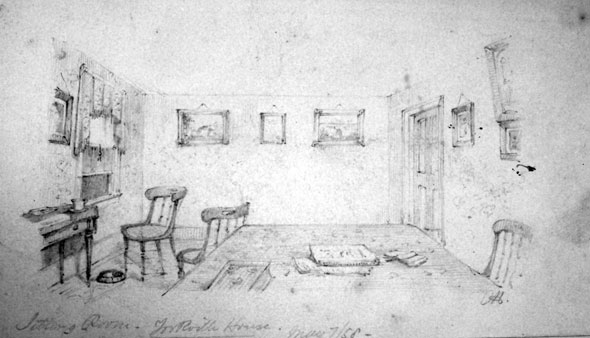 Interior of Yorkville House.
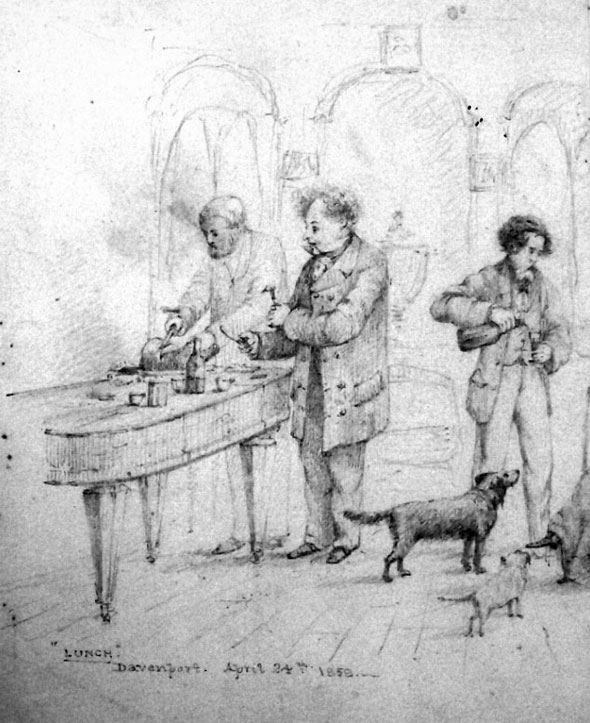 A sketch of lunch at Davenport.