 I've
held on to this picture for some time, unsure what to do with it. I'm
not sure how I first came across it in the Toronto Telegram archives but
it's always stuck in my mind.
I've
held on to this picture for some time, unsure what to do with it. I'm
not sure how I first came across it in the Toronto Telegram archives but
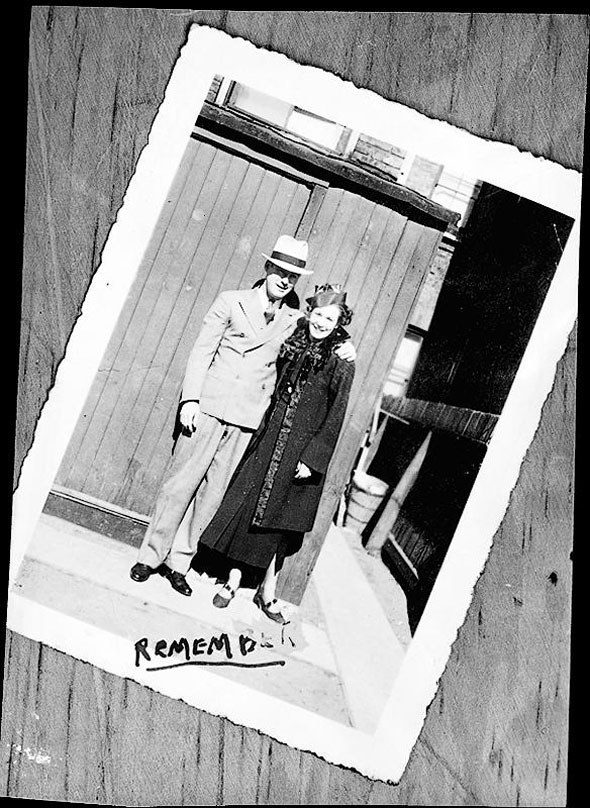
it's always stuck in my mind.The picture shows a suited Mickey McDonald with his arm around his wife, Margaret, or "Kitty Cat," but tells nothing of the man's violent history as the "the mad dog of Jarvis Street."
 Donald
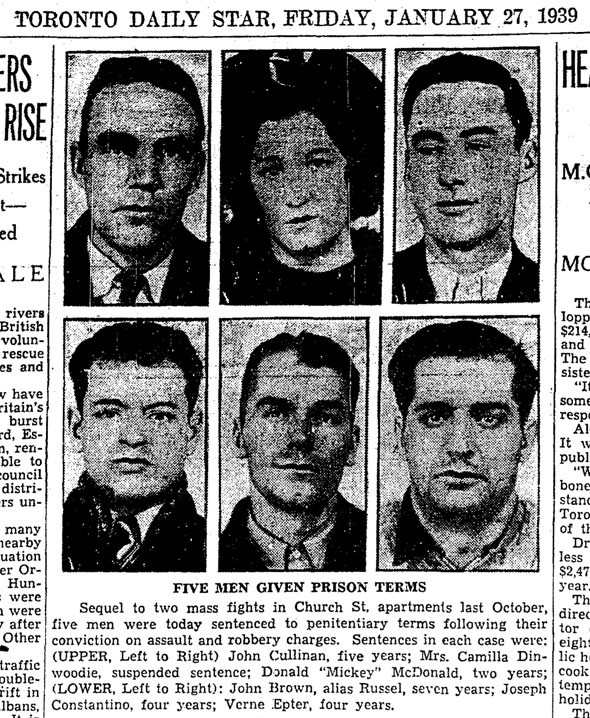
"Mickey" McDonald first appeared in print when he was sentenced to two
years in Kingston Penitentiary with four other men for his part in the
gangland assault and robbery of James C. Elder at his Church St.
apartment in 1938.
Donald
"Mickey" McDonald first appeared in print when he was sentenced to two
years in Kingston Penitentiary with four other men for his part in the
gangland assault and robbery of James C. Elder at his Church St.
apartment in 1938.After beating Elder, McDonald and his gang stole four cases of beer, seven bottles of whiskey, a bottle of gin, $2 in cash, and an overcoat. "Kitty Cat" McDonald drove the group to the apartment, but was discharged by the court.
During the trial, McDonald's father made a tearful plea for leniency, saying his son's behaviour was the result of alcohol addiction. He had only been out of jail four months for a previous offence before the old gang had pressured him to return, he said.
"Drink is his downfall. He wanted to avoid their company. Whatever he did that night it was not by deliberate choice. He took the liquor that night, but I am the man who paid for it a few days later."
John "Russel" Brown, a fellow gang member, echoed the observation. "I would like to say a word, too, not for myself but for McDonald, who was a victim of this whole thing."
In passing sentence, Judge Ian Macdonnell said he had to make an example of the group because of their habit for repeat offending. "Gang warfare, such as was never believed in Toronto, must go," he said.
 But
that wasn't the end of it. A month later, police charged McDonald and
his brother, Alex, with being part of a gang that murdered James
Windsor, a North Toronto bookkeeper and nightclub owner, on Jan. 7,
1939.
But
that wasn't the end of it. A month later, police charged McDonald and
his brother, Alex, with being part of a gang that murdered James
Windsor, a North Toronto bookkeeper and nightclub owner, on Jan. 7,
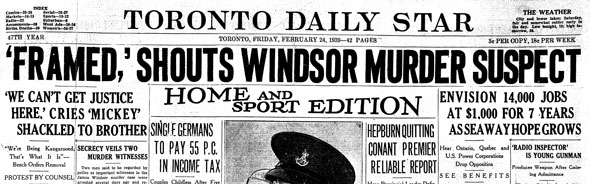
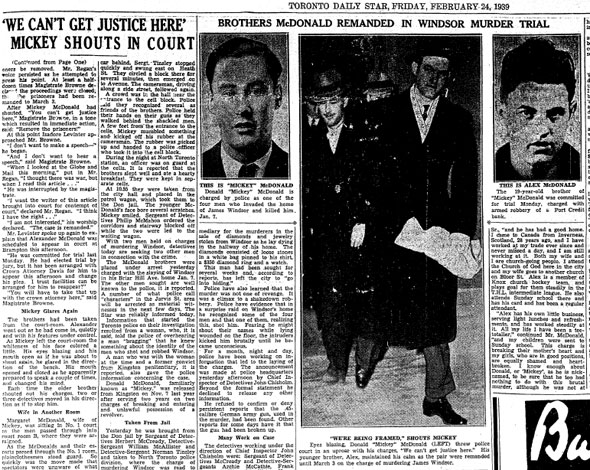
1939."We're being framed," Mickey yelled during an acrimonious early court hearing. "We're being framed - kangerooed. That's what it is, framed - kangerooed."
"We can't get justice here," he yelled, shackled to his brother.
Later, two men would claim Mickey had admitted to the crime.
John R. Shea, a surprise witness who was himself awaiting trial on a bank robbery charge, said he had been drinking with the McDonald brothers at an apartment on Ossington Ave. when they had left "to do a job."
"I've just killed a man ... I've shot a man and he's dead," Mickey said on his return. "I shot him right here" and pointed to his stomach.
The jury rejected an alibi that suggested the pair were engaged in a separate robbery at the time of the murder and found Mickey guilty of delivering the fatal shot.
The judge sentenced him to death by hanging. Alex, however, was acquitted based on the same evidence.
 But
there was still another twist in the tale. Mickey appealed the
conviction and won based the jury's inconsistent behaviour. He was sent
back to jail to serve the remainder of his assault and robbery
conviction.
But
there was still another twist in the tale. Mickey appealed the
conviction and won based the jury's inconsistent behaviour. He was sent
back to jail to serve the remainder of his assault and robbery
conviction.Shortly after his release, Mickey returned to his Jarvis St. territory where he and an accomplice beat and robbed an 86-year-old hotel doorman of his wristwatch. He was sent back to Kingston for two years and six months.
In 1944, McDonald received his longest prison sentence yet for taking part in an attempted hijack of $35,000 of liquor. The judge sentenced him to 15 years.
"He alone knows how many shakedowns he has attempted, how many people he has robbed, and how many he and his cohorts have beaten up," wrote The Globe and Mail after his release from prison in 1947.
No more was heard from McDonald after the hijacking conviction, at least in the newspapers, and we will certainly never know why he chose to write "remember" beneath that picture.
Please share this

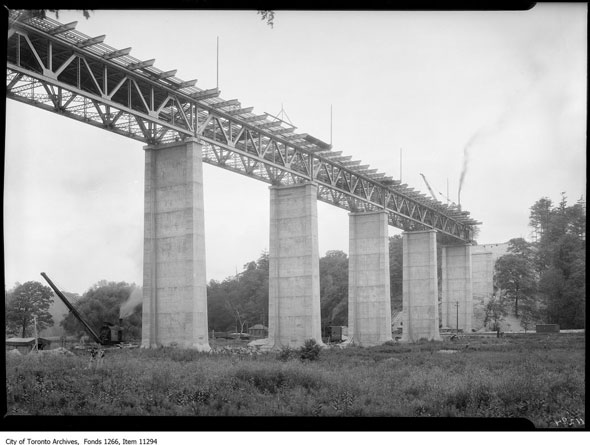 The
Leaside Viaduct doesn't get nearly the attention it deserves.
Needlessly dwarfed in terms of fame and stature by its slightly older
cousin to the south, the Prince Edward Viaduct, the Leaside bridge is
worthy of celebration all by itself.
The
Leaside Viaduct doesn't get nearly the attention it deserves.
Needlessly dwarfed in terms of fame and stature by its slightly older
cousin to the south, the Prince Edward Viaduct, the Leaside bridge is
worthy of celebration all by itself.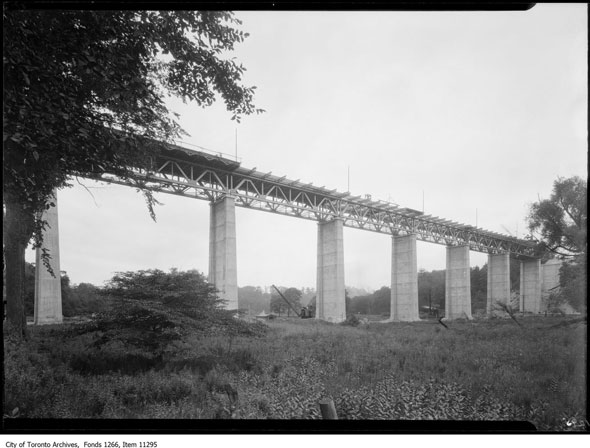 The
need for a second road bridge to span the Don Valley became apparent in
the late 1920s as the little neighbourhood of Leaside, a planned
community partially laid out to plans by Frederick Gage Todd for the
Canadian Northern Railway, was threatening to boom into a fully-fledged
town.
The
need for a second road bridge to span the Don Valley became apparent in
the late 1920s as the little neighbourhood of Leaside, a planned
community partially laid out to plans by Frederick Gage Todd for the
Canadian Northern Railway, was threatening to boom into a fully-fledged
town.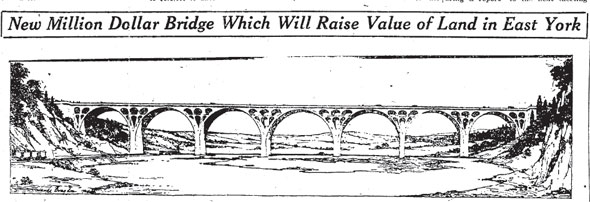 Unlike
the Prince Edward Viaduct, the Leaside Viaduct didn't need a series of
referendums to gain final approval. A link to the rabidly popular
Thorncliffe Park Raceway, a mecca for thoroughbred and harness racing
and the spiritual home of the Prince of Wales Stakes, was enough, it
seems.
Unlike
the Prince Edward Viaduct, the Leaside Viaduct didn't need a series of
referendums to gain final approval. A link to the rabidly popular
Thorncliffe Park Raceway, a mecca for thoroughbred and harness racing
and the spiritual home of the Prince of Wales Stakes, was enough, it
seems.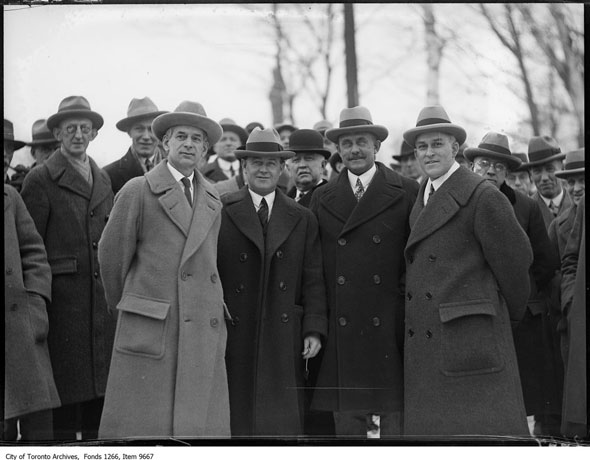 The
construction schedule was ambitions. Designer and lead engineer Frank
Barber pledged to deliver the $150,000 concrete and steel structure,
substantially different to the one initially approved by the local
councils, within a year - an unprecedented timeframe.
The
construction schedule was ambitions. Designer and lead engineer Frank
Barber pledged to deliver the $150,000 concrete and steel structure,
substantially different to the one initially approved by the local
councils, within a year - an unprecedented timeframe.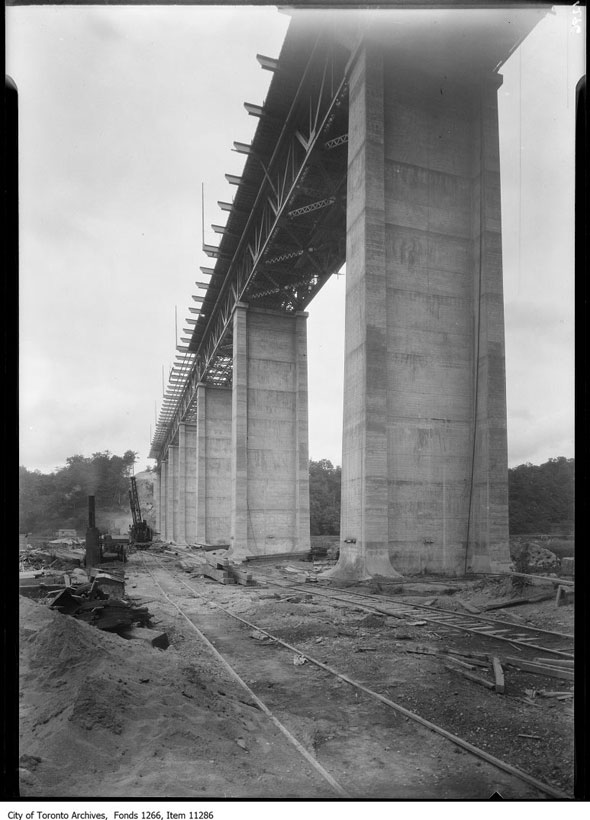 The
extreme haste had consequences. Three men died while working on the
bridge, but Barber believed a few mishaps were to be expected. "This is
not an usual number because you cannot get a gang of several hundred men
working on a construction of such a size without an occasional accident
happening," he said.
The
extreme haste had consequences. Three men died while working on the
bridge, but Barber believed a few mishaps were to be expected. "This is
not an usual number because you cannot get a gang of several hundred men
working on a construction of such a size without an occasional accident
happening," he said.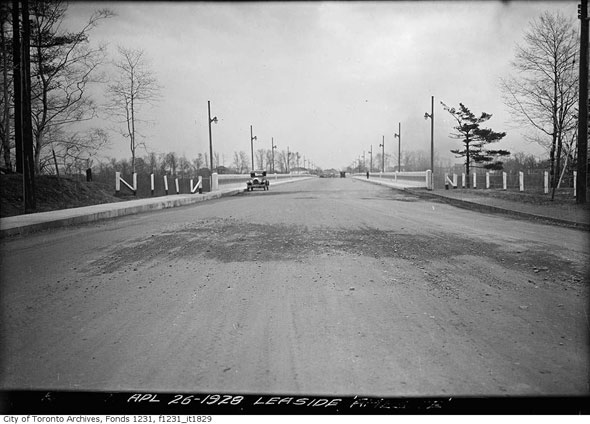 The
first vehicles to cross the concrete surface were a TTC bus, the first
on the new Pape route, and a bread wagon bound for Leaside. "The East
York-Leaside Viaduct changes the whole strategical position of Leaside,"
The Star wrote. "It centralizes the town and puts it on one of the most important highways in the metropolitan district of Toronto."
The
first vehicles to cross the concrete surface were a TTC bus, the first
on the new Pape route, and a bread wagon bound for Leaside. "The East
York-Leaside Viaduct changes the whole strategical position of Leaside,"
The Star wrote. "It centralizes the town and puts it on one of the most important highways in the metropolitan district of Toronto."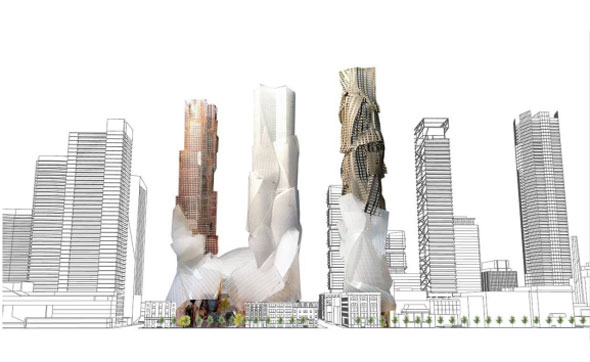 Frank
Gehry's bold concept for three massive condos on King Street West could
be trimmed through discussions with a new working group set up at
yesterday's council meeting. Council voted down the current proposal for
three high-rise residential towers, opting instead to establish a
special 14-member group to prevent the project going to the Ontario
Municipal Board.
Frank
Gehry's bold concept for three massive condos on King Street West could
be trimmed through discussions with a new working group set up at
yesterday's council meeting. Council voted down the current proposal for
three high-rise residential towers, opting instead to establish a
special 14-member group to prevent the project going to the Ontario
Municipal Board.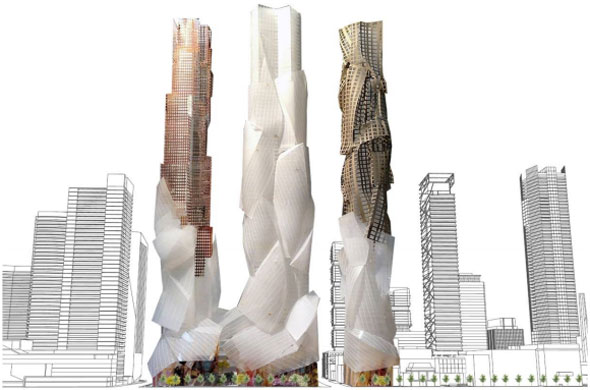 Adam Vaughan told the Star the panel will seek "a way to say yes"
to the proposal, which also includes an art gallery and a new campus
for OCAD University. The group will hold at least one public meeting and
will report back to council in March 2014.
Adam Vaughan told the Star the panel will seek "a way to say yes"
to the proposal, which also includes an art gallery and a new campus
for OCAD University. The group will hold at least one public meeting and
will report back to council in March 2014.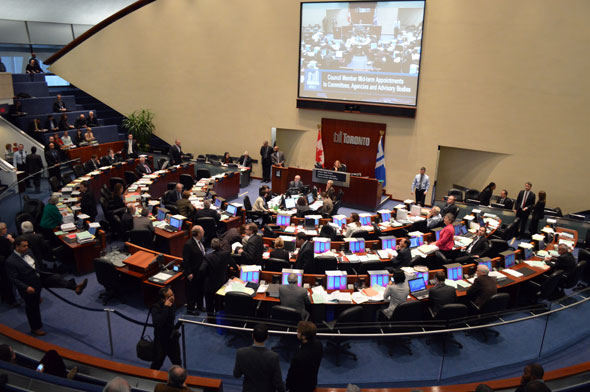 The
year is almost over and it's time to take stock of what city council
has achieved over the last 12 months. While the focus of public
attention was often on events outside the council chamber, there were
several notable decisions that will (hopefully) be demonstrably
beneficial when they come to fruition.
The
year is almost over and it's time to take stock of what city council
has achieved over the last 12 months. While the focus of public
attention was often on events outside the council chamber, there were
several notable decisions that will (hopefully) be demonstrably
beneficial when they come to fruition. Toronto's
bike share system was stuck between a rock and hard place: Too
localized to be financially viable, too broke to expand. To make matters
worse, BIXI had bought its bicycles and docking stations with cash from
a loan guaranteed by the city, meaning if the bike company defaulted
taxpayers would have been on the hook.
Toronto's
bike share system was stuck between a rock and hard place: Too
localized to be financially viable, too broke to expand. To make matters
worse, BIXI had bought its bicycles and docking stations with cash from
a loan guaranteed by the city, meaning if the bike company defaulted
taxpayers would have been on the hook.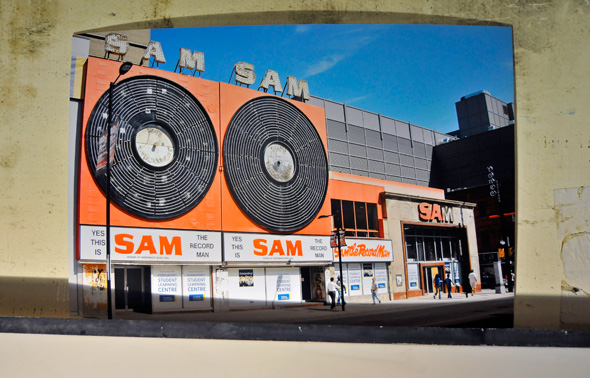 The
big neon display that once adorned Toronto's most famous record store
was a polarizing topic this year. Ryerson University promised to re-hang
the sign on its new, ultra-modern Student Learning Centre in exchange
for the planning permission necessary to build it in 2008. Then talks
began to stall.
The
big neon display that once adorned Toronto's most famous record store
was a polarizing topic this year. Ryerson University promised to re-hang
the sign on its new, ultra-modern Student Learning Centre in exchange
for the planning permission necessary to build it in 2008. Then talks
began to stall. In
May 2011 the three remaining Toronto Zoo elephants - Iringa, Toka and
Thika - badly needed a new home. Ontario was no place for the majestic
pachyderms and a city staff report recommended closing the exhibit where
four other elephants had recently died unless millions could be found
to improve the facilities.
In
May 2011 the three remaining Toronto Zoo elephants - Iringa, Toka and
Thika - badly needed a new home. Ontario was no place for the majestic
pachyderms and a city staff report recommended closing the exhibit where
four other elephants had recently died unless millions could be found
to improve the facilities.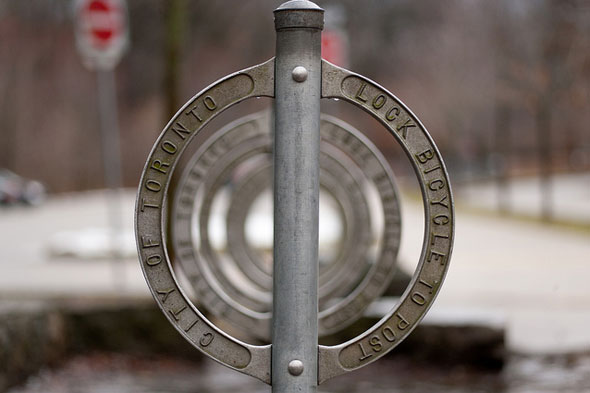 The
parking garage under Nathan Phillips Square is the largest of its kind
in Toronto - room for more than 2,000 cars, according to the Toronto
Parking Authority. It might seem like a safe bet that some of those
spaces could be used for a small secure bicycle parking facility without
fuss, but you'd be wrong.
The
parking garage under Nathan Phillips Square is the largest of its kind
in Toronto - room for more than 2,000 cars, according to the Toronto
Parking Authority. It might seem like a safe bet that some of those
spaces could be used for a small secure bicycle parking facility without
fuss, but you'd be wrong.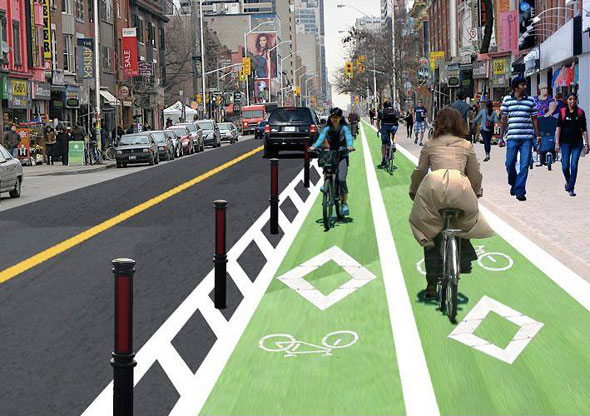 Until
this year, the discussion around bike lanes on Bloor St. had been
dormant since council decided to nix the Jarvis St. lanes. An incomplete
environmental assessment into the possible impacts of building the
east-west route was shelved and, despite annual events pushing for
progress, the file lay silent.
Until
this year, the discussion around bike lanes on Bloor St. had been
dormant since council decided to nix the Jarvis St. lanes. An incomplete
environmental assessment into the possible impacts of building the
east-west route was shelved and, despite annual events pushing for
progress, the file lay silent.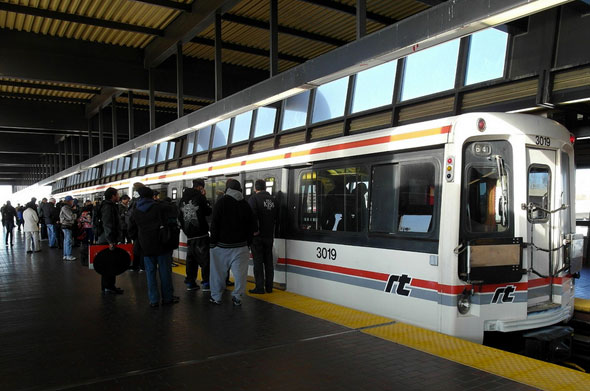 The
Scarborough RT is dying. Built in the 1980s, the little white rapid
transit cars are nearing the end of their working life and need
replacing, but with what? The fully-funded LRT option was cheaper and
could have reached more people desperately in need of proper transit but
it wasn't a subway, dammit.
The
Scarborough RT is dying. Built in the 1980s, the little white rapid
transit cars are nearing the end of their working life and need
replacing, but with what? The fully-funded LRT option was cheaper and
could have reached more people desperately in need of proper transit but
it wasn't a subway, dammit.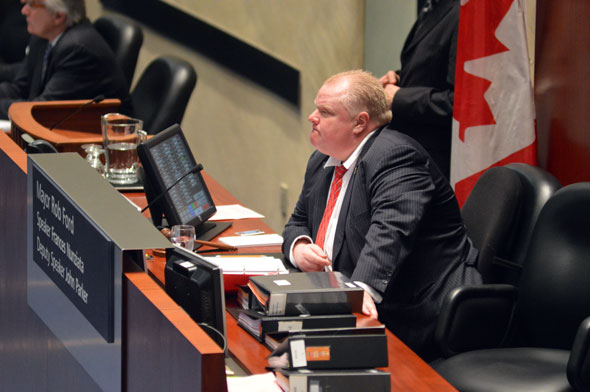 To
borrow a Seinfeld line, Rob Ford was Godzilla and Toronto was thousands
of fleeing Japanese. After months of incredible scandal involving
allegations of drugs, gangs, crack videos, and blackmail, a deeply
embarrassed council decided it needed to quarantine its toxic leader.
To
borrow a Seinfeld line, Rob Ford was Godzilla and Toronto was thousands
of fleeing Japanese. After months of incredible scandal involving
allegations of drugs, gangs, crack videos, and blackmail, a deeply
embarrassed council decided it needed to quarantine its toxic leader.


.jpg)

 Paying
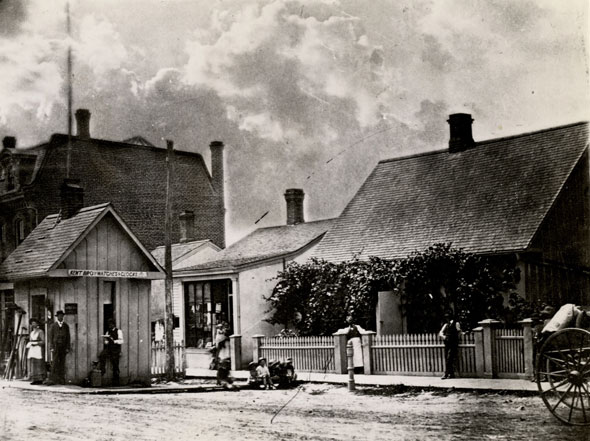
to use Highway 407 might seem like a drag, less so if you have one of
those electronic windshield devices, but imagine having to cough up on
every journey on every major road in or out of the city.
Paying
to use Highway 407 might seem like a drag, less so if you have one of
those electronic windshield devices, but imagine having to cough up on
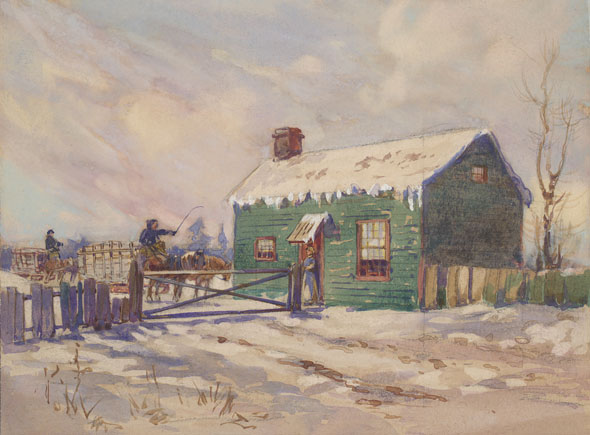
every journey on every major road in or out of the city.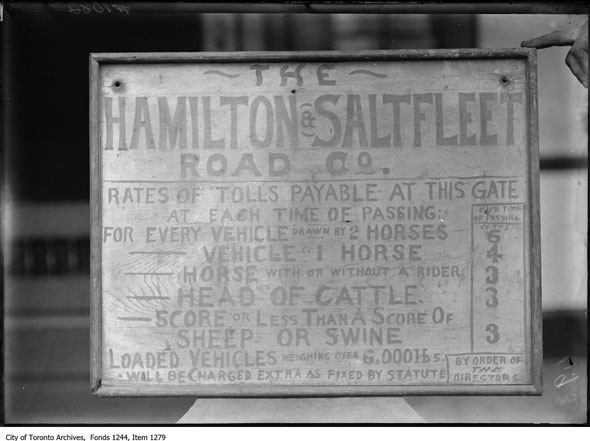 In
the 1800s, toll booths were positioned on every major route out of
town. At various times, little wooden cottages with a large gate
blocking the road could be found at King and Yonge, Queen and Bathurst
(then part of Dundas,) Dundas and Bloor, and Broadview and Danforth, to
name a few.
In
the 1800s, toll booths were positioned on every major route out of
town. At various times, little wooden cottages with a large gate
blocking the road could be found at King and Yonge, Queen and Bathurst
(then part of Dundas,) Dundas and Bloor, and Broadview and Danforth, to
name a few.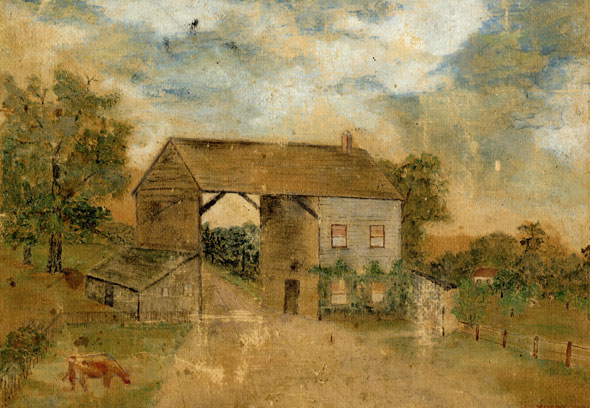
 Decades
earlier, a lumber dealer reportedly found a more creative solution. The
story goes that after a series of altercations with the operators of a
toll gate at Queen and Ossington, some of them physical, an unnamed
supplier to Fort York bought the land on the northeast corner of the
intersection, directly opposite the gate.
Decades
earlier, a lumber dealer reportedly found a more creative solution. The
story goes that after a series of altercations with the operators of a
toll gate at Queen and Ossington, some of them physical, an unnamed
supplier to Fort York bought the land on the northeast corner of the
intersection, directly opposite the gate.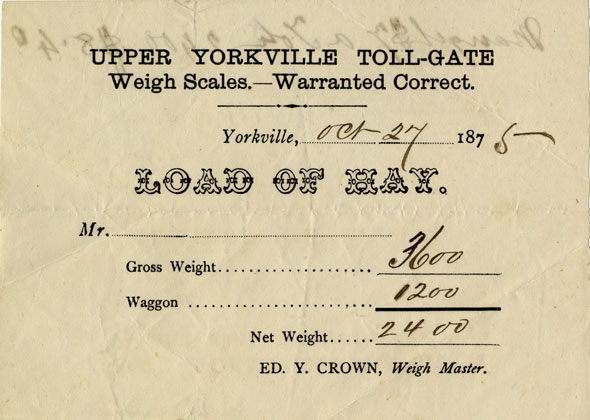 One
of the city's few remaining toll booths - Tollgate #3 - still stands
away from its original location close to Bathurst and Davenport. The
house is of exceedingly rare plank construction - only one other is
known to exist in Ontario - and has been picked up and moved several
times, once spending time in storage at the TTC yard.
One
of the city's few remaining toll booths - Tollgate #3 - still stands
away from its original location close to Bathurst and Davenport. The
house is of exceedingly rare plank construction - only one other is
known to exist in Ontario - and has been picked up and moved several
times, once spending time in storage at the TTC yard.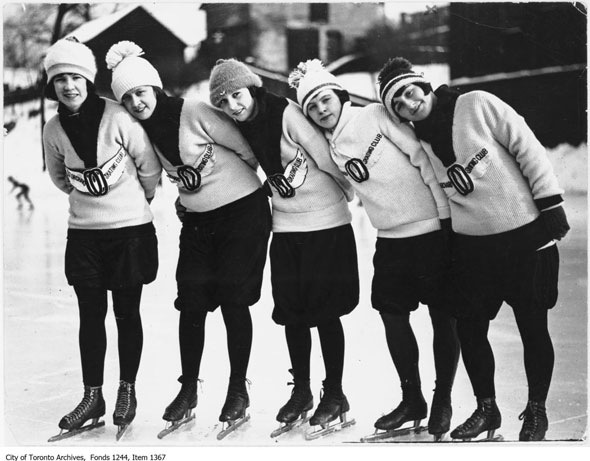 Time
to put away that fall gear - the skating season is officially upon us.
Toronto's public rinks are now open for shinny and the first Bambi-like
forays onto the hard stuff, despite a recent uptick in temperatures.
Time
to put away that fall gear - the skating season is officially upon us.
Toronto's public rinks are now open for shinny and the first Bambi-like
forays onto the hard stuff, despite a recent uptick in temperatures.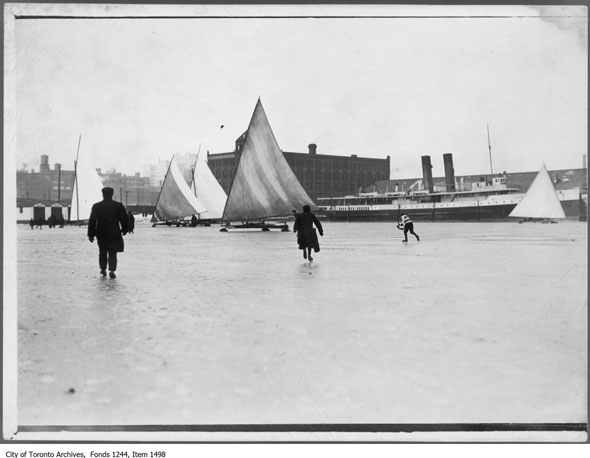 Skaters on the Toronto Bay
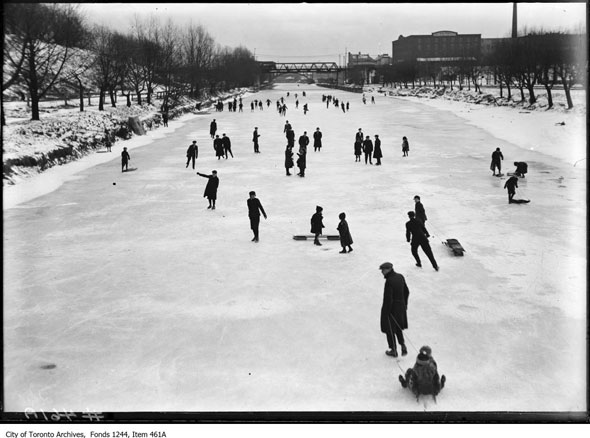 A frozen Don River near Riverdale Park, looking south to Gerrard
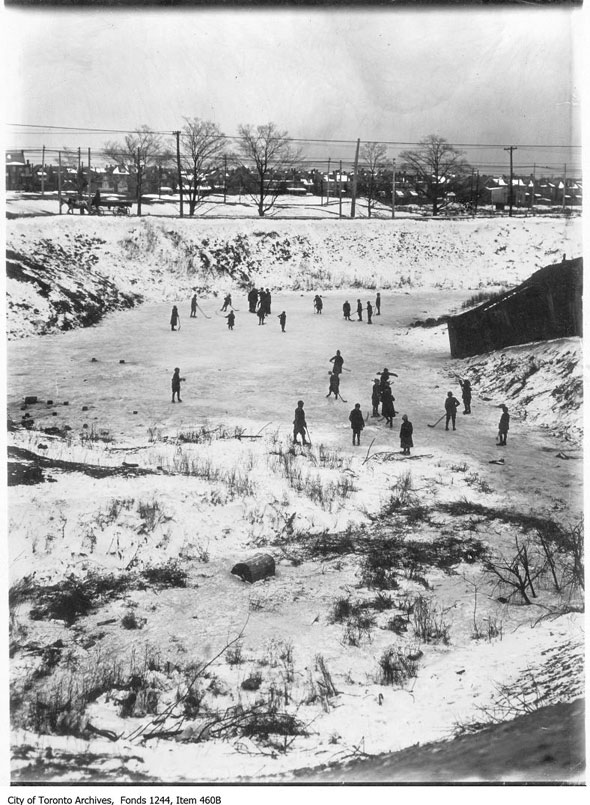 Skaters at Christie Pits
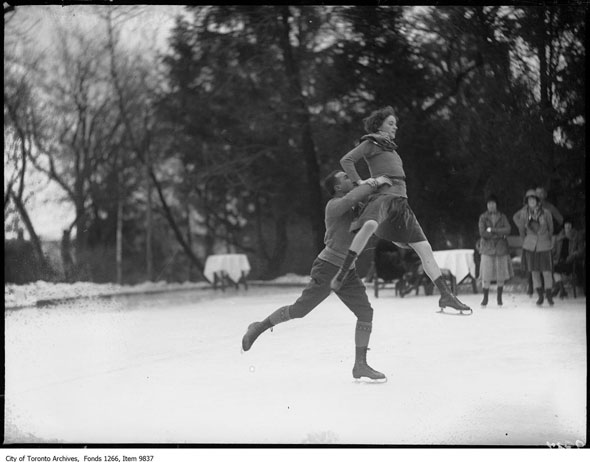 Figure skaters put on an outdoor show
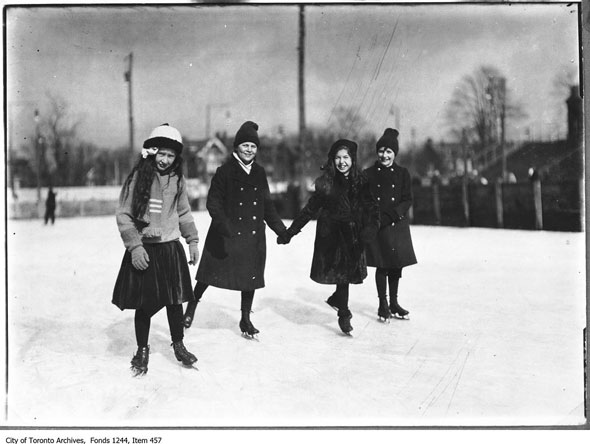 A group of girls take to the ice between 1910 and 1912
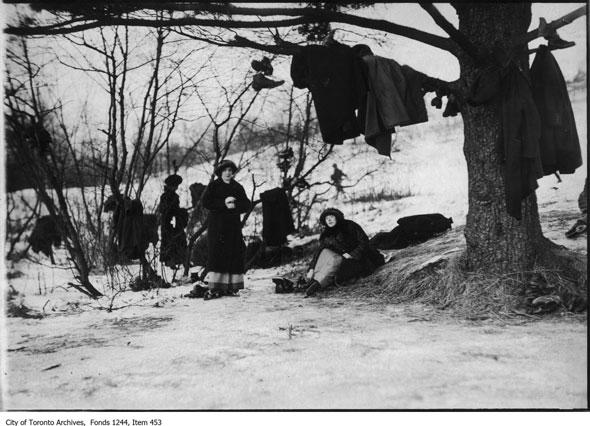 Women lace up beside Grenadier Pond in High Park
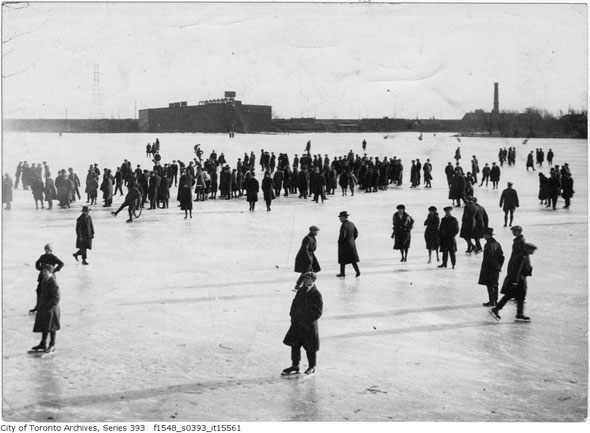 Skaters on Grenadier Pond
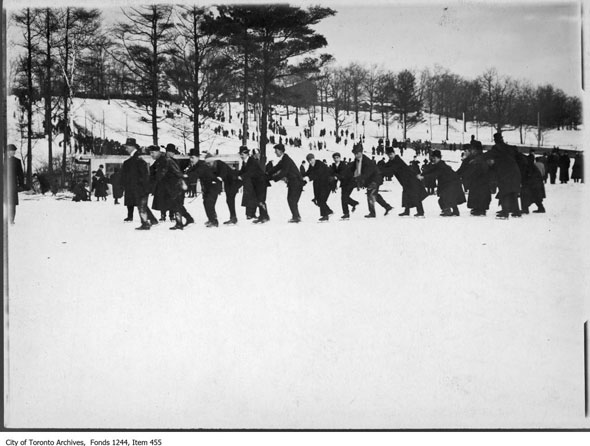 Nervous skaters cling together in High Park
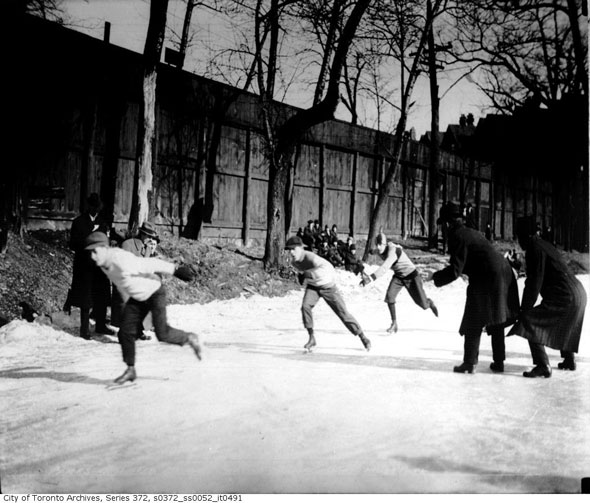 Moss Park skating championships race
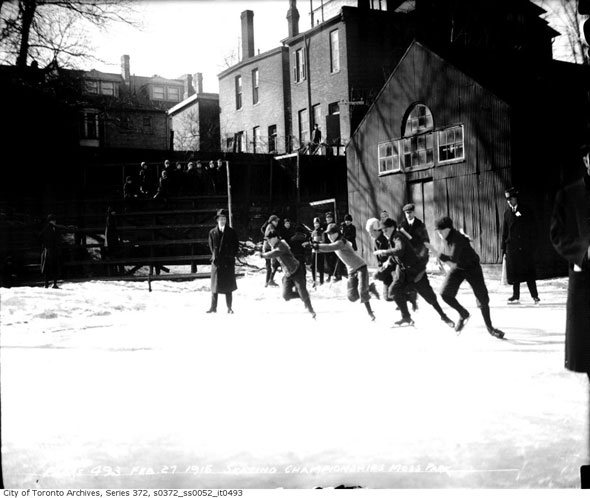 Another view of a skate race at Moss Park
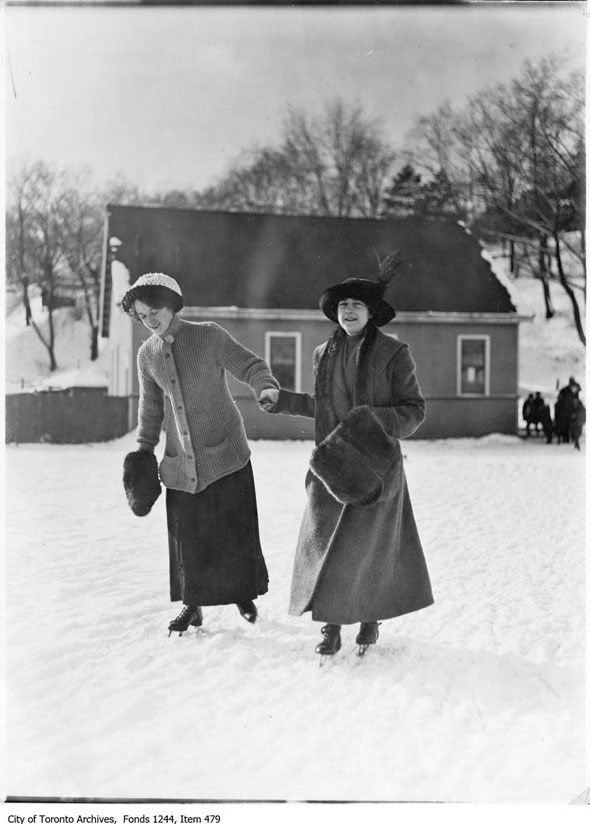 Women on the ice at Riverdale Park
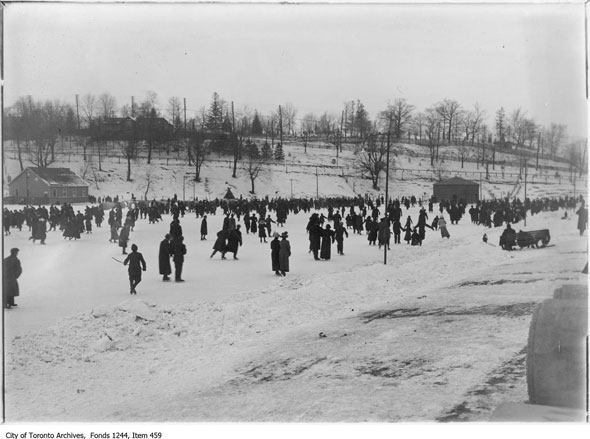 Wide shot of a frozen Riverdale Park
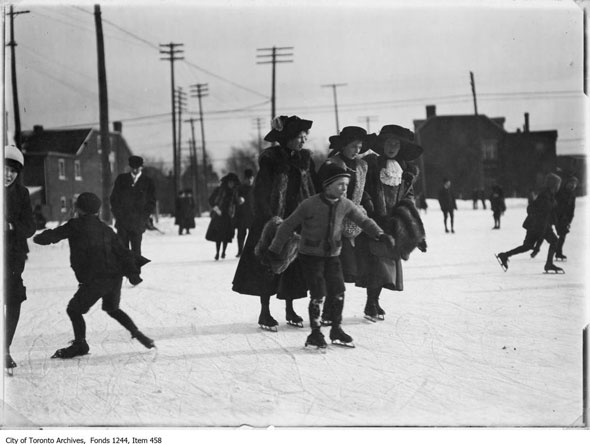 A makeshift rink on a vacant lot
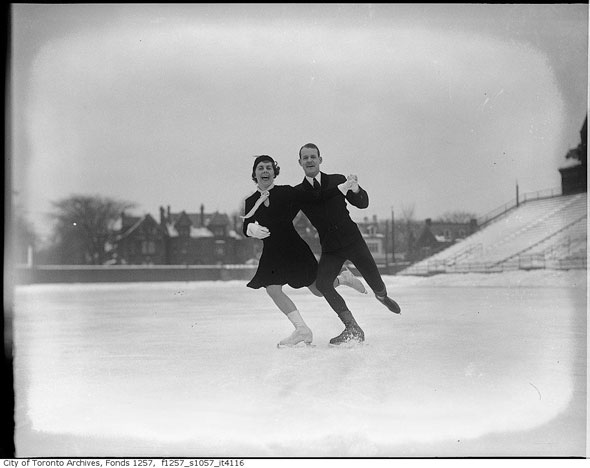 Figure skaters show off for the camera at Varsity Arena
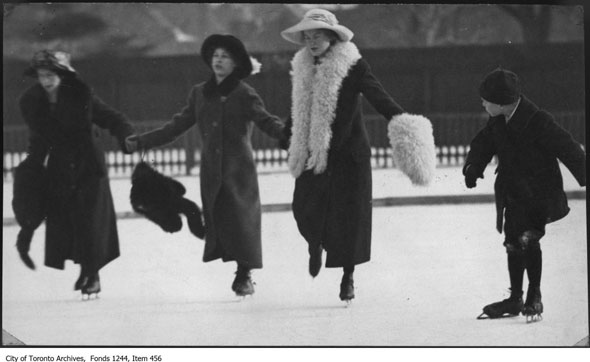 Heavy winter coats on display at Varsity Arena
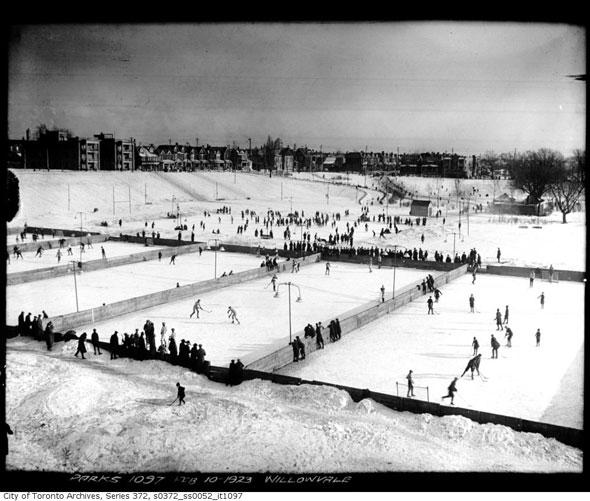 Rinks at Christie Pits, then Willowvale Park.
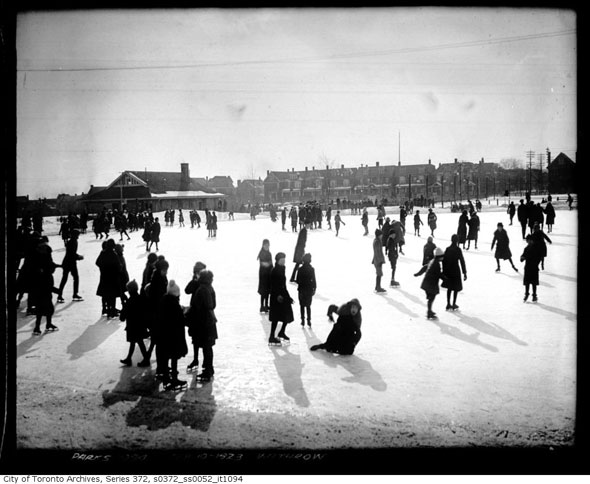 Skaters at Withrow Park