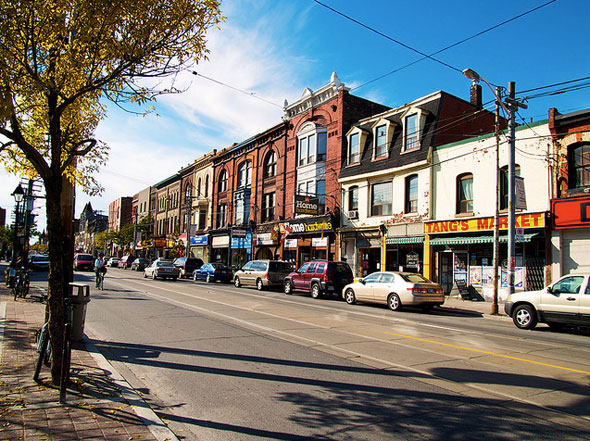
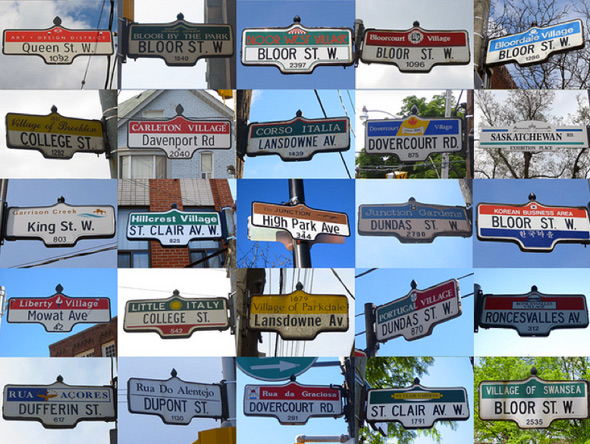
Toronto's reputation for being a city of neighbourhoods has deep roots. A hundred years ago, many of the city's best known areas - Parkdale, Leslieville, Rosedale, Yorkville, and others - were independent outlying towns with their own local government and distinctly separate identity.
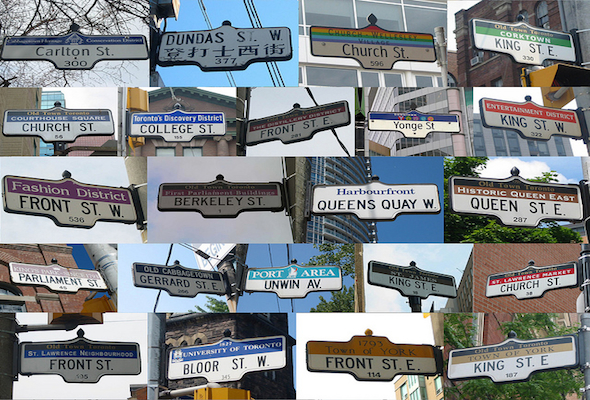
The patchwork city of Toronto most likely takes its name from the Mohawk word tkaronto, meaning "where there are trees standing in the water." Originally applied to The Narrows at Lake Simcoe, the name gradually worked its way south to be applied to Fort Toronto and later the city of York. But what about the neighbourhoods - where did those names come from?
Rosedale
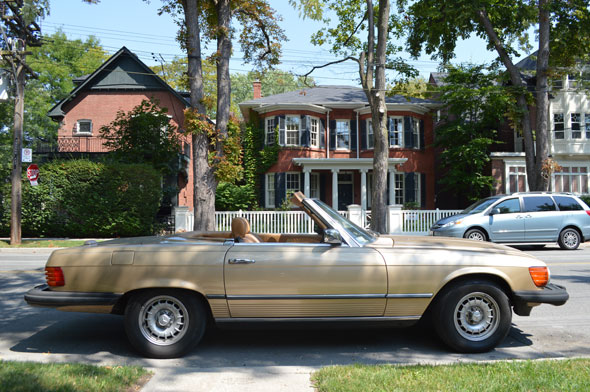
How apt that Toronto's swankiest locale has a pretty name to match the sprawling homes, tree-lined streets and carefully manicured lawns. Interestingly, the flowery name predates the neighbourhood's reputation for old money.
Named by Mary Jarvis, the wife of William Botsford Jarvis, sheriff of the historic Home District and a founder of Yorkville, for the abundance of wild roses that grew nearby, the name "Rosedale" was first applied to the Jarvis' family estate but later grew to encompass the area north of Bloor and east of Yonge. The "dale" suffix, common to many Toronto neighbourhoods, means broad valley in Old English.
Rosedale was once home to the opulent Chorley Park residence, Ontario's fourth government house, which was torn down in a moment of utter insanity to create parkland.
Cabbagetown
Cabbagetown has perhaps the most unusual name in Toronto. After all, how does a neighbourhood get named for a hearty but hardly glamourous leafy, green vegetable?
Originally the village of Don Vale, the working class area developed around the old Winchester Street Bridge which, before the Prince Edward Viaduct, was a major crossing point over the Don river. The Cabbage name, used derisively by some snooty Torontonians, arrived with Irish immigrants who planted the vegetables, among others, in their front yards.
Liberty Village
Inmates released from Toronto Central Prison, once located near King and Strachan, got their first tastes of post-incarceration life on Liberty Street, named for its route to freedom. Though the brutal prison closed in 1915 amid changing attitudes to corrections, the name remained attached to the street.
The use of the Liberty Village name, derived from its central street, was intended to help separate the development from nearby Parkdale.
Leslieville
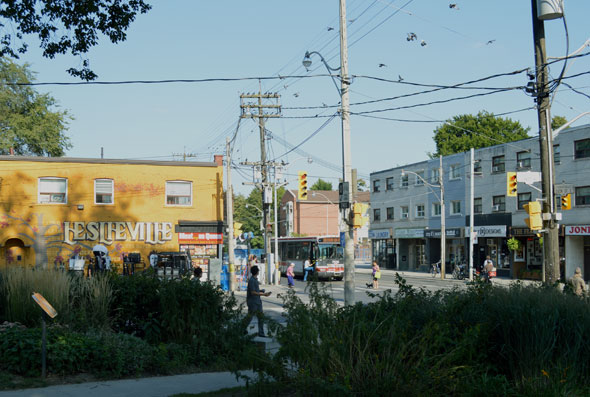
Another part of Toronto that began life as an independent village, Leslieville was once home to a substantial community of brick factory and nursery workers. George Leslie, the owner of a large gardening business and major employer east of the city, gave his name to the area now south of the CN tracks, west of Coxwell.
Alexander Muir, the first principal of Leslieville Public School, is famous for penning the poem The Maple Leaf Forever, so the story goes, after a bright maple leaf fell from a nearby tree onto his jacket. The inspirational tree still stands on Memory Lane south of Queen Street East.
Summerhill
The pastoral sounding Summerhill has transit in its blood. The area is named for Summer Hill, the former home of Charles Thompson, a Canadian shipping magnate whose estate once encompassed the area subdivided to create the neighbourhood.
Thompson ran a successful stagecoach and steamer company but later used parts of his estate to build a popular amusement park overlooking the nearby ravine. Summerhill Avenue was once the grand entrance to Thompson's Summer Hill Spring Park and Pleasure Grounds. The area is also known for the North Toronto Railway Station and CN railway.
Davisville
Another neighbourhood named for its founder, Davisville was established in a similar way as Summerhill. In 1840, English immigrant John Davis purchased the plot of land and ran the area's first post office. A hard worker, Davis also operated a local pottery company - the biggest local employer.
The original plot was subdivided in the late 1800s and sold off for residential use. John Davis' grandson, Jack, ran the old post office at Yonge and Davisville, which is now a Starbucks.
Kensington
Kensington Market in Toronto most likely got its name from Kensington Avenue that runs through the once predominantly Jewish neighbourhood. Kensington Avenue itself was likely named for Kensington district in London, which is derived from the Anglo-Saxon "Kenesignetun" or "Kenesigne's land or meadows."
Though separated by an ocean, the Kensingtons share a common trait: London's Kensington also had a market, a hub for various sub-cultures in the 60s and 70s, which was contained inside a now-demolished building.
Leaside
Famous for its railway history, Leaside is named for John Lea, an English-born American immigrant, who purchased the plot of flat land near the Don River in 1820. Originally known as Lot 13, the Canadian Pacific Railway signed a whopping 999-year lease on the part of the land in 1884
.
In 1914, two railway entrepreneurs, William Mackenzie and Donald Mann, planned the upscale settlement of Leaside - marketed as the "new Rosedale" - between the railway, Eglinton, Bayview and Leslie. Unfortunately, thing's didn't quite work out. Financial difficulties meant many of the homes were never built and the areas around Laird Drive, Hanna Road and Wicksteed Avenue - named for railway employees - originally went undeveloped.
In the 20th century, industry arrived in the form of munitions factories and an air field during the first world war. Leaside was eventually annexed by East York in 1967 and absorbed in Toronto in 1998.
Junction Triangle
The triangular area between the CNR and CPR railway lines has only been the Junction Triangle since March 2010. Originally an industrial area without a definitive name, local residents held a vote two years ago to chose a suitable title. Losing suggestions included Perth Park, Black Oak Triangle, The Wedge, Railtown and Railpath.
Yorkville and The Annex
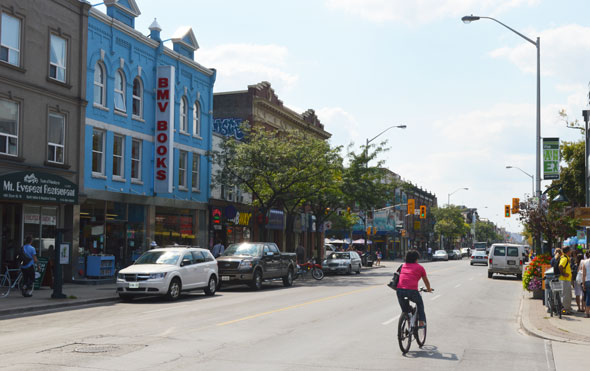
Like Leslieville, Yorkville was once distinctly separate from the city of Toronto. Founded by William Botsford Jarvis and Joseph Bloore, a brewer, as a residential suburb named for the old city of York, the community was later officially incorporated as the Village of Yorkville. As the population grew and the village became unable to properly service its citizens, the government asked the city of Toronto to annex the area, which it did in 1883.
The Annex started life as a Yorkville subdivision created by developer Simeon Janes in 1886. Originally called the Toronto Annex, The Annex was annexed by Toronto in 1887, partly retaining its original name.
Parkdale
The historic village of Parkdale once gave Rosedale a run for its money in terms of glamour and exclusivity. A former independent outlying town of Toronto, Parkdale thrived on its lakefront location and proximity to the recently purchased High Park, from which its name is derived.
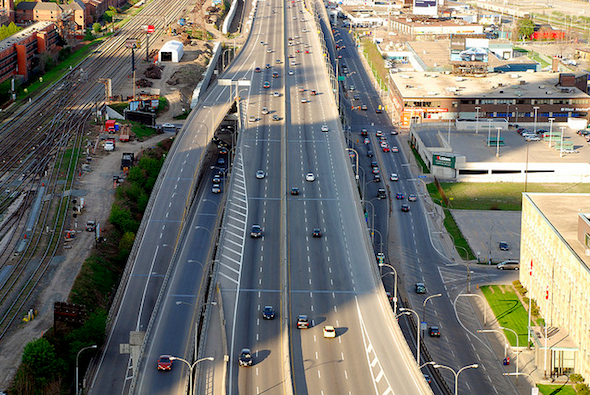
With the construction of the Gardiner Expressway and reworking of Lake Shore Boulevard, Parkdale lost its way and its major attraction, Sunnyside Amusement Park. A period of decline around the second world war led to many of the larger homes being sold and divided into rooming houses or demolished entirely for apartment buildings.

 Gardiner
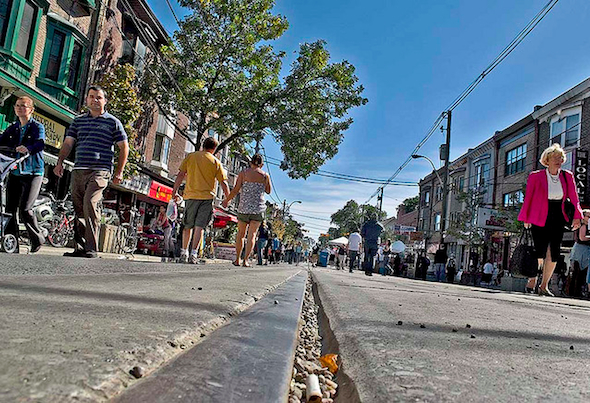 Roncesvalles
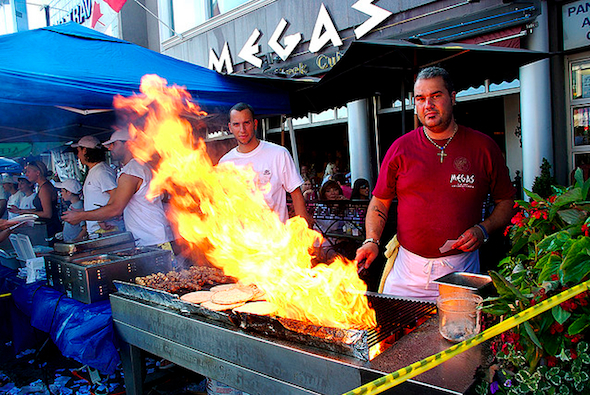 Danforth
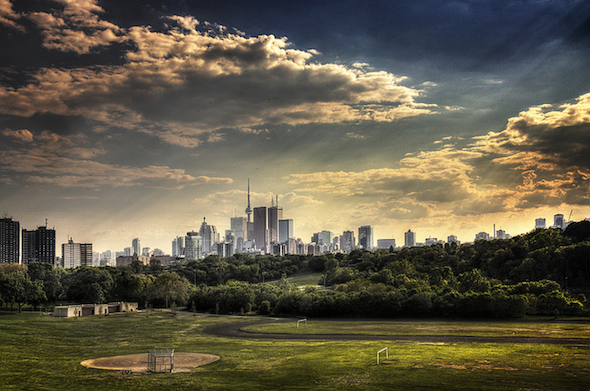 Broadview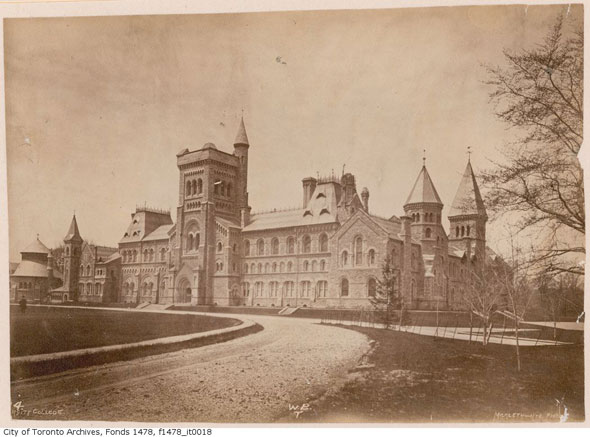
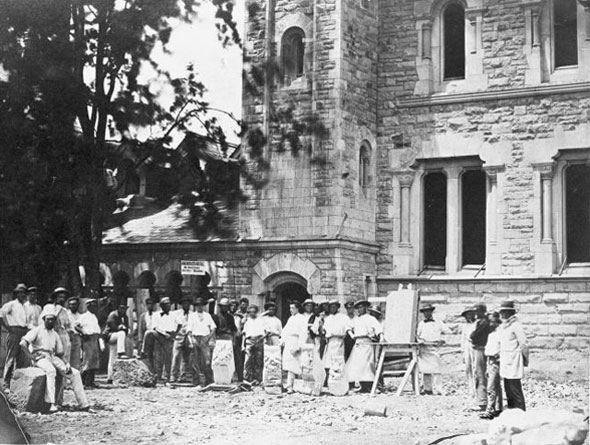 Cumberland's
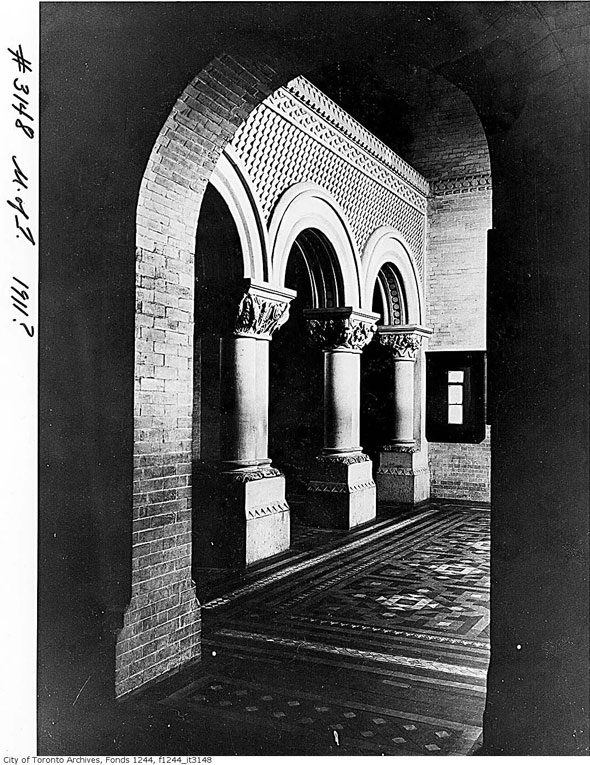
plans called for intricate stonework throughout the grand Norman
Romanesque style structure, and a team of stonemasons were brought on to
carve gargoyles and detailed patterns while builders worked on the main
structure.
Cumberland's
plans called for intricate stonework throughout the grand Norman
Romanesque style structure, and a team of stonemasons were brought on to
carve gargoyles and detailed patterns while builders worked on the main
structure.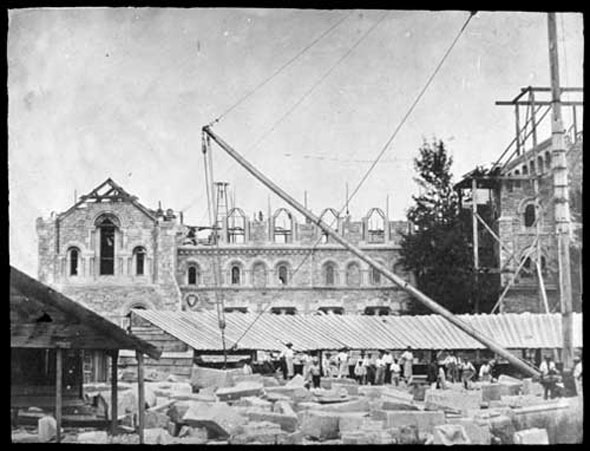
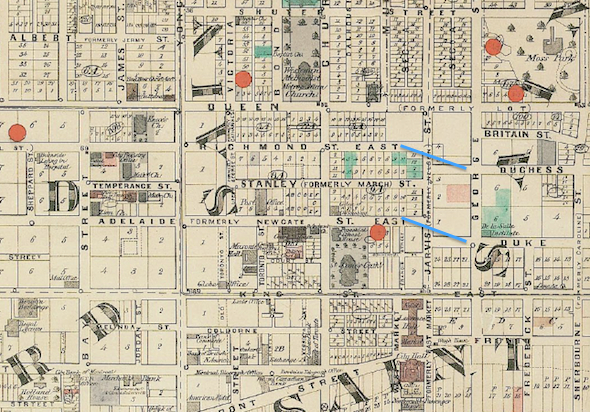
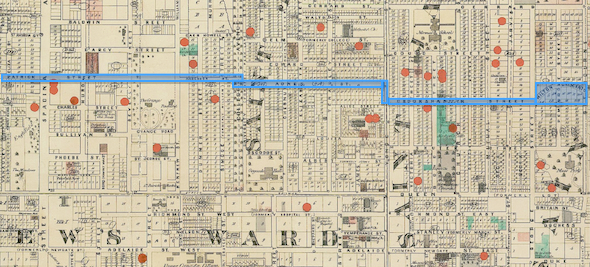
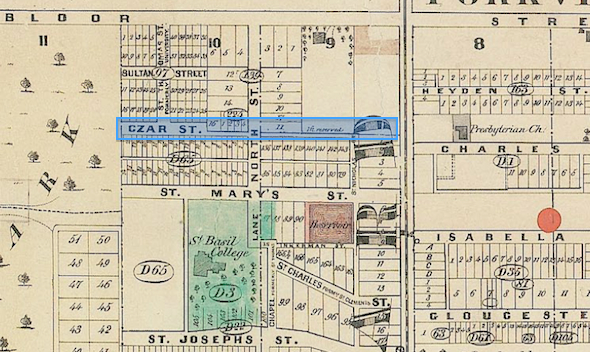 According to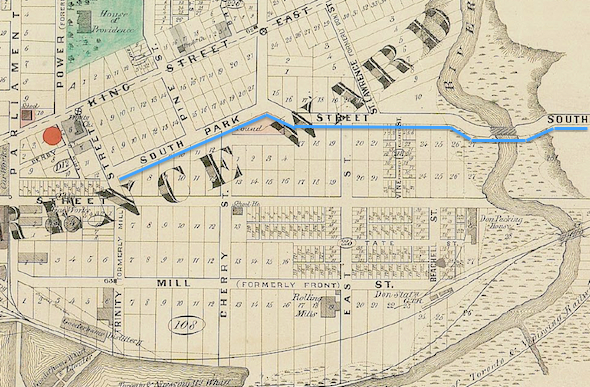
 The
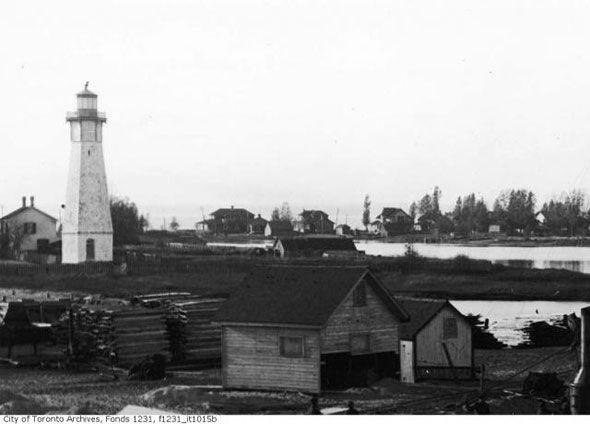
Gibraltar Point Lighthouse on the western tip of the Toronto Islands is
Toronto's oldest remaining structure. Built from a mix of Queenston and
Kingston stone, its guiding light helped ships navigate the city's
harbour and lake shoreline for more than 150 years.
The
Gibraltar Point Lighthouse on the western tip of the Toronto Islands is
Toronto's oldest remaining structure. Built from a mix of Queenston and
Kingston stone, its guiding light helped ships navigate the city's
harbour and lake shoreline for more than 150 years. 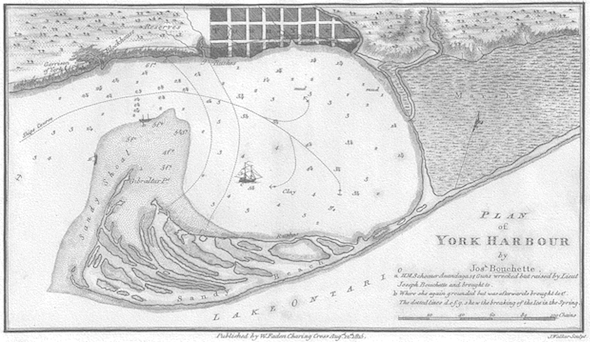 Started
in the early part of the 19th century, the Gibraltar Point Lighthouse
once stood on the western shore of Centre Island, then part of a sandbar
attached to the mainland. Upon its completion in 1808, the stone
structure was built to 52 metres - 25 metres lower than its present
height - and was powered by sperm oil, a flammable substance refined
from a liquid in the head of sperm whales.
Started
in the early part of the 19th century, the Gibraltar Point Lighthouse
once stood on the western shore of Centre Island, then part of a sandbar
attached to the mainland. Upon its completion in 1808, the stone
structure was built to 52 metres - 25 metres lower than its present
height - and was powered by sperm oil, a flammable substance refined
from a liquid in the head of sperm whales. 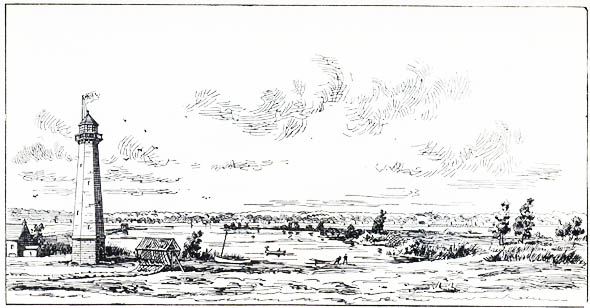 Either
Rademuller welcomed the hooch hunters and they began to drink or the
lighthouse keeper decided it he didn't want to liquor up the soldiers
and tried to turn them away. Either way - it was curtains for
Rademuller. The next day, a bloodstain on one of the wooden steps
leading up to the oil lamp was the only evidence of his untimely
departure.
Either
Rademuller welcomed the hooch hunters and they began to drink or the
lighthouse keeper decided it he didn't want to liquor up the soldiers
and tried to turn them away. Either way - it was curtains for
Rademuller. The next day, a bloodstain on one of the wooden steps
leading up to the oil lamp was the only evidence of his untimely
departure.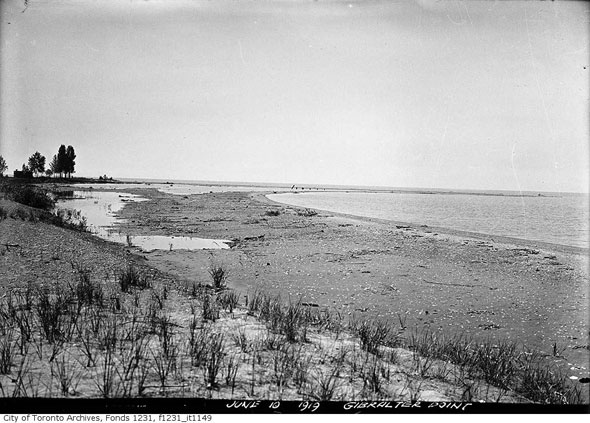 According
to newspaper reports published after the discovery of human remains, a
group of soldiers did stand trial for Rademuller's murder but none were
ever convicted. With that, the case went cold. Almost 200 years later
no-one is any the wiser about exactly what happened on that chilly
night. With all evidence lost to time, it's unlikely any answers will be
forthcoming.
According
to newspaper reports published after the discovery of human remains, a
group of soldiers did stand trial for Rademuller's murder but none were
ever convicted. With that, the case went cold. Almost 200 years later
no-one is any the wiser about exactly what happened on that chilly
night. With all evidence lost to time, it's unlikely any answers will be
forthcoming.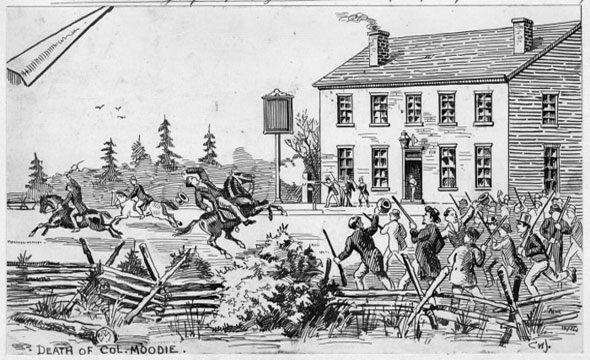 Postal
Station K at Yonge and Montgomery stands on important ground. The land
now occupied by one of Toronto's finest examples of art deco
architecture used to be home to
Postal
Station K at Yonge and Montgomery stands on important ground. The land
now occupied by one of Toronto's finest examples of art deco
architecture used to be home to 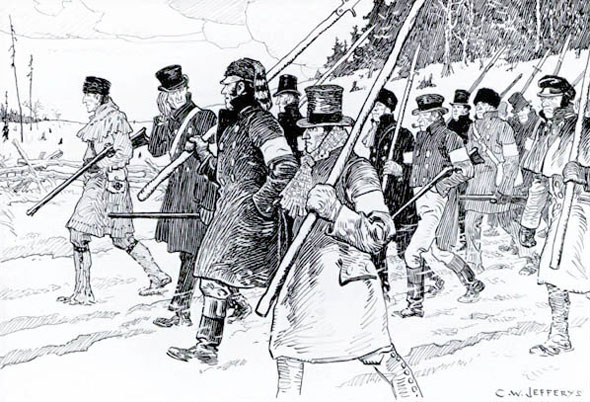 It was from this situation that
 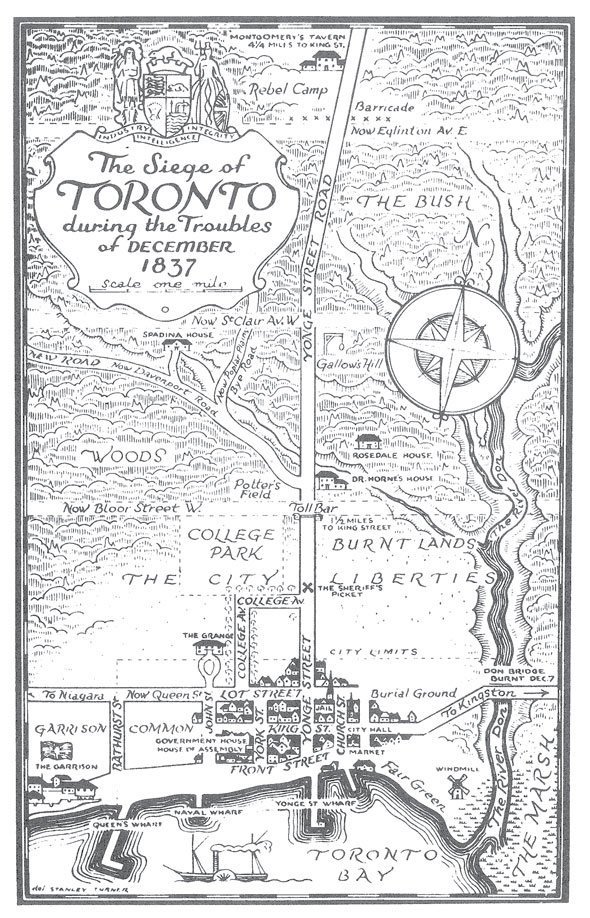 Mackenzie's troops moved south down Yonge street to city hall (then located at King and Jarvis) to acquire more weapons.
 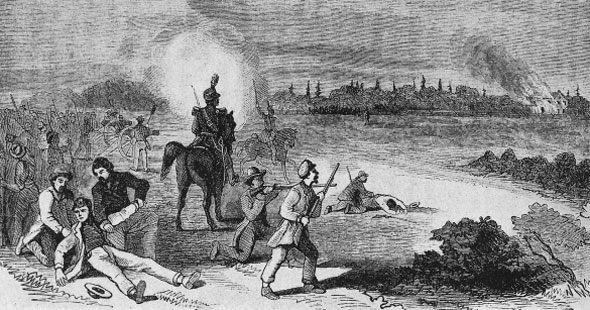 In
the aftermath, Peter Matthews and Samuel Lount, the diversionary pair,
were tried and hanged at the King Street Gaol for their crimes. Anthony
Van Egmond was captured at Montgomery's Tavern and held in a small cell
in Toronto where he developed pneumonia and suffered from malnutrition.
Despite transfer to a hospital, he died in January 1838.
In
the aftermath, Peter Matthews and Samuel Lount, the diversionary pair,
were tried and hanged at the King Street Gaol for their crimes. Anthony
Van Egmond was captured at Montgomery's Tavern and held in a small cell
in Toronto where he developed pneumonia and suffered from malnutrition.
Despite transfer to a hospital, he died in January 1838.