Saturday, February 26, 2022

Toronto area home prices up 453% since 1996, report finds


In 1996, the average price for a home in the GTA was $198,150. Today, it’s $1,095,475.

Skyrocketing prices over the last 25 years were fuelled by strong demand and limited supply, a new report by Re/Max Canada found. Since 1996, residential unit sales have doubled and the average price has increased by 453 per cent.

Between 1996 and 2021, more than two million homes were sold in the GTA, representing a $1.1 trillion boom for the real estate market.

“Performance of the GTA housing market over the 25-year period has been nothing short of remarkable,” said Christopher Alexander, president of Re/Max Canada, in a press release. This is especially so when considering this time period was characterized by the tech meltdown of 2000, 9/11, SARS, the Great Recession of 2008, Ontario’s Fair Housing Plan and the ongoing pandemic, he added.

While costs are shooting up, Alexander said the average annual growth rate is 7.08 per cent, which is the “best pocket” to be in as it’s not too strong and is still positive – meaning homeowners make “a bit of equity every year.”

“Anything over eight or nine per cent you’d have concerns over how long it will last,” Alexander said. “There have been so many stories on a real estate bubble but seven per cent is perfect. If you could hope for an appreciation number year-over-year that would be it.”

The report analyzed home buying activity in nine GTA regions – Toronto East, Toronto West, Toronto Central, Durham, Halton, Peel Region, York Region, and Simcoe and Dufferin counties.

It found land availability, especially in the city’s core and surrounding communities, waned. Low supply combined with migration, low interest rates, and affordability continue to impact the market in the GTA, the report said. 

While a handful of regions experienced triple-digit increases in sales, including Toronto Central, Halton Region, York Region, Simcoe County and Dufferin County, the entire GTA “reached new heights” for average sale prices.

A reason for increased sales in Halton, Durham, Peel and York regions is new construction — East Gwillimbury is the fastest growing municipality in Canada.

For the last 25 years, these regions offered more affordable options for those looking to purchase, the report says. First-time home buyers moved in and transportation infrastructure with the GO train and another 400-series highway developed.

But with less land to build on, high density housing has become a priority with more condominiums being built — condos in Mississauga represent one in every two sales, the report said.

Condo apartments and townhomes account for 76 per cent of sales in Central Toronto, according to data from the Toronto Regional Real Estate Board (TRREB).

In Toronto there isn’t much land available to buildup supply, said Cameron Forbes, a broker with Re/Max real estate.

To increase supply, the GTA needs to be creative and get “more flexible with municipal bylaws,” he said.

Ways to do this include, turning existing lots into two units, converting single family homes to multi-family dwellings, and demolish existing stock to increase density — the Imperial Oil building on St. Clair Avenue West — now the Imperial Plaza Condominiums — is a prime example, said Forbes.

With population growth in the GTA expected to explode, high demand will continue, Forbes said.

During the start of the pandemic immigration numbers fell with border closures. But the federal government is making up for the shortfall allowing more than 400,000 new permanent residents in 2021 — the most newcomers in a year in Canadian history. In 2022, the country is expecting 420,000 newcomers, and 430,000 in 2023.

Around 40 per cent will settle in the GTA, said Forbes, resulting in roughly 160,000 to 170,000 newcomers. That means 50,000 to 60,000 new homes will need to be constructed annually to accommodate them. For the last decade, 40,000 new homes have been built annually, he said.

“That’s a big reason for the driving cost,” Forbes added.

But there are still pockets of affordability, he said. Those wishing to enter the market can buy smaller apartments in the city or move further out in the GTA, or just outside of it, if looking for a family home. Because of the pandemic, more people have moved further out of the city centre, made possible by remote work, Forbes said.

Over the next 25 years housing prices are expected to rise at a greater rate than inflation due to population growth and the job market, with many flocking to the GTA for career prospects.

“The economy is strong in the GTA,” Forbes said.

Please share this

Toronto reveals which speed cameras are catching the most drivers

The City of Toronto released its most recent automated speed enforcement (ASE) data Friday, revealing the devices issued more than 50,000 tickets during the last quarter of 2021.

In a release issued Friday, the city said that a total of 54,391 tickets were issued between October and December near schools in “community safety zones.”

Of the more than 54,000 tickets issued, 15,687 were given out in October, with the most common location to receive one being Victoria Park Avenue near Tiago Avenue in Don Valley North.

November saw 11,516 tickets issued by the devices. The most common location was Kipling Avenue south of Snaresbrook Drive in Rexdale.

In December, ASE devices issued 27,188 tickets. The device on Royal York Road north of Coney Road issued the most tickets that month at 2,724 — or nearly 10 per cent of all tickets issued in the last quarter of the year.

While drivers may be subject to fines if ticketed by an ASE device, they do not incur the driver any demerit points and do not affect a person’s driving record.

“These numbers continue to show that speed cameras are an important tool in our Vision Zero toolbox that increase enforcement against those choosing to break the law,” Toronto mayor John Tory said in the statement.

Tory said that the city can expect more speed cameras to be deployed, along with other measures such as “road and intersection redesigns, speed limit reductions, the installation of more head start pedestrian signals and increased traffic enforcement by Toronto Police.”

As of January, the city’s ASE devices have been installed at a fifth round of locations. Signs have been posted at all locations to warn drivers, the city says.

Since the city installed the ASE devices in July 2020, they say 392 Part III charges, meaning they need to be seen in a court, have been laid. The highest excess speed charge, according to the city, was laid in Etobicoke North when a driver was clocked driving 146 km/h in a 50 km/h speed limit zone on Martin Grove Road north of Garfella Drive.

Please share this

Saturday, February 19, 2022

History of the Yorkdale Shopping Centre in Toronto


When visiting Yorkdale Shopping Centre today, I find it difficult to realize that it is the same plaza that I experienced when it opened in 1964.

It has been greatly expanded during the past five decades, and though the original sections of the mall survive, they are almost unrecognizable.

The story of Yorkdale is a vital part of the history of retailing in the Toronto area. It was Canada's first indoor mall, an improvement for shoppers that particularly suited the Canadian climate. It allowed people to park, walk inside an enclosed structure, and access shops from its interior.

Yorkdale was built in an era when many suburbanites shopped at "strip malls," constructed to accommodate those living in communities surrounding the city that owned cars.

The first strip mall in the Toronto area was at Bayview and Eglinton. Many such malls still exist today, consisting of shops built in one or more rows, their front doors facing an outdoor parking lot. Customers enter the stores directly from the parking lots.

Strip malls began appearing after the Second World War, when many Torontonians were relocating from the city’s urban core to the suburbs.

They were following a dream of owning larger homes on more generous-size building lots. Some of the houses they left behind in the inner city were purchased or rented by the immigrants arriving in the city.

Relocating to the suburbs was facilitated by the post-war's booming economy, which placed automobile prices within the reach of more and more Canadians.

Vehicle sales skyrocketed, creating the beginning of a "car-dominated society." It allowed people to travel greater distances to shop or attend a movie.

Eaton's was one of the first to realize the potential of meeting the needs of the increasing number of suburbanites.

Prior to the Second World War, the company's department stores were in the downtown core. Aware of the expansion in population in the suburbs, in 1954, for the price $1.4 million, Eaton's bought 100 acres of land located to the northwest of the city. The intent was to erect a large shopping mall on the site.

Eaton's knew that it needed another major retailer to join in the venture. As a result, in 1961, the company offered to sell the Robert Simpson Company one half of the site if it joined in the enterprise.

However, Simpsons wanted only 19 acres, on the west side of the property, and stipulated that the price must include sewage, water connections and roadways. Eaton's agreed and spent $1 million to satisfy the terms of the deal.

The land where Yorkdale was to be erected was cleared and ready for construction by the spring of 1962, the work commencing during the early-summer of that year.
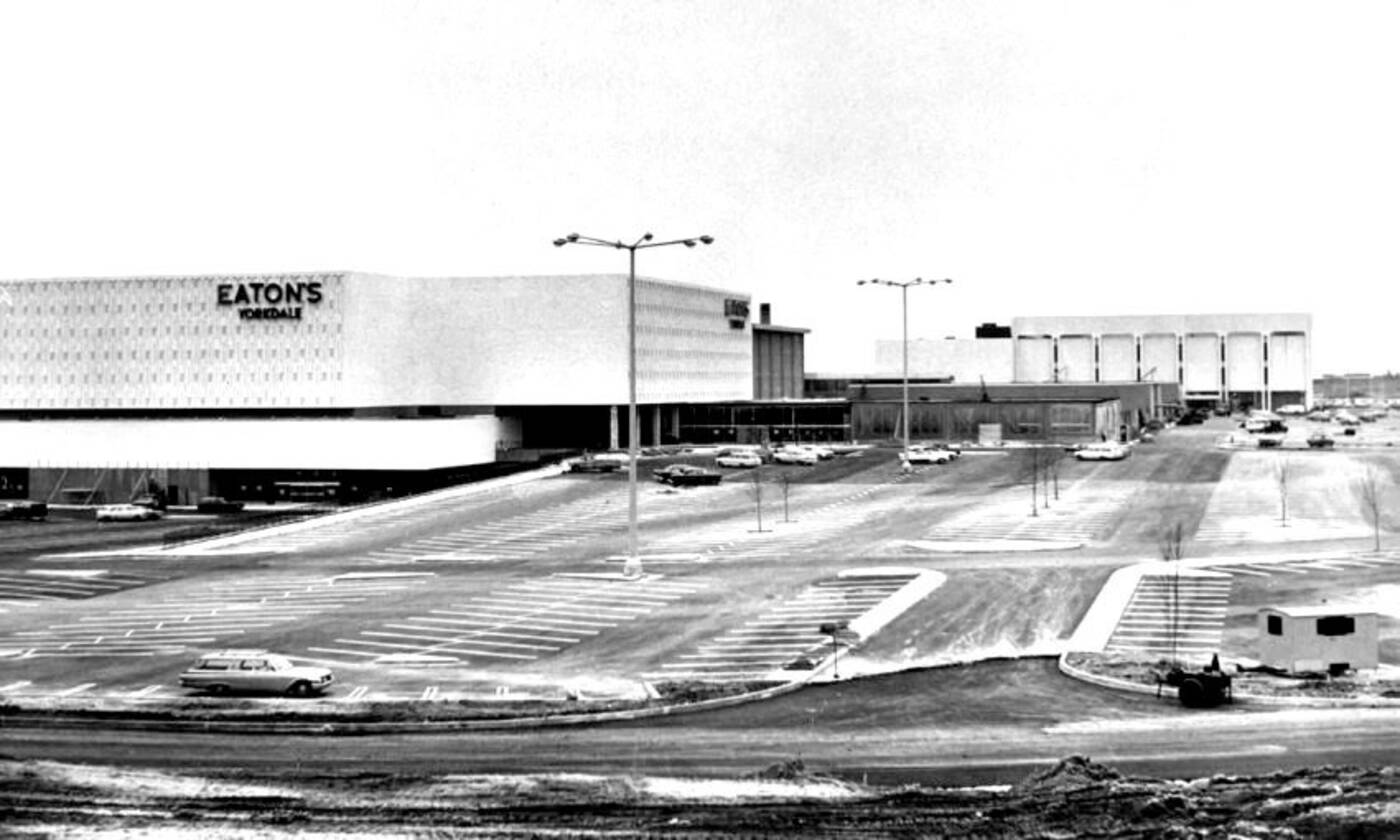
yorkdale shopping centre

View looking west in March 1964 of Yorkdale, the Eaton’s Store in the foreground and Simpsons in the distance.

Everything was completed by February 1964. As opening day drew near, John David Eaton insisted that the mall close at 5:30 or 6 p.m., similar to its downtown stores.

However, the smaller retailers in the project strongly objected, since they wanted to remain open until 9:30 p.m.. John David finally agreed, after he was assured that employees would not be required to work longer hours than they wanted.

On Sunday, February 16, 1964, long lines of customers gathered at the various entrances to Yorkdale, waiting for the 9:30 a.m. opening. By mid-morning, its four parking lots (6,500 spaces) were completely filled.

At 2:30 p.m., drivers were scouring the lots trying to find a place to park. By the end of the day, the Star newspaper estimated that 100,000 shoppers had crammed into the mall.
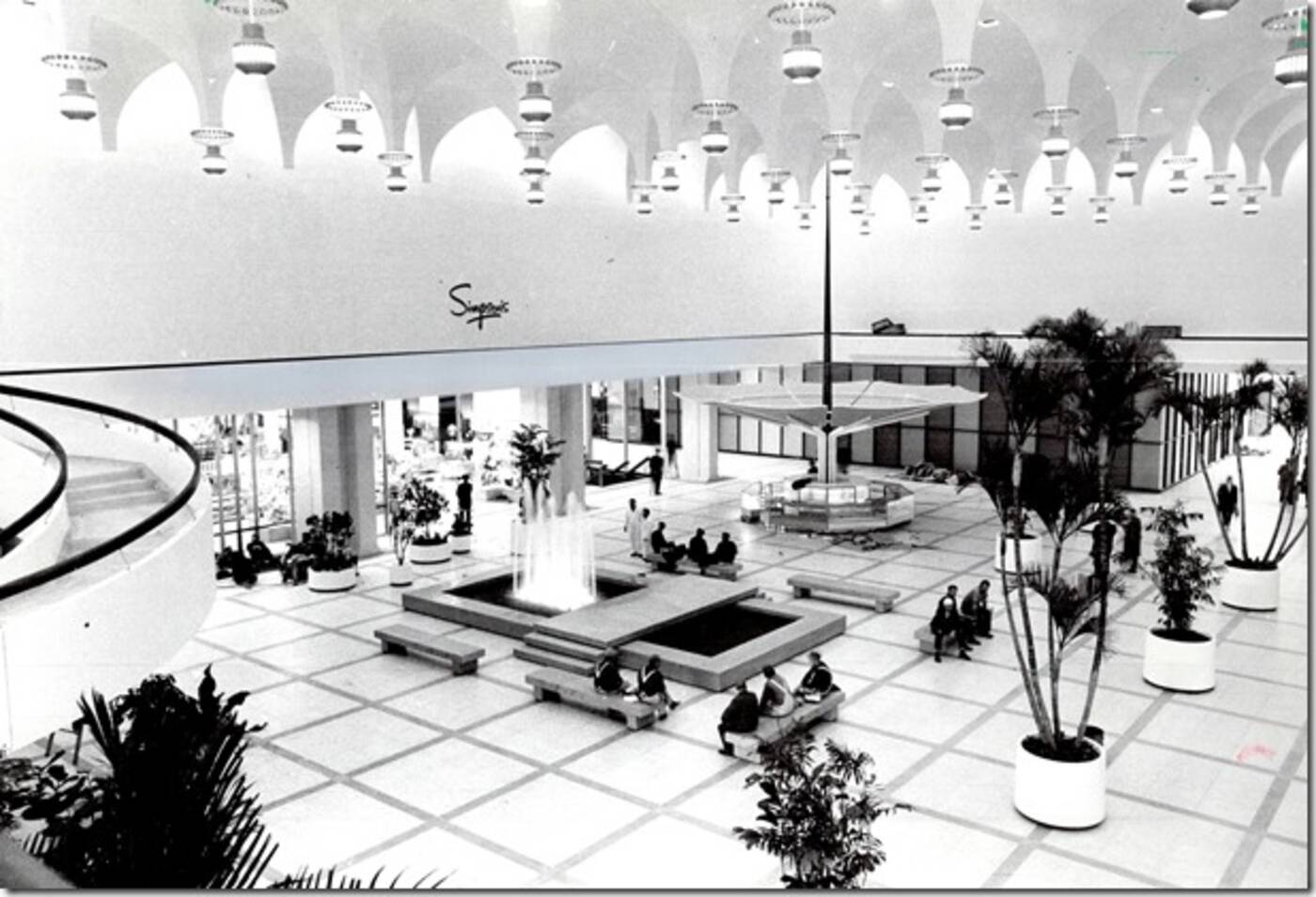
yorkdale shopping centre

View of the three-storey court on the south side of the Simpsons store. The curved staircase on the left leads to Simpsons Court restaurant. The photo is undated, but it is likely c. 1964. Toronto Public Library, tspa 0014666f.

Yorkdale had over 1.2 million square feet of space, containing 61 retail shops, several restaurants, and multiple services.

The Dominion (today their stores are named Metro) was the largest the company had ever built, containing 17 checkout counters.

The week the plaza opened, some of the shops were not yet occupied, but it was still an impressive sight. For a short period of time, Yorkdale was the largest indoor shopping mall in the world. Though its size was impressive, its importance was perhaps due to another factor.

Yorkdale set the pattern for future malls across Canada. It demonstrated the advantages of locating malls near transportation hubs, which allowed shoppers access from nearby arterial roadways.

As well, it showed that if retail enterprises of this size were to be successful, more than one large-scale store was required. Yorkdale actually possessed three—Simpsons on its west side, Eaton's on its east, and a Dominion Store on the south.

It was the first time that Canada's two largest department store chains—Eaton's and Simpsons—were under one roof. This was accomplished, even though they had been competitors across Canada for many decades.

Prior to the opening of Yorkdale, many people living in the suburbs had continued to shop downtown or visited local strip malls. Neither of these options was truly convenient.

When suburbanites drove downtown, even then, parking was becoming a nightmare. Strip malls were also at a disadvantage as they were exposed to the vagaries of the Canadian weather.

The appeal of Yorkdale was obvious. It offered numerous retail outlets that were closer to home than the downtown, were impervious to the weather, and possessed plenteous free parking.

Torontonians were able to drive to the mall to shop indoors, enjoy a meal or snack, and attend a movie theatre, all at one destination.

The configuration of the Yorkdale Plaza was basically an "L-shape." The top of the "L", the bottom, and elbow of the "L" were anchored by one of the large stores.

The corridors that connected the big stores resembled indoor shopping streets, one-third of a mile long, 40 feet wide, the ceiling above them two storeys in height.

The three large retailers had large open spaces in front of them, similar to a courtyard or piazza, which were three-storeys high.

Since the mall was climate controlled, shoppers were able to enjoy strolling along the wide avenue-like areas and courtyards in comfort, immune to the weather outside.

The curtains in the spacious windows, located high above the shops, could be automatically adjusted to allow the proper amount of light to enter the interior of the plaza.

Other pleasing features were the two large fountains as well as numerous 20-foot trees, some of them palm trees.

In 1964, Yorkdale had many popular stores — Reitman's, Collyer Shoes, Peoples Credit Jewellers, Laura Secord Candies, Hunts Bakery, Jordan Wines, Henry Birks and Sons Jewellers, Jack Frasers Men's and Boy's Wear, Toy World, Kresge's and Eddie Black's Camera Store.

I vividly remember Coleman's Delicatessen and its delicious corned beef sandwiches, the restaurant located near the Dominion Store.

There was a Smitty's Pancake House, which also served small steaks (the site later became "Obies"). The Encore Noshery was reputed to be the largest restaurant in Canada in a shopping centre.

The beauty parlour, "Ponytails," which catered to the needs of small children, had hobbyhorses instead of regular chairs.

Yorkdale had a cinema with two auditoriums, with combined seating for 1200 patrons. I remember seeing Mel Brook's zany film Blazing Saddles at the Yorkdale Cinema in 1974.

It was an afternoon matinee, attended mostly by seniors. I was one of the few persons in the audience that did not have purple-tinted hair. As a matter of fact, even then, I did not have much hair at all.

As the screening progressed, I discovered that I was also one of the few that was laughing. I admit that the humour was a little off-colour— typically Mel Brooks.

Eaton's and Simpsons both had restaurants. The Simpson's Court restaurant overlooked the cathedral-like interior courtyard with its three-storey ceiling.

I remember visiting it numerous times for lunch, usually ordering the daily special of soup, chicken-pot pie, and a salad.

Eaton's Vista restaurant was on the second floor, at the northwest corner of the store, overlooking the mall where there was a fountain. In the evenings, the Vista featured all-you-can-eat buffet, which included roast beef.

I sometimes visited it on a Friday for dinner. I seem to remember that Eaton's restaurant was later renamed "The Loft," but I cannot find any proof of this. Memory sometimes plays strange tricks.

Though Yorkdale was located quite a distance north of the downtown, it was connected by several arterial roadways—Highway 401, Wilson Avenue, and Dufferin Street.

Market research conducted by Eaton's had shown that the mall was likely to attract shoppers from within a 30-minute drive. This meant that people as far away as Brampton and Whitby could easily drive to Yorkdale, as well as those living north of Bloor Street.

This was a potential market of almost a million shoppers. In 1966, the location became even more advantageous when the interchange at the Allen Expressway and the 401 was completed, and in January 1978, when the mall was connected to the University/Yonge subway line.

The architect of the Yorkdale Mall and the Eaton's Store was John Graham Consultants. The store Graham created for Eaton's had a striking exterior, with off-white bricks containing three-dimensional patterns that accented the vertical elements of the design.

Another added feature of the plaza was the underground truck tunnel that delivered goods to the retail outlets. The gigantic Dominion Store featured an underground conveyor belt that delivered customers' purchases to a station in the south-west parking lot, where they could pick up their groceries.
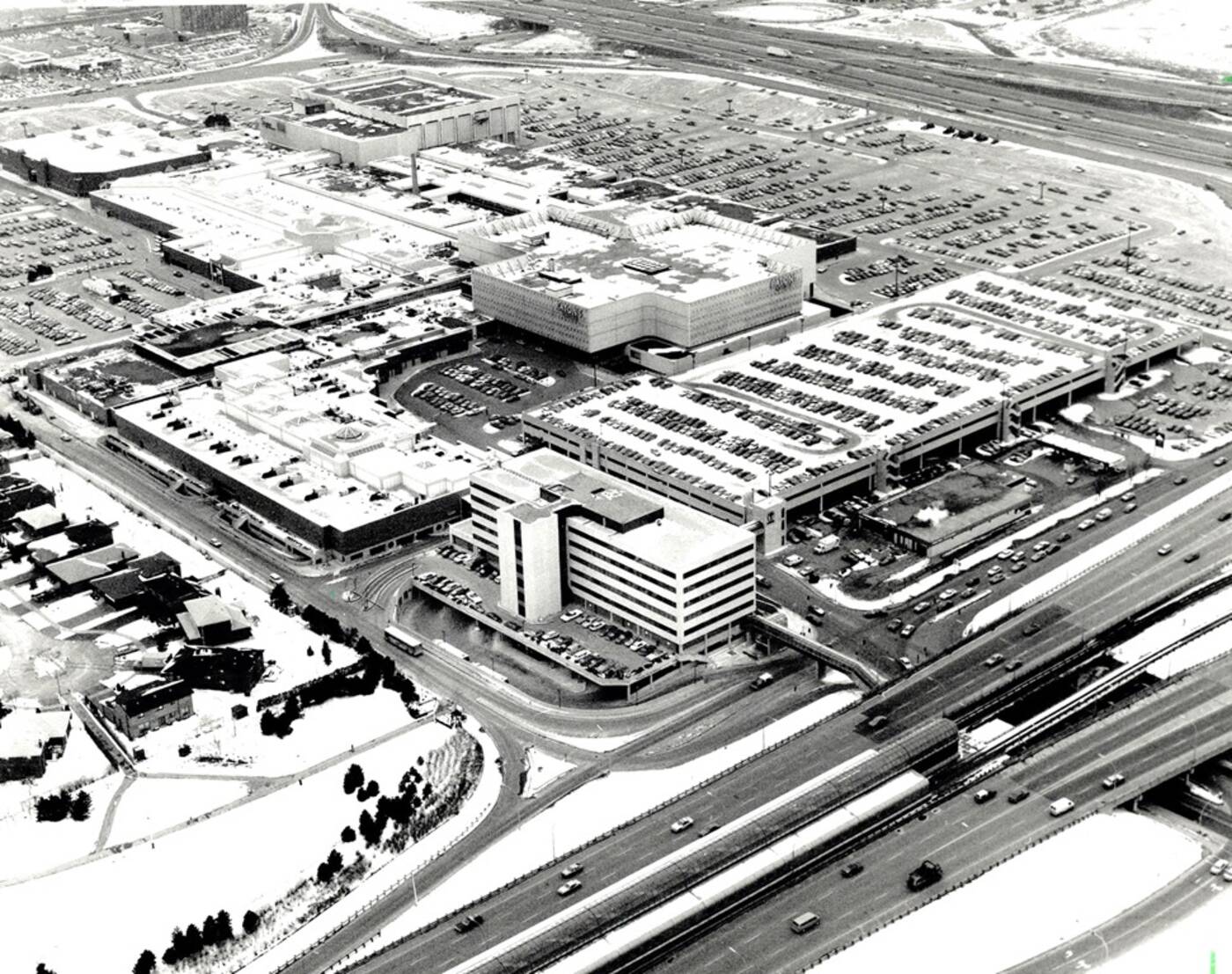
yorkdale shopping centre

Aerial view of Yorkdale in 1989, looking toward the the northwest. The Eaton’s and Simpsons stores are visible, as well as the 1984 extension added to the plaza. Toronto Public Library, tspa 0014664.

John B. Parkin Associates were hired to design the Simpsons store, the architect within the firm who was assigned the work being John Andrews, a Harvard-educated Australian.

During the years ahead, Andrews opened his own firm and won the contracts for the University of Toronto's Scarborough Campus and the CN Tower.

I recall attending Boxing Day sales at Yorkdale during the 1970s; I visited early in the morning to avoid the enormous crowds, even though compared to today, they were considerably smaller.

Yorkdale was where I first experienced the frustration of losing my automobile in a parking lot. I soon learned to memorize the row or section number where it was located.

During the 1980s, I visited the mall to attend the Yorkdale Antique Market. It was usually held each February and continued consecutively for three or four years.

It was a large display, which fully occupied all of the "L"-shaped space. The mall also held fashion and automobile shows.

On frigid winter days, for exercise, I drove to the mall in the early morning to walk within the enclosed area. When the shops opened, I enjoyed a coffee and then drove home.
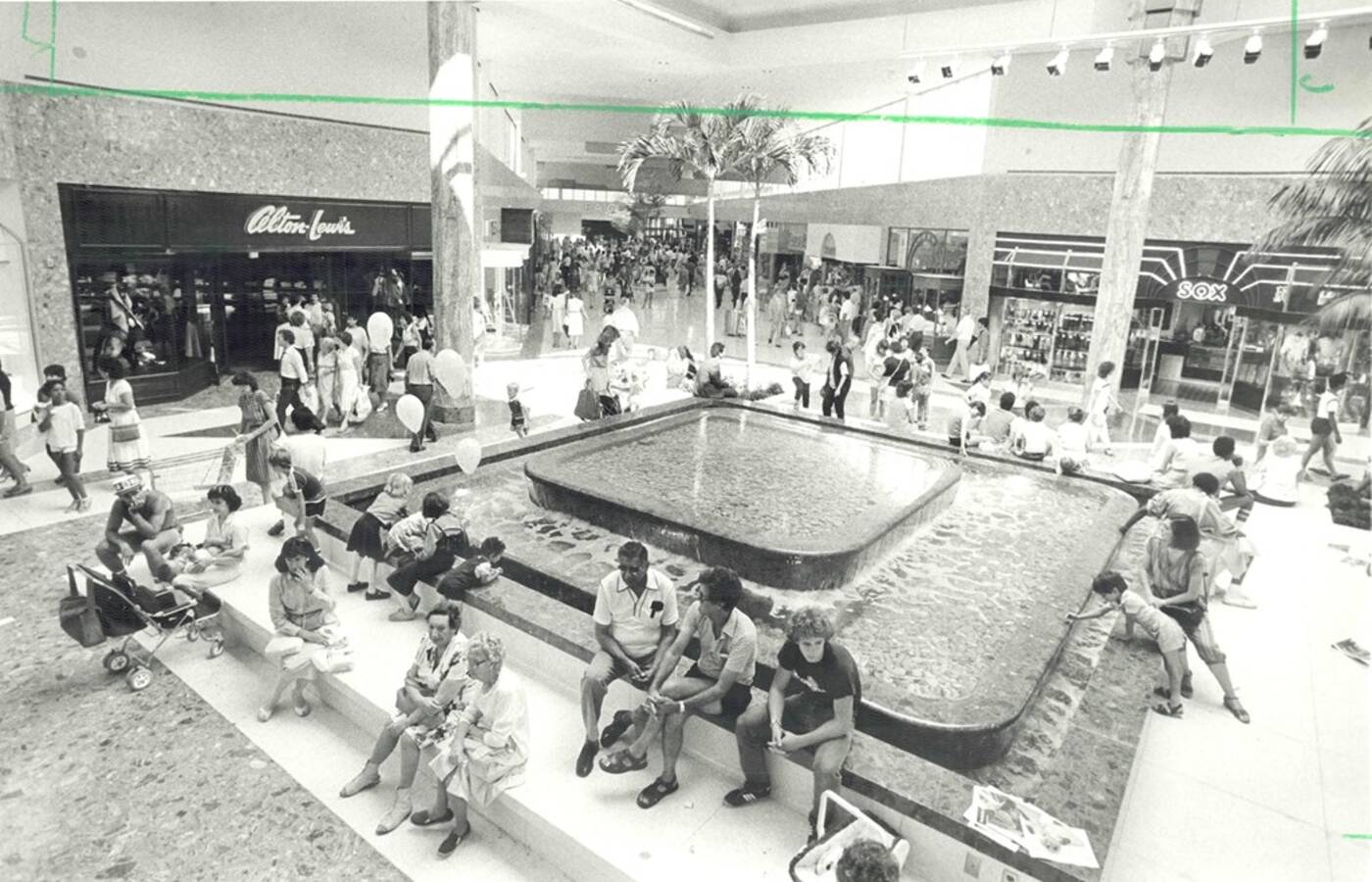
yorkdale shopping centre

Yorkdale after the new section opened in 1984. Toronto Public Library, 0014662.

In 1984, Yorkdale was expanded by an additional 153,000 square feet, with 75 new stores, at a cost of $14 million.

In 1991, Sears Department store opened in the plaza. In 1999, the Rainforest Cafe began serving food in a tropical atmosphere (it closed in 2014).

In 2012, an addition was erected on the southwest side of Yorkdale. It included a relocated and expanded Holt Renfrew Store, situated where the Dominion store had been.

In 2015, the Sears Store on the west side of the plaza was demolished and replaced with the 70,000 square-foot Restoration Hardware, which opened in 2017. It resembled an impressive mansion with indoor and outdoor shops, a courtyard cafe and rooftop conservatory/park.

In 2016, another section was built on the east side, with a Nordtrom Department Store, Uniqlo, as well as 30 more retailers.
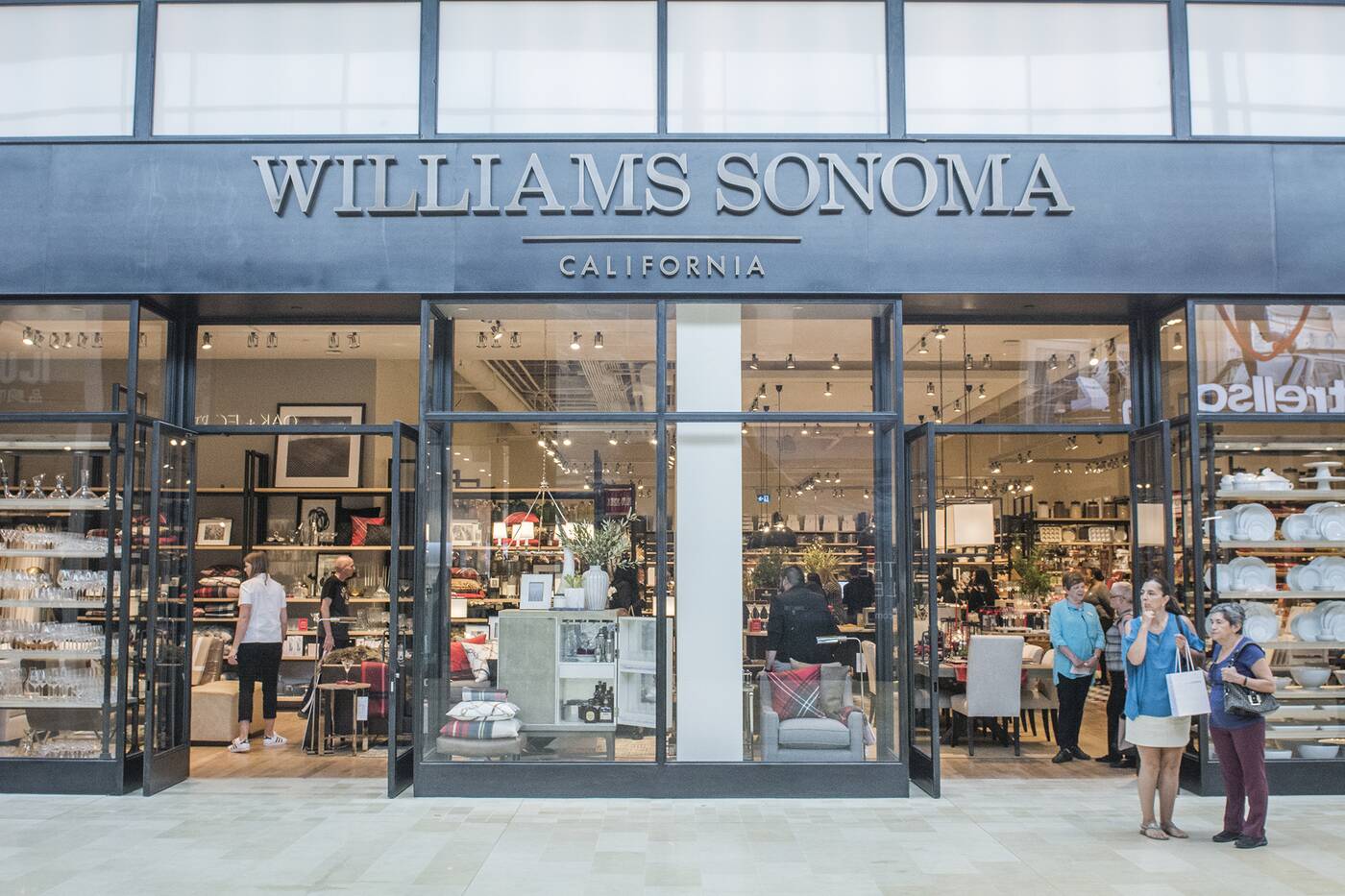
yorkdale shopping centre

Williams Sonoma was one of the shops that opened during the 2016 expansion. Photo by Hector Vasquez.

In 2017, the The Cheesecake Factory restaurant commenced operation. More expansions have continued since.

Visiting Yorkdale in recent times, I lament the loss of the fountains and the large trees, particularly the palm trees. However, I thought that the massive skylights in the ceilings of the new sections were amazing.

Creative in design, they allow plenteous daylight to enter the interior walking areas. In some instances, I felt I was strolling up the nave of a great cathedral.

Please share this

Tuesday, January 18, 2022

Rodger Kotanko: Toronto police killed Ontario gunsmith in raid over handguns with scrubbed serial numbers, search warrant docs reveal

Toronto police killed Ontario gunsmith in raid over handguns with scrubbed serial numbers, search warrant docs reveal

Police raided Rodger Kotanko’s Simcoe, Ont., workshop over two seized handguns they believed he had transferred after illegally removing their serial numbers. On Tuesday, Kotanko’s family launched a $23 million lawsuit arguing in part that this claim makes no sense.


Rodger Kotanko had just returned to his rural home and workshop in Simcoe, Ont., a short drive west of Port Dover, near Lake Erie, after doing some shopping with his wife, Jessie. She’d just failed a driver’s test and needed some cheering up.

The gunsmith’s workshop, a detached garage, was where Kotanko tended to the firearms of loyal customers — police officers and soldiers among them. The garage sits at the end of a driveway, lined on one side during summer with towering sunflower plants Kotanko would never see again.

On Nov. 3, just before noon, a customer was waiting as Kotanko made his way into the workshop, likely unaware Toronto police were watching him.

Until now, what was known through official channels through Special Investigations Unit press releases is that officers were there to execute a search warrant, and Kotanko was shot dead by one officer. Seven other officers have been designated as witnesses to the events that have raised many questions in a community where Kotanko was respected.

Among them, what were Toronto police so interested in that they had honed in on a 70-year-old father of three, some two hours and a great lake away from the big city?

Search warrant documents unsealed at the request of the media reveal why.

In short, police believed Kotanko had milled off the serial numbers on two restricted handguns registered to his company, and, without authorization, transferred their ownership, with the guns ultimately ending up in the hands of two young Toronto residents.

Kotanko’s family has also obtained the search warrant documents, and on Tuesday announced a $23 million wrongful death lawsuit, alleging, the family said in a press release, that Toronto police “unlawfully executed a search warrant and used excessive force ... in a military-style take down,” shooting him four times.

The family alleges in their lawsuit that the search warrant was not presented on the day of the raid, that the information used to get the warrant “was obtained using irrelevant and prejudicial information” and was “designed to undermine (Kotanko’s) credibility and standing before the judge or justice of the peace and the public.”

Police “recklessly targeted” Kotanko and the operation was “negligently planned,” the family said in the press release.

The family also alleges Kotanko’s wife was unlawfully detained and restrained by police and prevented from “providing him with comfort after he was shot and was dying.”

The family’s statement of claim, filed this week, names five unidentified officers with the Toronto police Integrated Gun and Gang Task Force, an inspector in charge of the task force, Chief James Ramer and the Toronto Police Services Board as defendants.

“The Kotanko family is holding Toronto police to account, so this doesn’t happen to someone else,” the family’s lawyer, Michael Smitiuch, said in the press release. “Rodger Kotanko wasn’t able to defend himself, or his reputation, but his family will.”

The allegations have not been proven in court and police have not yet filed a defence document.

Toronto police on Tuesday acknowledged receiving a copy of the statement of claim from the media but a police response was not immediately available. The police board did not immediately respond Tuesday to a request for comment.

Once a civilian-led SIU investigation is underway, police typically do not comment on a case.

The 28-page search warrant application, called an “information to obtain,” or ITO — a document put before a judge to seek authorization for a search warrant — offers a very lightly redacted account of the reasons for the police raid. The media is scheduled to appear in court in late February to contest a police request to have names of officers and civilian employees redacted from the materials.

Otherwise, the media is free to report its contents, which include details of the investigation that led police to Rodger Kotanko’s garage.

Rodger Kotanko's locked garage. The gunsmith was working in the garage when he was shot by Toronto police executing a warrant.


The handguns

In late August 2021, a young person crashed a stolen Mercedes at Victoria Park Road and Finch Avenue East in Toronto, resulting in an arrest and the seizure of a Norinco 1911A1 .45 calibre handgun, according to the ITO.

Two months later, on Oct. 10, officers with North Bay Police Service were investigating a “possible kidnapping” when they pulled over a vehicle with three males, all with Toronto addresses. One of the males, a youth, was allegedly found to be in possession of the same brand of handgun.

In both cases, the document states, the guns’ serial numbers appeared to have been removed by a milling machine, as had other markings on the firearms’ slides.

According to the ITO, police were able to restore the serial numbers, finding the weapons had been registered to D.A.R.K. International Trading Company, one of two businesses owned by Kotanko, the other business being R.K. Custom Guns.

The markings on the slides were also restored to reveal cursive “RK” letters on both, and “RK Custom” on the North Bay gun.

A gun ‘savant’

In 1970, when Rodger Kotanko was just 19, he got a criminal record for “possessing a narcotic” for the purposes of trafficking and for possessing a “restricted unregistered firearm,” for which he served nine months, according to police database searches detailed in the ITO.

After that, Kotanko had no other criminal record.

For its part, Kotanko’s family says the “narcotic” was cannabis and the gun, a black-powder gun Kotanko had made — the kind, said brother Jeff Kotanko, that you would see in “Pirates of the Caribbean” movies.

“I’m not even sure the gun fired,” said younger sister Suzanne Kantor.

Kotanko had been attending forestry school at the time. The charges interrupted that. But, he clearly had a gift with firearms.

Kotanko gained a reputation for custom builds and reliability. He could charge as much as $7,000 for a custom handgun, and customers lined up for them, including competitive shooters and military clients, said Jeff, who also worked with this brother.

“He was a gun savant,” he said.

Rodger Kotanko also loved adventure, and for a time was a competitive skydiver and taught at the Simcoe airstrip.

Lately, Kotanko — who Kantor said stood maybe five-foot-six, moved “like a sloth,” and loved to talk — was working on his diet. He lived for family and family dinners, including Christmas time. While wife Jessie, who came to Canada from China four years ago, tended to the garden behind the house, Kotanko would can and make pickles of whatever Jessie grew.

“He’s not someone that you would even fear. He’s a 70-year-old man who was on the never-ending diet trying to live healthy, had had bypass heart surgery,” said Kantor. “He loved pickled beets. He loved pickled peppers. The hotter the peppers, the better they were.”

Rodger Kotanko was shot and killed on Nov. 3, 2021, in a Toronto police raid on his Simcoe, Ont., home and gunsmith workshop.


Twenty-five handguns

According to the police ITO, Kotanko — an experienced and licensed gunsmith with a certificate to acquire non-restricted, restricted and prohibited firearms — notified the Ontario Chief Firearms Office in March 2009 that he was importing 25 Norinco 1911A1 .45 calibre pistol frames that he would make into working firearms, with new serial numbers, which he properly reported.

The guns’ serial numbers ranged from RKC01 to RKC025. The “RKC” stood for Rodger Kotanko Custom, and cursive branding was also added to the slides.

After the two seizures, police checks with the firearms office showed 14 of the 25 weapons were still registered to D.A.R.K., including the seized guns, which bore the serial numbers RKC04 and RKC014, and were to be stored at Kotanko’s address.

In the search warrant material, the officer who prepared the document noted the length of Kotanko’s career in firearms and that he had “legally bought, sold, manufactured and successfully transferred hundreds of firearms over the years,” and that he would well know all the rules around reporting of lost or stolen firearms and transfers.

Also, being a gunsmith, the officer said Kotanko would have access to tools, including possibly a milling machine. The officer also believed Kotanko “would also be one of the few people who would have an interest in milling off the name of his company from a firearm sold to the criminal market, along with the serial number.”

Based on that, the officer formed the belief that Kotanko transferred the guns without authorization. That belief formed the basis for the search warrant. On Nov. 3, Ontario court judge James Chaffe authorized a three-week period to search Kotanko’s home, beginning that same day.

Kotanko’s brother Jeff questions the logic of police thinking. First, he said, Kotanko, of all people, would have known that you cannot effectively remove a serial number unless you remove a chunk of metal. Second, why would his brother create a crime gun when he can fetch $7,000 for a custom gun?

Jeff’s theory is that the handguns had recently been legally transferred and that the firearm computers had not caught up to the transactions. He recalled his brother mentioning a man was looking to buy a pair of the handguns for him and his son. A logbook Kotanko kept was seized in the raid and would be where his brother kept information about authorized transfers, said Jeff.

As well, every couple of years, said Jeff, the Chief Firearms Officer conducted checks to ensure all of the many firearms Kotanko kept on-site were accounted for. The last check, conducted pre-pandemic, found nothing amiss, said Jeff.

The raid

Kotanko’s wife failed her driver’s licence test on the morning of the raid. Kotanko had bought her a car to help her socialize, and he was working on his Cantonese. Disappointed by the failure, the two went out shopping.

While out, a customer called and said he was coming by the shop.

Police were nearby upon Kotanko’s return home and the customer and Kotanko were in the garage when the raid went down. Police, note the family in their statement of claim, arrived with their own ambulance in tow.

The gunsmith was killed in a place where Kotanko, in the words of sister Kantor, loved to “shoot the s---” with customers over Tim Hortons coffee while he worked on their guns. It was also a pace where he had loved to debate with Kantor’s daughter, who had died suddenly of a heart problem just nine months earlier.

Among the family’s questions: Why wait until Kotanko had returned to his shop, where his hands are on guns almost all the time?

“We don’t get it,” said Kantor. “It wasn’t like he was some evil person. He just wasn’t. We just want answers. It’s terrifying to think that this can happen.”

The SIU investigation into the killing continues. 

Please share this

Sunday, December 26, 2021

Caiwan Cunningham, 20, was gunned Christmas Eve in the stairwell of a Lawrence Heights building on Friday, Dec. 24, 2021


A 20-year-old man was shot to death Christmas Eve in the stairwell of a Lawrence Heights building.

Toronto Police responded to the building in the area of Replin and Flemington Rds. — near Allen Rd. and Lawrence Ave. W. — around 9:15 p.m. after receiving reports of shots fired.

A man in his 20s was found suffering from gunshot wounds and was taken to hospital where he died.

“This shooting is now a homicide,” Const. Dave Hopkinson said Saturday.

The dead man has been identified as Caiwan Cunningham.

He is the city’s 83rd murder victim of the year and the 45th killed by a firearm.

Police said there are reports that suspects were seen fleeing the area traveling south on foot.

“This is an active investigation and police remain in the area carrying out inquiries to establish the full circumstances of the occurrence,” Homicide Det.-Sgt. Brandon Price said in a statement released Saturday.

“Anyone who may have seen Caiwan Cunningham, have heard, or witnessed anything suspicious, is urged to contact Homicide investigators,” he added.

Another man was wounded in a shooting at a Brampton house party on Christmas Eve.

Peel Regional police say the gun violence occurred in the area of Williams Pkwy. and Chinguacousy Rd. around 6 p.m. on Friday.

Officers arrived on scene and located the victim. He was transported to a local hospital.

There was no suspect information immediately available.

Please share this

Saturday, December 25, 2021

DEADLY CHRISTMAS: Man gunned down in Lawrence Heights, Toronto's 83rd homicide of 2021

A man was shot to death Christmas Eve in the stairwell of a Lawrence Heights building.

Toronto Police responded to the building in the area of Replin and Flemington Rds. — near Allen Rd. and Lawrence Ave. W. — around 9:15 p.m. after receiving reports of shots fired.

A man in his 20s was found suffering from gunshot wounds and was taken to hospital where he died.

“This shooting is now a homicide,” Const. Dave Hopkinson said Saturday.

The dead man, whose name was not immediately released, is the city’s 83rd murder victim of the year and the 45th killed by a firearm.

There are reports that suspects were seen fleeing the area traveling south on foot, Hopkinson said.

Another shooting took place at 8 a.m. on Christmas Day at St Clair Ave. W. and Hilton Ave. — just east of Bathurst St.

Police say a car struck some other cars, fled the scene, and officers subsequently located a suspect armed with a gun in a vehicle in an underground parking lot.

Officers struggled with the man before taking him into custody.

In another case, a man was wounded in a shooting at a house party in the area of Williams Pkwy. and Chinguacousy Rd. around 6 p.m. on Friday.

Police on scene located the victim and he was transported to a local hospital.

There was no suspect information.

Please share this

Friday, December 24, 2021

Jamie Hagley, 21 murdered close to intersection of Grandravine Drive and Driftwood Avenue of Toronto


Some of the doorways at the townhome complex have Christmas decoration in front of  them. One of them had a pile of sawdust in front of it marking the spot where a 21-year-old man was shot and killed.

“Bang bang bang.  Three shots,” is what one man described he heard.

Fear of the violence is why he did not wish to share his name as he walked with his family from his niece’s townhouse – passing the scene of the shooting – and into a nearby parking lot.

“I was watching TV with him,” he said referring to one of the children he walked with.

“That’s gunshots,” he recalled saying at the time. “And it is pretty close.”

It was about four units away.

Police announced that Thursday at about 9:37 p.m., they responded to a call about a shooting in the Jane and Finch area close to intersection of Grandravine Drive and Driftwood Avenue.

Officers found a man outside a townhouse unit who had been shot.

He was pronounced deceased at the scene.

Friday morning police identified the victim as Jamie Hagley, 21, of Toronto.

He is the city’s 82 nd homicide of the year.

“I come to visit because I am really worried about them,” said the man who was visiting his niece and her young family.

“It’s terrible.  And that is why we need to move from here because it is not a good place to raise kids.”

A woman  walking through the complex Friday to take out her garbage – who identified herself as Claire – said she has lived in the area for 21 years.

“I heard the shots when they happened,” Claire said. “It is frightening. It is a sad and it is frightening.”

“I called everyone I know who has a son, just to find out if their kid was okay.”

The townhouse complex is across the street from where another shooting happened on September 7, that killed a 30-year-old man.

“We need to get out of here because I am worried about them and the kids,” said the man walking with his family.

“Christmas is tomorrow.  Somebody has to live with that for the rest of their lives. They don’t have a son.  He was just 21 years old.  It’s sick.”

Investigators would like to speak with anyone who may have information or have dashcam or video surveillance of the area.

They are asked to contact police at 416-808-7400, or Crime Stoppers anonymously at 416-222-TIPS (8477)

Please share this

Sunday, December 12, 2021

Mel Lastman, first mayor of amalgamated Toronto, dead at 88


Mel Lastman, one of the most memorable mayors in the history of Toronto and the first to lead the amalgamated city after serving many years in the role in North York, died Saturday of heart failure at the age of 88.

Lastman was mayor of North York from 1973-1997 and when Metropolitan Toronto became the City of Toronto, Lastman got the top job, beating incumbent Toronto mayor Barbara Hall in 1998. Lastman was re-elected in 2000 with 80% of the popular vote and served until his retirement in 2003.

Born on March 9, 1933, Lastman also was a highly successful businessman, starting the Bad Boy furniture chain in 1955.

Postmedia chairman Paul Godfrey called Lastman “the Pied Piper of the people of Toronto,” who gave his life for the city he loved.

“He was a visionary and he was underestimated,” said Godfrey, who knew Lastman for more than 50 years.

“City Of Toronto has lost a true icon in Mel who is an instrumental part of the growth of both North York and the city of Toronto and one of the city’s greatest ever Mayors.”

Godfrey added Lastman “was also a trailblazer in both business with Bad Boy and then later as the mayor of the first amalgamated city of Toronto and all the challenges that go with something as major as that.”

Lastman’s funeral will be held Monday at Benjamin’s Park Memorial Chapel.

Lastman’s wife, Marilyn, died at age 84 on New Year’s Day in 2020 after a long hospital stay. They had been married for 67 years.

Son Blayne Lastman, who relaunched the Bad Boy chain in 1991 and often had his father make cameos in commercials, had told the Sun at the time of his father: He’s frail. He’s trying,” adding then Lastman had “lost his best friend.”

Tributes to Lastman poured in on Saturday night, including from current Toronto mayor John Tory.

“He was so committed to the city and worked throughout his time in office to make sure Toronto moved forward as one united city into the 21st century,” Tory said in a statement.

“I was a co-chair of Mayor Mel’s campaigns for Megacity Mayor and had the privilege of serving in his “kitchen cabinet,” during his time in office,” Tory said.

“He was a kind, good-hearted man with a larger-than-life personality who always wanted to do the right thing for people.”

Tory also lauded Lastman’s contributions to North York.

“Before amalgamation he spent so much of his life serving the people of North York and building up North York. This part of the city wouldn’t be thriving as it is now without the work Mel Lastman did over many decades,” Tory said.

Ontario premier Doug Ford tweeted: “He was a great Mayor and he touched many lives. Ford added Lastman was a “true leader and builder.”

Brampton Mayor Patrick Brown tweeted: “Very sorry to hear about the passing of Mel Lastman. I got to know him while I was serving at the provincial level. He had a wealth of knowledge on Toronto, Ontario and Canada. He leaves behind a very impressive legacy of City building. Condolences to his family and friends.”

Lastman had a teflon-like ability to shake off the types of slips of the tongue (like his comment about being boiled alive in water in Africa) or photo ops gone wrong (like when he shook the hand of a member of the Hell’s Angels) that would get politicians in trouble today.

Lastman once memorably called in the Canadian Forces to help Toronto dig out of a series of blizzards and was in charge during the SARS outbreak when he fought to revive the city’s flagging tourism industry.

Lastman reportedly borrowed $2,000 to open his first appliance store

Years later he reflected on how he championed the city during his time as mayor of Toronto, telling the Canadian Press in 2013:

“(Toronto politicians) should be selling it over and over again and telling people how lucky they are in living in such a multicultural city as this. The diversity of Toronto is unbelievable to what it was. You think back, everybody spoke English wherever you went. Today you hear all different languages no matter where you go — on the subway, on the bus, on the street, a restaurant, no matter where you are — and it sounds great,” Lastman said.

Godfrey told the Sun Saturday: “In the hearts of Torontonians he’s a Canadian icon.”

Lastman is survived by sons Blayne and Dale, six grandchildren and two great grandchildren.

Please share this

Toronto Real Estate: Insatiable demand, low supply means record prices


Now that we’re into December and 2021 is almost behind us, it seems only fitting that this wild, record-setting year of Toronto real estate is winding down with more records being set.

The November sales figures, released last week by Toronto Regional Real Estate Board, will come as no surprise to those who have been even casually following this market.

Inventory remains low, prices continue to rise, and in the absence of any strong and decisive moves on the interest rate front, there is little indication that much will change any time soon.

With 9,017 sales, the most, in fact, ever reported by TRREB for the month of November, the seasonal slow-down that once characterized our market appears to be a thing of the past.

Eager buyers, evidently keen to lock in limited-time-only rock-bottom interest rates, don’t appear to have the option to take a break.

Thus, demand remains insatiable while the supply of new listings, an essential component of any healthy and balanced marketplace, is far below adequate.

For the sixth consecutive month, new listings continued their decline to a total of just 10,306 for the month of November — down 13.2% year-over-year.

Given the nature of supply and demand, the upward pressure on prices has continued unabated.

With the average selling price in the city of Toronto now $1,163,323, the average cost of a home is up a full 21.7% from November 2020. Which, it should be noted, was already an increase of 13.3% from the same month one year prior which was, at the time, considered a noteworthy indication of how strong our pandemic real estate market was proving itself to be.

What this all means, really, is that the numbers aside, the conditions that have defined our real estate marketplace since the pandemic began have gone from what felt like a remarkable anomaly to essentially our new normal.

Whereas once there was a gap between sale prices in the 416 and 905, which by extension represents the availability of options for those priced out of homes in the city, the pandemic-driven suburban exodus drove that migration at warp speed. That inventory has been absorbed, which is why you see prices almost everywhere rising so dramatically.

In the months ahead, what I hope to see is some further scrutiny and analysis dedicated to understanding whom exactly is competing to buy these homes. It seems obvious that the state of our market cannot simply be the result of fired-up would-be homeowners battling it out against one another.

That just seems unlikely almost two years into a pandemic that was understood to be the catalyst for changing the nature of the way we all relate to our homes.

Someone needs to be looking at how much of the current momentum in our marketplace is being driven by corporate ownership and speculation, both the institutional-type investors gobbling up as much inventory as they can and those simply utilizing home equity lines of credit to fund a down payment on second or third properties.

Even if such buyers only make up a portion of people making offers on any given property on any given offer night, that type of participation is substantial enough to be adding to the momentum — and the rising prices.

Once we have even a small degree of understanding around who is driving the bus here, only then does it actually make sense to consider the types of measures, if any, worth considering to calm things down.

For all the talk of government interventions like banning blind bidding and introducing cooling off periods, none of that will make so much as a hint of difference if it’s the investor class pouring fuel on this fire.

Please share this

Monday, November 1, 2021

Vincenza Galloro 67, found dead in her 83 Northover St home; son Antonio 43 in custody


Police have named a 67-year-old woman allegedly killed by her son in her North York home on Saturday night.

Police said they were called to a home on Northover Street, near Sheppard Avenue West and Jane Street at about 10 p.m. for an assault that occurred inside.

They arrived to find Vincenza Galloro suffering from critical injuries inside the home.

She was later pronounced dead at that scene.

A post-mortem examination is scheduled for Monday.

Several people told CP24 Galloro lived in the home with her grandson and her son.

On Sunday, police said they arrested man identified as Antonio Galloro and charged him with one count of second degree murder.

Investigators said Sunday that the accused is the victim’s son.

Antonio Galloro will appear in court virtually at Old City Hall on Sunday.

Vincenza Galloro's death is the city's 74th homicide of the year.

Anyone with information about this incident is asked to call detectives at 416-808-7400.

Please share this