Sunday, June 19, 2022

Toronto’s housing crisis of 1922 was rooted in policies that still make homes unaffordable in 2022


A fire-insurance map from 1924 shows what the Annex, Harbord Village and Palmerston neighbourhoods looked like a decade after city bylaws banned apartment buildings in many parts of the city. Single-family homes still dominate much of these neighbourhoods today.MAP: CITY OF TORONTO ARCHIVES • ARCHIVAL RESEARCH FOR THIS STORY: PAULA WILSON/THE GLOBE AND MAIL

One hundred years ago, Toronto was in the midst of an acute housing shortage.

Although 6,000 new homes were expected to be added that year, the “immense contribution to the city’s bulk of homes” was simply not going to be enough, decried an article published in The Globe on June 16, 1922. All through the spring, the article stated, “the supply of moderate-sized homes available for rent filled only a small percentage of the demand.”

The lack of housing wasn’t a new phenomenon. By the turn of the century, Toronto had become Canada’s second-largest urban centre, after Montreal, putting a strain on its existing stock of homes. Military manufacturing boomed during the First World War, and when it was done the city bulged with returning soldiers, immigrants and rural folks, drawn by the promise of work in the city’s new harbour and financial districts.

The problem then, as now: For Torontonians without significant wealth, finding housing was a challenge. But at a time when affordable rental properties were needed most, of the 3,000 new dwellings that had been built since the beginning of the year, just five – less than 0.17 per cent – were apartment buildings.

That’s because, for the most part, they were banned outright.

Apartment blocks in various stages of construction on Kendal Avenue in 1922, when new apartment projects were heavily restricted in Toronto.CONTRACT RECORD, 1922

On May 14, 1912, motivated by moral concerns, the City of Toronto passed By-Law No. 6061, which meant no apartment buildings could be built on the majority of the city’s residential streets.

While it’s certainly not the only factor that has led to Toronto’s dearth of low-rise, affordable rental properties – indeed, many buildings were erected despite the law – experts say the city is still grappling with the bylaw’s effects on its urban fabric and zoning, not to mention the NIMBYism toward multiunit housing generally.

“Early land-use regulations have had a major impact, still very perceptible today,” said Raphael Fischler, dean of the faculty of environmental design at the Université de Montréal, in an interview about Toronto’s history. “Large parts of the city that exist today were built a century ago, under the influence of the regulations on the books at the time.”

Unlike many European cities and even Montreal, Toronto lacks elegant low-rise density, which provides a spectrum of sizes and affordability in smaller-scale neighbourhoods. These housing options, particularly beneficial for people who are often left out of the market – renters, people living alone, young families, the elderly – offer a sense of community and contribute to the character that makes cities pleasant to live in.

While Toronto became largely a city of single-family homes, Dr. Fischler said, Montreal developed as a city of duplexes and triplexes. As a result, he said, the latter now offers a wider range of housing options. “It’s fair to say that Montreal displayed a greater tolerance for density and for the mixing of uses than many North American cities,” he said.

STORY CONTINUES BELOW ADVERTISEMENT

The Roslyn Apartments at Glen Road, north from Howard Street, in 1913 and 2022. The first tenants of the three-storey red brick buildings included realtors, merchants and manufacturers.
Osgoode Mansions at Palmerston Avenue and Harbord Street, as seen during construction in 1914 and in 2022. Today, neighbourhoods like Palmerston lack many ‘missing middle’ properties, denser than single-family homes but not as dense as low-rise apartments.
La Verne Apartments, built beside Allan Gardens in 1927, was allowed under the bylaw bans because Carlton Street, deemed a commercial road, was exempt. The tower behind La Verne was built after the city passed the Condominium Act in 1967 in an attempt to regulate affordable housing.CITY OF TORONTO ARCHIVES; FRED LUM/THE GLOBE AND MAIL

Turn-of-the-century Torontonians had a complicated relationship with apartment buildings.

On the one hand, early developments typically upheld the gentility demanded by the city’s elite. Unlike today’s towering condo buildings, the “apartment-houses” of the early 19th century were often no more than four floors high and blended in nicely with the surrounding neighbourhood.

Residents of the city’s first apartment buildings – the St. George Mansions, completed in 1904 near the current site of Robarts Library – included professors, barristers and two bank managers, according to Richard Dennis, a University College London geographer considered the authority on Toronto’s early apartment history.

But despite that pedigree, the predominantly Protestant city found the negative moral associations hard to shake. Apartment-dwelling families were expected to have fewer children, and this was considered an unethical constraint on the natural order. Meanwhile, dwellings that offered in-house kitchen and cleaning services were seen as degrading the traditional role of a wife.

“Unsurprisingly, there was negative reaction from both wealthy neighbours and city administrators who were reviewing building permits and were not familiar with this new building type,” said Emma Abramowicz, a planner at ERA Architects who has researched Toronto’s early planning history.
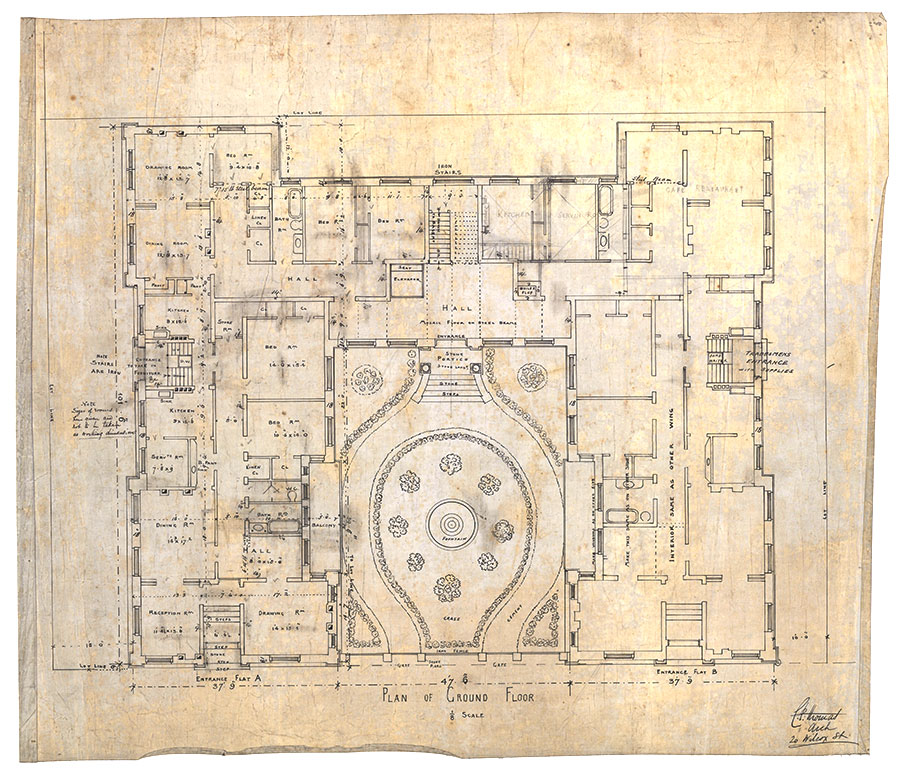
Yet by the end the century’s first decade, Dr. Dennis wrote in his landmark 1989 research paper, Toronto’s First Housing Boom, the city’s directory listed almost 50 such buildings creeping into single-family home neighbourhoods. This raised concerns about property values and privacy, as well as the loss of home ownership as a priority (apartments were typically rented)

St. George Mansions on Harbord Street, photographed in 1944 and shown in its architectural drawings, was Toronto’s first apartment building. After it was finished in 1904, the six-storey complex had 34 apartments and about 99 occupants.CITY OF TORONTO ARCHIVES; TRINITY COLLEGE ARCHIVES
The Spruce Court Apartments in Cabbagetown were built from 1913 to 1925 for working-class residents. But with rents of $25 a month – half of an ordinary worker's monthly wages – it wasn't quite as affordable as advertised.CITY OF TORONTO ARCHIVES

Experts have often noted that the turning point was set in 1911 by physician Charles Hastings with the publication of his report exposing the unsanitary conditions of those living in the Ward, the inner-city slum located next to City Hall.

Fearing that Toronto might fall victim to the scourge of these “human packing cases,” so rife in New York, Dr. Dennis wrote, the report reinforced the belief that shared dwellings were immoral and not fit for Toronto.

“If Toronto becomes a city of closely-packed tenements,” one Globe journalist wrote on April 27, 1912, “it will become a city of stunted children and of unhappy adults. Its morals will suffer as well as its health.”

In response to these mounting concerns, and after a slate of lesser measures were deemed inadequate, in 1912 city council passed the apartment ban by 18 votes to nil.

By-Law No. 6061 limited the construction of apartment buildings to a few arterial roads.

Developers found breaking the law could be fined $50 – about a month’s salary at the time – or jailed for as much as six months.

STORY CONTINUES BELOW ADVERTISEMENT

Apartment houses listed in Toronto directories
Number, 1903-1918
010020030019031904190519061907190819091910191119121913191419151916191719182
THE GLOBE AND MAIL, SOURCE: DATA COLLECTED BY UNIVERSITY COLLEGE LONDON GEOGRAPHER RICHARD ​DENNIS, PUBLISHED IN TORONTO'S FIRST APARTMENT-HOUSE BOOM: AN HISTORICAL GEOGRAPHY(1989)​
DATA
SHARE
×
earNumber of apartments
1903-01-012
1904-01-013
1905-01-014
1906-01-015
1907-01-018
1908-01-0114
1909-01-0123
1910-01-0137
1911-01-0167
1912-01-0192
1913-01-01129
1914-01-01207
1915-01-01250
1916-01-01272
1917-01-01287
1918-01-01290

APARTMENT HOUSES LISTED IN TORONTO DIRECTORIES

×

Share this chart:

https://s3.amazonaws.com/chartprod/5EvFadkhLA7DLQHPr/thumbnail.png

According to Richard White, an author and Toronto historian, public response was favourable. Nonetheless, there were dissenters.

Builders who had purchased land for the purpose of apartment development were angry. Two weeks after the bylaw had been passed, architect John Alexander Mackenzie wrote in The Globe: “It surely is not British fair play that the objections of a few property-owners should be allowed to bar hundreds of our best families from a share in the fresh air and pleasant outlooks of our hill and Rosedale districts.”

Others rejected equating Toronto’s mostly upper-class apartments with New York’s tenements. Builder Alfred Coleman argued that planned multifamily dwellings were actually better than the crammed single-family houses that would result from the ban.

Almost immediately, developers found workarounds. They could usually get special approval from city council or run a long apartment block behind a narrow commercial street frontage.

As a result, several hundred apartment buildings were constructed in areas where they had initially been banned. Dr. White said that of the 12 applications for exemptions in the Beaches neighbourhood, all were approved.

According to data from the City of Toronto Archive, between 1921 and 1931, the number of units in apartment houses increased tenfold, from 2,000 to 20,000. Yet for a city with a population of 630,000, that number was tiny compared with cities such as New York and Chicago.

“It’s the core reason why Toronto doesn’t have a historic character of medium density throughout its historic core, like the four-storey buildings seen in American cities,” Ms. Abramowicz said.

The policy was generally quite effective, she said; for decades, much of the city saw very little apartment development.

A 1920 report from the Toronto Housing Commission includes these specifications for a semi-detached home of Type C, one of the permitted types of housing at the time.TORONTO HOUSING COMMISSION

Type A and C houses on Gilmour Avenue, as seen in the 1920 report, and a block plan of other properties in the neighbourhood.TORONTO HOUSING COMMISSION
One of the apartment complexes built in the post-ban era was Claridge Apartments at Avenue Road and Clarendon Avenue, built in 1927-28. Architectural firm Lawrence Baldwin & Gerald Greene designed it in a Venetian palazzo style.CITY OF TORONTO ARCHIVES

While many areas did get more low-scale apartments and condo towers later in the century, few of those developments broached tree-lined, residential streets.

“We haven’t really shifted from the planning approach the City of Toronto took in 1912,” Ms. Abramowicz said. “I think it’s to our detriment.”

While experts agree that By-Law No. 6061 has left a mark on the city’s building story, many argue its more significant legacy is the attitude it initiated. According to Richard Harris, an urban historical geographer at McMaster University, Toronto’s early 20th-century policies led to its ingrained resistance to development in residential neighbourhoods.

“That’s where the ‘not-in-my-backyard’ consideration comes in,” Dr. Harris said. “Once the built environment has been built in a particular way, property owners resist any kind of density.”

STORY CONTINUES BELOW ADVERTISEMENT

Apartment buildings under construction at Moss Park in 1963.BORIS SPREMO/THE GLOBE AND MAIL

Mr. White said this mentality was truly entrenched in the 1960s, amid numerous attempts to rezone the apartment-free areas to add density. This was met with strong opposition from homeowners, and in 1966 the planning department marked most of those neighbourhoods “inviolate” – protected from widespread development.

“The urban reform movement stopped neighbourhood destruction, but it then entrenched an anti-development mindset,” he said. “To me, that is the root of present-day opposition to the missing middle.”

A hundred and 10 years on from the passage of By-Law No. 6061, it is impossible to know how the city would have evolved without it. Indeed, Toronto never got the “wealth of attractive, medium-density character apartments” it could have had, Ms. Abramowicz writes in the housing anthology House Divided.

Such apartments offer a spectrum of quality, architectural style and affordability, she argues. Amid a housing crisis comparable with that of a previous century, she asks: “Why shouldn’t there be room down the street?”


Please share this

Toronto could face wave of condo project cancellations as costs rise


Toronto housing developers could cancel the construction of up to 5,000 condo units as the costs of borrowing and building soar, according to an analysis by leading condo research group Urbanation Inc.

Construction costs have climbed across the country. Putting up a high-rise in Toronto is now 21 per cent more expensive than it was during the same quarter of last year, according to Statistics Canada’s building construction price index. And with the Bank of Canada’s benchmark interest rate having risen 125 basis points in the past four months, construction loans are also becoming more expensive.

Such an increase in costs can put a developer in a bind, because projects typically can’t receive construction loans until most of their units have already sold to preconstruction buyers. The time between preconstruction and occupancy is usually about five years. If costs rise during that interval, a developer can’t easily raise prices to compensate, because many of its condos are presold. Instead, the increased expenses eat away at profit margins. When projects become unprofitable, they are often cancelled.

According to Urbanation’s research, about 5,000 preconstruction units were sold last year for less than $1,000 per square foot, which would make them economically unfeasible to build under current financial conditions. “Many of those could cancel,” said Urbanation’s president, Shaun Hildebrand.

If Toronto developers start cancelling projects, buyers who made deposits on preconstruction condos will have their money refunded, as required by Ontario law. But those who signed sale agreements years ago could find that they now have to pay higher prices for similar units.

Tarion, the province’s new-home consumer protection organization, says on its website that developers are required to specify conditions under which their projects could be terminated. Those conditions could include a developer failing to secure necessary financing, or not meeting the minimum number of preconstruction sales needed for a building to proceed.

The rise in the cost of building condos in the Toronto region had already begun before the pandemic disrupted supply chains and drove up prices of building materials such as wood. From early 2017 to today, construction costs are up 50 per cent, according to commercial real estate data firm Altus Group.

The last time Toronto experienced a wave of condo cancellations was in 2018, when developers called off 4,687 units because of rising construction expenses, according to Urbanation.

“When cost escalation is 10 per cent to 14 per cent, you can lose your profit in less than a year,” said David Schoonjans, senior director of cost and project management for Altus. Developers that launched projects in 2019 and have not yet broken ground are facing a 30-per-cent jump relative to construction costs at that time, according to Altus data.

Even if global supply chain problems dissipate and goods start to move more quickly, Mr. Schoonjans said, the Toronto region will continue to deal with rising costs because of the sheer volume of new home construction in the area.

Housing starts reached a record high across the country last year, and the Toronto region saw record-high condo starts. That has increased demand for experienced carpenters and other construction workers.

“The market is so overloaded and schedules are being extended and missed,” Mr. Schoonjans said. “There’s just more work than there is capacity to perform it, and that would be the case even without the pandemic.”

Real estate developers could raise the prices of units in future projects in anticipation of higher costs, but buyers may not be willing to spend much more than they already are. The average cost of a preconstruction condo in Toronto is already near $1,400 per square foot, according to Urbanation.

The bulk of preconstruction condo buyers are investors, each of whom would need a tenant to pay at least $3,000 a month to cover the mortgage payment on a 500-square-foot unit purchased with a 20-per-cent down payment at today’s typical five-year fixed rate, which is around 5 per cent. That does not include condo fees or other home ownership expenses, such as taxes and upkeep.

Urbanation says developers had planned to launch projects totalling 12,900 condo units in the Toronto region during the second quarter of this year. As of mid-June, 8,606 units had been brought to market in the quarter, according to Urbanation’s numbers.

Please share this

Tuesday, June 14, 2022

How to search the history of your Toronto home?


Toronto has a fascinating history but just how difficult is it to do a little digging into the history of where you live?

The City of Toronto provides a guide to finding the history of your house. There may be maps, building permits, photographs and other information you can find if you're willing to spend the time searching their treasure trove of data.

You can start with online research but you'll eventually need to head over to the City of Toronto Archives at 255 Spadina Road. It's only open weekdays by appointment only.

Once you get there, staff can help you get started and retrieve specific records including copies of building permits or photos.

The site archivehistory.ca recommends some of the following strategies.

  • Determine whether or not your street name or address changed at any point in the past
  • Consult fire insurance plans
  • Check the City's aerial photograph collection, which covers most of the city from 1947 to 1972
  • To determine former occupants, consult assessment rolls and city directories

If all of this sounds like too much work, third party companies like Toronto-based Caerwent Housestories will do all the work for you and offers a series of packages, depending on how nicely you want the research presented.

The basic package will set you back $550. It comes in chart-form and includes "detailed information about previous owners and occupants."

Pricier packages include things like photographs, newspaper citations, building permits and a narrative history of your house and neighbourhood.

Please share this

Sunday, April 10, 2022

More than 200 homeless people died in Toronto last year 2021


A total of 216 people experiencing homelessness died in Toronto last year, according to new data from the city.

The data released by Toronto Public Health (TPH) on Friday shows there were 4.2 average deaths of unhoused people per week last year. 

According to the city, the number of deaths in 2021 rose significantly from 2020. Seventy-two more people died last year than in the previous year, when 144 unhoused people died. The number of deaths has more than doubled since 2017 — the first year that the city collected such statistics — when 101 people died. 

A full 55 per cent of the deaths in 2021 were due to drug toxicity, the data shows. Other causes of death include heart disease, accidents, complications from diabetes, hypothermia, liver and lung disease, organ failure, suicide and cancer.

The city says 132 out of the 216 people who died were residents of homeless shelters. It has yet to release the number of people living outside who died. 

For Gru, a shelter hotel resident in Toronto, the numbers are "awful" to hear.

"There are no words," he said. "There is just a deep, deep sense of loss that these are people like you or I who ended up in a position where they couldn't afford rent or they couldn't afford their mortgage. Homelessness in Canada is a death sentence, really."

Homeless advocates say the numbers are staggering, but not surprising. They say the city has enforced policies that created unsafe conditions for unhoused people. And they say the solution is permanent housing and harm reduction supports, not policing and clearing encampments.

'It's a crushing number,' homeless advocate says

Doug Johnson Hatlem, a street pastor at Sanctuary Ministries of Toronto, said on Saturday that Mayor John Tory, the city's Shelter Support and Housing Administration (SSHA), and city councillors should all be held to account for their policies on homelessness, given the "unacceptable" number of deaths of unhoused people last year.

"It's a crushing number," Johnson Hatlem said. 

"All three — council, Toronto mayor's office and SSHA spent an incredible amount of their time and their political capital insisting that they were in the right to beat people into submission to get inside for what they were calling safe indoor shelter. Their priorities were completely out of whack."

In 2020, the first year of the pandemic, there was more of a spirit of "we're all in this together," but in 2021, Tory's attitude was "we're going to do what we want to do and we're not going to listen to people," Johnson Hatlem said. The city failed to engage with people who were unhoused and their advocates and instead chose to act on behalf of wealthy people and those who don't want to see homelessness in their backyards, he said.

"The problem will not just ever go away until people are housed. And so, we saw a 50 per cent increase in deaths and it's an enormous number that somebody has to take account for," he said.

"It's not an acceptable number. I think a great majority of these deaths were preventable," he added. "It's always been a crisis that we have people who died homeless on the streets of Toronto. At this point, it's a five-alarm fire, and the people who should be treating it as a five-alarm fire are not doing so."

Johnson Hatlem said the city, for example, put a lot of effort into clearing encampments, which displaces and scatters unhoused people, increasing their vulnerability. He said the city should sit down with unhoused people and advocates to figure out what needs to be done to reduce the number of deaths and violence and to reduce the number of overdose deaths.

Rafi Aaron, spokesperson for the Interfaith Coalition to Fight Homelessness, said it is important to remember that each number represents a human being.

"They were wonderful people. They loved and were loved. They had people who were close to them. They were fathers, wives, brothers, sisters, uncles, aunts, in some cases grandparents. They were our neighbours or your neighbours. They were people who were vibrant and generous and who we miss dearly and who didn't need to die," Aaron said.

A.J. Withers, a steering committee member of the Shelter and Housing Justice Network and adjunct faculty in critical disability studies at York University, said some of the deaths happened when the shelter system was more than 99 per cent full. The absence of safer indoor shelter space, the toxicity of street drugs and the dismantling of encampments was all "deeply concerning," Withers said.

"The lack of safe supply, the lack of access to overdose prevention sites and lack of access to appropriate harm reduction really means that people die," Withers said. "As the city does things like criminalize people in encampments, people get pushed further and further away from support systems and people die."

Withers said the numbers are probably far higher because hospitals and emergency rooms don't report deaths of unhoused people to TPH. Withers noted that the median age for males who died was 49, while the median age for females who died was 40, meaning "there are many years lost" when people don't have housing.

Dr. Andrew Boozary, a primary care physician and executive director of the Gattuso Centre for Social Medicine at the University Health Network, said the city cannot "go back to normal" because homelessness was already a public health crisis before the COVID-19 pandemic. The pandemic itself has affected unhoused people disproportionately, he said.

"The solution to homelessness is housing. Shelters or encampments are not solutions to homelessness, it is housing. And so, we really need to ensure that every level of government is committed to housing as the solution. And if we don't see that concerted effort, these rates will only continue to increase," he said.

"And that's on us as a society, because these rates are increasing, not because of individual failures, but because of our failure on delivering housing as a human right."

Policing poverty is also not the answer, he said.

"What is really has to be clear is that ripping down tents is not the solution to homelessness. It is delivering on housing as a human right. It is building more social housing, it is getting people more access to social housing and supportive housing." 

City 'saddened by all of the deaths'

The city, in response, said it collects the data and uses it to help it make better decisions on improving the health of people experiencing homelessness.

"The City is deeply saddened by all deaths of people experiencing homelessness both in and outside of the City's shelter system. We offer our condolences to the individuals' friends and loved ones and to our staff and clients who continue to witness these tragedies," the city said in a statement.

"While the emergency shelter system plays an important role in supporting the health and wellness of those experiencing homelessness, the real solution to improved health outcomes is permanent housing with supports." 

Toronto's 24-month housing and homelessness plan aims to create more than 3,000 new affordable housing opportunities by the end of year, including 2,000 with supports, to meet the needs of marginalized and vulnerable people experiencing homelessness, the city said.

In February 2022, the city said council approved an accelerated housing plan to provide an additional 300 "housing opportunities" through partnerships with housing providers and private market landlords.

"The death of anyone in our city is extremely sad and our condolences are with the families and friends of those who have passed away," Tory said in a statement issued Saturday evening. 

Tory defended the actions the city has taken to tackle homelessness and drug overdoses, including opening thousands of supportive homes, expanding the shelter system before and during the pandemic and introducing harm reduction initiatives in shelters.

"More than half a billion dollars was spent on shelters and housing programs last year by the City of Toronto — this was entirely because the Mayor and City Council understood we need to do everything we can as a municipal government to provide safe shelter to people, to provide supportive housing to those who need it, and to help provide vaccinations and other pandemic safety measures," the statement said.

"Notwithstanding the significantly increased level of activity especially in the area of supportive housing where the federal government has been of great help, much more remains to be done and I acknowledge that just as I continue to work hard to get the support we need to offer even more supportive housing, perhaps the single most important key to addressing homelessness."

Please share this

Here’s six ways the Federal Budget could affect residential house prices in the GTA


There is no silver bullet for Canada’s housing woes, federal Finance Minister Chrystia Freeland cautioned while delivering the federal budget this week — a road map that includes an array of pitches to build more homes, stifle flippers, and overhaul housing programs that have faced scrutiny.

The Toronto area has felt the weight of overlapping housing challenges, which ripple out countrywide.

Million-dollar home prices have forced would-be buyers to stay in the rental market, as soaring rent costs squeeze out the city’s essential workers. With thousands relying on the city’s shelter network, the number one reason for homelessness cited during last spring’s street needs assessment was that Toronto housing costs were just too high.

What will the newest slate of federal housing promises mean for residents of the GTA? While many details are yet to come, here’s a look at what this budget could mean on the ground:

Market-priced home supply

Will the budget’s $8.8 billion to build 100,000 more Canadian homes in the next five years make GTA housing more affordable?

Royal LePage CEO Phil Soper says the injection of supply will help, particularly as the budget’s intent aligns with that of the Ontario government and the City of Toronto. The problem, he said, is the tidal wave of demand — millennials are aging out of their condos to raise their families and a record 400,000 immigrants landed last year.

The budget “is not quite enough,” says Karen Chapple, director of the School of Cities at the University of Toronto.

“It’s not really addressing the structural issues in the GTA — the declining population in some of the inner ring suburbs and the unevenness of growth. We have so much low-density housing and it’s very hard to move that stock because it’s inhabited by middle-class, long-term homeowners,” she said.

Chapple says Toronto is doomed to keep building “tall and sprawl” — ultradense towers and exurbs that require people to commute long distances to work, unless it removes some of the existing barriers. Among them, she said, are zoning that makes it easier to rebuild monster homes than multiple units; urban design regulations, and appeals and delays at the Ontario Land Tribunal.

“This money doesn’t quite do the trick without dealing with these details,” said Chapple.

Foreign buyers

The federal government’s two-year ban on foreign home buying made for great budget headlines, but it won’t contribute to housing affordability in Canada and certainly not in the Toronto region, said Royal LePage’s Soper.

He says the issue of foreign buyers probably registers with people who have misconstrued immigration for investment.

In 2017, such a ban might have had more impact but now the run-up in GTA home prices is higher at the tail end of a pandemic when the borders have been effectively sealed for nearly two years.

“This time it’s a made-in-Canada problem. The 2020 to 2022 rise in home prices includes virtually no foreign investment,” said Soper.

In Vancouver, which has a more concentrated population, it could mean a decrease in competition for extravagant homes among the super rich. But it will have less impact in Ontario, he said.

Soper notes the ban includes some significant exemptions, such as recreational properties that are popular with Americans in places such as Muskoka.

“We have 850,000 foreign students (in Canada). A small portion will live in homes they own and they’re exempt,” he said.

The Toronto Regional Real Estate Board says land registry data shows an average of 200 transactions a month by foreign buyers in the Greater Golden Horseshoe. But for the last two years that number has been about half or about 1 per cent of total real estate sales. There were about 11,000 sales in the real estate board’s territory in March.

Home flipping

Experts differ on the effectiveness of a new measure announced to curb house flipping.

The step, which impacts residential properties sold on or after Jan. 1 next year, would see individuals paying “full taxation on their profits as business income,” for properties held for less than a year (excluding homes sold under extenuating circumstances such as a death or divorce.) The measure would see Ottawa reaping an additional $15 million a year.

The move is a switch from current legislation that permits a capital-gains tax exemption on all principal residences.

Frank Clayton, senior research fellow in the Centre for Urban Research and Land Development at Ryerson University, believes the policy is aimed at a problem that “will solve itself.”

Clayton argues that when the housing market peaks, which he says it is going to or has already, due to interest rate hikes, “if we wait until 2023 (house flipping) is not going to be a problem because the market will be softer and people won’t be (doing it).”

John Pasalis, president of Realosophy Realty, a Toronto real estate brokerage that uses data analysis to provide advice to residential real estate purchasers, investors and sellers, holds similar doubts about the policy.

“The speculation tax is unlikely to have a big impact on the housing market,” Pasalis says, adding it’s “very rare” to see investors buying and selling a home within 12 months without doing any major renovations to it, simply to profit from rising house prices.

Rental housing

What’s in it for renters?

For one, a reform of the federal government’s multibillion-dollar Rental Construction Financing Initiative, which was introduced in 2016 to create more rental units, but has faced criticism over its formula — which currently lets some above-market-rent units be labelled “affordable housing.”

The rules are based on median family incomes. Using Toronto’s 2019 median, that would mean any rental could be affordable if it cost $2,228.75 or less — a rate that falls above this year’s average market rate for even a three-bedroom apartment. The new target Ottawa is pledging would ensure at least 40 per cent of the units fall at, or below, 80 per cent of local market rate.

“It was something that really needed a second look and we’re glad that they are taking a stronger approach,” said Douglas Kwan, a lawyer with the Advocacy Centre for Tenants Ontario.

He was encouraged, too, by a vow to federally review “housing as an asset class,” including the way corporate players in residential real estate are taxed. While Kwan was hoping for more immediate steps, pointing to the trend of rental buildings being bought by the likes of real estate investment trusts, the budget hints at “potential early actions” by year’s end.

Also on the horizon: a strategy that tackles the specific challenges faced by Indigenous households in cities such as Toronto. The budget grants a $300-million ask from the National Housing Council to develop an Indigenous housing strategy for urban, rural and northern settings — with the council lambasting the current approach as having “demonstrably failed.”

Deeply affordable housing

With the promise of $4 billion to accelerate housing efforts by municipalities, Kwan is looking for detail — namely, how much deeply affordable versus market housing would be boosted, and if there would be any marked increase in undersupplied rent-geared-to-income homes.

As of late 2021, more than 78,800 households in Toronto were waiting for rent-geared-to-income housing, with just 2,821 housed off that list last year. Tens of thousands are also waiting for units with support services. For those residents, Coun. Ana Bailão — Mayor John Tory’s designated housing advocate — said she was pleased to see a two-year, $1.5-billion extension of the federal Rapid Housing Initiative, which supports deeply affordable projects in the city.

By year’s end, Bailão says Toronto is expecting to have 1,000 RHI-funded units opened up — though she cautioned that with the city’s depth of need, they’d always want to see more funds.

While awaiting details, she’s hoping the accelerator effort offers supports that could be layered on top of city initiatives to further lower the cost of its resulting units.

Also well-received: a promise to keep up the higher levels of funding to combat homelessness allocated during the pandemic, and a pledge to issue a one-time $500 payment to those struggling with affordability.

“Even as fast as we’re building our modular housing, it’s still taking six months, nine months, a year,” Bailão said. Some households, she said, needed help “right now.”

Co-operative housing

More co-op housing appears to be on the horizon, with the federal government promising a new development program with a target of 6,000 units countrywide, and $1 billion in loans to support co-op projects, reallocated from the existing Rental Construction Financing Initiative coffers.

Toronto has a diverse co-op market, with some requiring buy-in, but others operating similarly to a rental — though without a traditional landlord or profit incentive, with residents becoming members of the co-op that can vote on decisions like when to raise housing bills.

But while co-ops provide affordable housing to some city-dwellers, advocates and elected officials alike have said federal funding doesn’t compare to what it’s been in the past — meaning building a co-op today is much harder, and available units have become a rarity.

Tom Clement, executive director of the Co-operative Housing Federation of Toronto, said the budget vow was “significant,” though details of the program are still being ironed out.

He’s hoping to see some grants available along with the promised loans, arguing that especially in expensive markets such as Toronto, loans may help secure the brick-and-mortar building, but that further assistance would likely be needed to offer rentals at an affordable rate.

Clement also hopes to see a program that offers some long-term certainty, in order to ensure a steady pipeline of new co-op units, as well as allowing for ongoing partnerships with the private sector to help boost supply and attracting more talent to work in the co-op sphere.

“To look at this as a long-term investment, to me, is really key,” he said.

Please share this

Wednesday, March 9, 2022

Gun violence in Toronto is skyrocketing — again

With the world’s attention focussed on Russian President Vladimir Putin’s unprovoked invasion of Ukraine, it’s understandable gun crime in Toronto isn’t top of mind for most people.

But it should be because gun violence in Toronto has skyrocketed since the start of this year.

As of Feb. 27, shootings were up 47.7% compared to this time last year, the number of people injured is up 70.6%, the number of people fatally shot is up by 33.3% and the total number of people injured and killed by gunfire is up 57.7%.

Thus far there have been 65 shootings compared to 44 at this time last year, 29 people wounded compared to 17 last year, 12 people killed compared to nine last year and a total of 41 people wounded or killed compared to 26 last year.

It’s still early in 2022 and gun crime can fluctuate significantly over the course of a year based on such things as drug and turf wars among rival criminal gangs.

That said, if the current pace of gun violence were to continue for the rest of the year, Toronto could surpass the highest number of shootings recorded since comparable records began in 2004 (492 in 2019), the highest number of gun murders since 2005 (51 in 2018) and the highest number of people injured in shootings since 2004 (240 in 2019).

Toronto Police say the ages of shooters and victims in gun crime are getting younger and shootings are becoming more violent.

Two of the accused in gun murders so far this year were 13 years of age, almost a third of the fatal shootings have involved victims or accused under 20 years of age and the average age of those involved in gun violence has dropped from 25 to 20 in the last five years.

“There are a lot of youths out there who are getting guns … that’s unacceptable,” Insp. Hank Idsinga, head of Toronto’s homicide, unit told the Toronto Sun‘s Brad Hunter last month. “The ages of the shooters we’re seeing is going down.”

In addition, the shootings are becoming more violent and thus more dangerous, including for innocent bystanders.

Police were called to a residence on Connaught Ave. in the Bathurst St. and Steeles Ave. W. area for a fatal shooting in Toronto, Ont. on Thursday, Feb. 17, 2022. ERNEST DOROSZUK/TORONTO SUN FILES

Police say the number of shell casings they’re recovering from shooting scenes is up by 50% from last year, meaning criminals are using guns with larger magazines or the guns have been converted to rapid fire.

Gun violence in Toronto has skyrocketed since police street checks, also known as carding, were banned by the provincial and city governments after 2014, because of allegations the practice was racist.

In that year, gun violence was down dramatically from 2005’s notorious Summer of the Gun, when then police chief Bill Blair introduced a policy of enhanced street checks.

In 2005, there were 262 shootings with 178 people wounded and 53 people killed by gunfire.

By 2014, the number of shootings had dropped dramatically to a record low 177, the number of injuries to a record low 76 and the number killed by gunfire to 27.

Here’s what happened after 2014, without street checks:

2015: 288 shootings, 126 injured, 26 killed.

2016: 407 shootings, 152 injured, 41 killed.

2017: 392 shootings, 148 injured, 39 killed.

2018: 427 shootings, 178 injured, 51 killed.

2019: 492 shootings, 240 injured, 44 killed.

2020: 462 shootings, 178 injured, 39 killed.

2021: 408 shootings, 163 injured, 46 killed.

Given that there’s no political will to bring back street checks, increasing gun violence appears to be inevitable.

Please share this

Saturday, February 26, 2022

Toronto area home prices up 453% since 1996, report finds


In 1996, the average price for a home in the GTA was $198,150. Today, it’s $1,095,475.

Skyrocketing prices over the last 25 years were fuelled by strong demand and limited supply, a new report by Re/Max Canada found. Since 1996, residential unit sales have doubled and the average price has increased by 453 per cent.

Between 1996 and 2021, more than two million homes were sold in the GTA, representing a $1.1 trillion boom for the real estate market.

“Performance of the GTA housing market over the 25-year period has been nothing short of remarkable,” said Christopher Alexander, president of Re/Max Canada, in a press release. This is especially so when considering this time period was characterized by the tech meltdown of 2000, 9/11, SARS, the Great Recession of 2008, Ontario’s Fair Housing Plan and the ongoing pandemic, he added.

While costs are shooting up, Alexander said the average annual growth rate is 7.08 per cent, which is the “best pocket” to be in as it’s not too strong and is still positive – meaning homeowners make “a bit of equity every year.”

“Anything over eight or nine per cent you’d have concerns over how long it will last,” Alexander said. “There have been so many stories on a real estate bubble but seven per cent is perfect. If you could hope for an appreciation number year-over-year that would be it.”

The report analyzed home buying activity in nine GTA regions – Toronto East, Toronto West, Toronto Central, Durham, Halton, Peel Region, York Region, and Simcoe and Dufferin counties.

It found land availability, especially in the city’s core and surrounding communities, waned. Low supply combined with migration, low interest rates, and affordability continue to impact the market in the GTA, the report said. 

While a handful of regions experienced triple-digit increases in sales, including Toronto Central, Halton Region, York Region, Simcoe County and Dufferin County, the entire GTA “reached new heights” for average sale prices.

A reason for increased sales in Halton, Durham, Peel and York regions is new construction — East Gwillimbury is the fastest growing municipality in Canada.

For the last 25 years, these regions offered more affordable options for those looking to purchase, the report says. First-time home buyers moved in and transportation infrastructure with the GO train and another 400-series highway developed.

But with less land to build on, high density housing has become a priority with more condominiums being built — condos in Mississauga represent one in every two sales, the report said.

Condo apartments and townhomes account for 76 per cent of sales in Central Toronto, according to data from the Toronto Regional Real Estate Board (TRREB).

In Toronto there isn’t much land available to buildup supply, said Cameron Forbes, a broker with Re/Max real estate.

To increase supply, the GTA needs to be creative and get “more flexible with municipal bylaws,” he said.

Ways to do this include, turning existing lots into two units, converting single family homes to multi-family dwellings, and demolish existing stock to increase density — the Imperial Oil building on St. Clair Avenue West — now the Imperial Plaza Condominiums — is a prime example, said Forbes.

With population growth in the GTA expected to explode, high demand will continue, Forbes said.

During the start of the pandemic immigration numbers fell with border closures. But the federal government is making up for the shortfall allowing more than 400,000 new permanent residents in 2021 — the most newcomers in a year in Canadian history. In 2022, the country is expecting 420,000 newcomers, and 430,000 in 2023.

Around 40 per cent will settle in the GTA, said Forbes, resulting in roughly 160,000 to 170,000 newcomers. That means 50,000 to 60,000 new homes will need to be constructed annually to accommodate them. For the last decade, 40,000 new homes have been built annually, he said.

“That’s a big reason for the driving cost,” Forbes added.

But there are still pockets of affordability, he said. Those wishing to enter the market can buy smaller apartments in the city or move further out in the GTA, or just outside of it, if looking for a family home. Because of the pandemic, more people have moved further out of the city centre, made possible by remote work, Forbes said.

Over the next 25 years housing prices are expected to rise at a greater rate than inflation due to population growth and the job market, with many flocking to the GTA for career prospects.

“The economy is strong in the GTA,” Forbes said.

Please share this

Toronto reveals which speed cameras are catching the most drivers

The City of Toronto released its most recent automated speed enforcement (ASE) data Friday, revealing the devices issued more than 50,000 tickets during the last quarter of 2021.

In a release issued Friday, the city said that a total of 54,391 tickets were issued between October and December near schools in “community safety zones.”

Of the more than 54,000 tickets issued, 15,687 were given out in October, with the most common location to receive one being Victoria Park Avenue near Tiago Avenue in Don Valley North.

November saw 11,516 tickets issued by the devices. The most common location was Kipling Avenue south of Snaresbrook Drive in Rexdale.

In December, ASE devices issued 27,188 tickets. The device on Royal York Road north of Coney Road issued the most tickets that month at 2,724 — or nearly 10 per cent of all tickets issued in the last quarter of the year.

While drivers may be subject to fines if ticketed by an ASE device, they do not incur the driver any demerit points and do not affect a person’s driving record.

“These numbers continue to show that speed cameras are an important tool in our Vision Zero toolbox that increase enforcement against those choosing to break the law,” Toronto mayor John Tory said in the statement.

Tory said that the city can expect more speed cameras to be deployed, along with other measures such as “road and intersection redesigns, speed limit reductions, the installation of more head start pedestrian signals and increased traffic enforcement by Toronto Police.”

As of January, the city’s ASE devices have been installed at a fifth round of locations. Signs have been posted at all locations to warn drivers, the city says.

Since the city installed the ASE devices in July 2020, they say 392 Part III charges, meaning they need to be seen in a court, have been laid. The highest excess speed charge, according to the city, was laid in Etobicoke North when a driver was clocked driving 146 km/h in a 50 km/h speed limit zone on Martin Grove Road north of Garfella Drive.

Please share this

Saturday, February 19, 2022

History of the Yorkdale Shopping Centre in Toronto


When visiting Yorkdale Shopping Centre today, I find it difficult to realize that it is the same plaza that I experienced when it opened in 1964.

It has been greatly expanded during the past five decades, and though the original sections of the mall survive, they are almost unrecognizable.

The story of Yorkdale is a vital part of the history of retailing in the Toronto area. It was Canada's first indoor mall, an improvement for shoppers that particularly suited the Canadian climate. It allowed people to park, walk inside an enclosed structure, and access shops from its interior.

Yorkdale was built in an era when many suburbanites shopped at "strip malls," constructed to accommodate those living in communities surrounding the city that owned cars.

The first strip mall in the Toronto area was at Bayview and Eglinton. Many such malls still exist today, consisting of shops built in one or more rows, their front doors facing an outdoor parking lot. Customers enter the stores directly from the parking lots.

Strip malls began appearing after the Second World War, when many Torontonians were relocating from the city’s urban core to the suburbs.

They were following a dream of owning larger homes on more generous-size building lots. Some of the houses they left behind in the inner city were purchased or rented by the immigrants arriving in the city.

Relocating to the suburbs was facilitated by the post-war's booming economy, which placed automobile prices within the reach of more and more Canadians.

Vehicle sales skyrocketed, creating the beginning of a "car-dominated society." It allowed people to travel greater distances to shop or attend a movie.

Eaton's was one of the first to realize the potential of meeting the needs of the increasing number of suburbanites.

Prior to the Second World War, the company's department stores were in the downtown core. Aware of the expansion in population in the suburbs, in 1954, for the price $1.4 million, Eaton's bought 100 acres of land located to the northwest of the city. The intent was to erect a large shopping mall on the site.

Eaton's knew that it needed another major retailer to join in the venture. As a result, in 1961, the company offered to sell the Robert Simpson Company one half of the site if it joined in the enterprise.

However, Simpsons wanted only 19 acres, on the west side of the property, and stipulated that the price must include sewage, water connections and roadways. Eaton's agreed and spent $1 million to satisfy the terms of the deal.

The land where Yorkdale was to be erected was cleared and ready for construction by the spring of 1962, the work commencing during the early-summer of that year.

yorkdale shopping centre

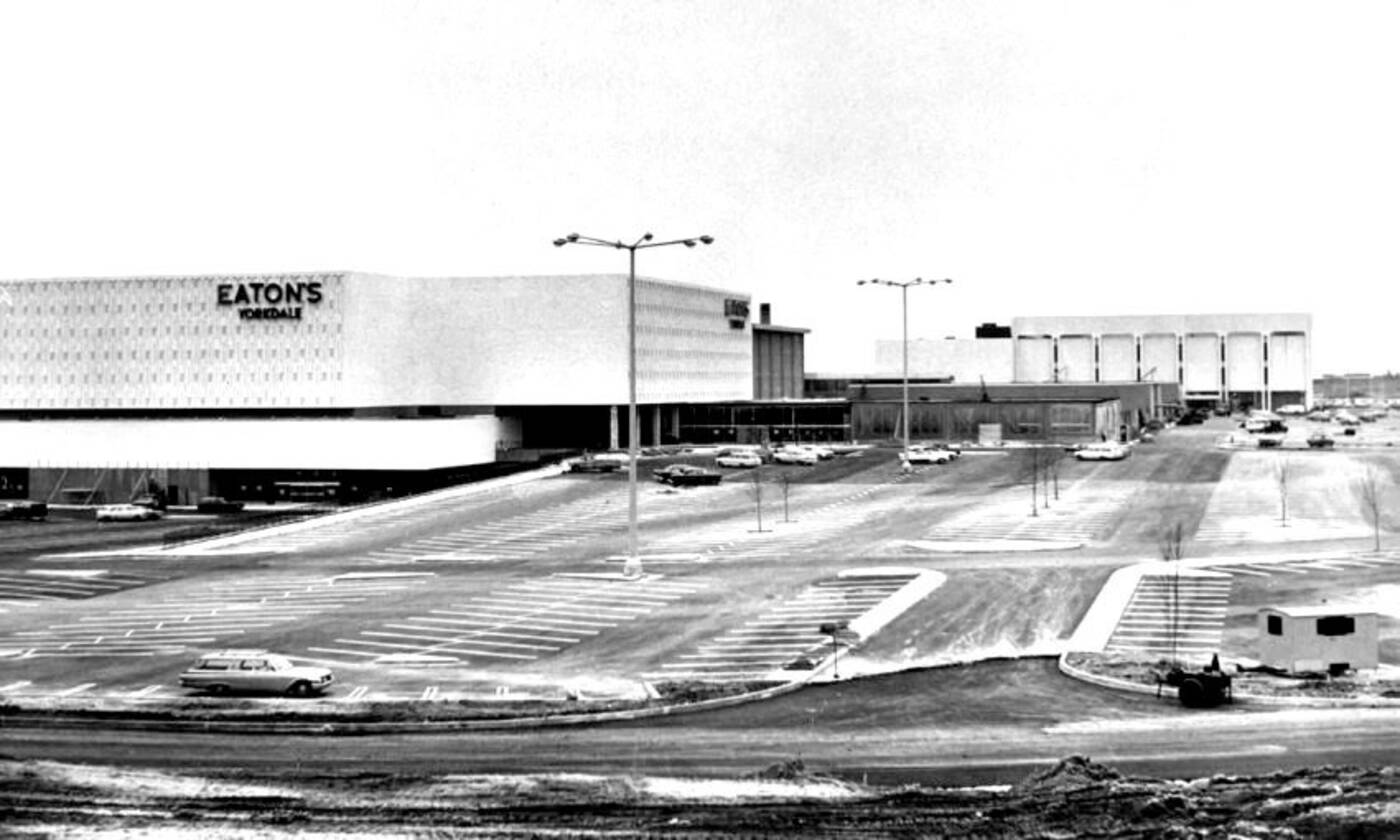
View looking west in March 1964 of Yorkdale, the Eaton’s Store in the foreground and Simpsons in the distance.

Everything was completed by February 1964. As opening day drew near, John David Eaton insisted that the mall close at 5:30 or 6 p.m., similar to its downtown stores.

However, the smaller retailers in the project strongly objected, since they wanted to remain open until 9:30 p.m.. John David finally agreed, after he was assured that employees would not be required to work longer hours than they wanted.

On Sunday, February 16, 1964, long lines of customers gathered at the various entrances to Yorkdale, waiting for the 9:30 a.m. opening. By mid-morning, its four parking lots (6,500 spaces) were completely filled.

At 2:30 p.m., drivers were scouring the lots trying to find a place to park. By the end of the day, the Star newspaper estimated that 100,000 shoppers had crammed into the mall.

yorkdale shopping centre

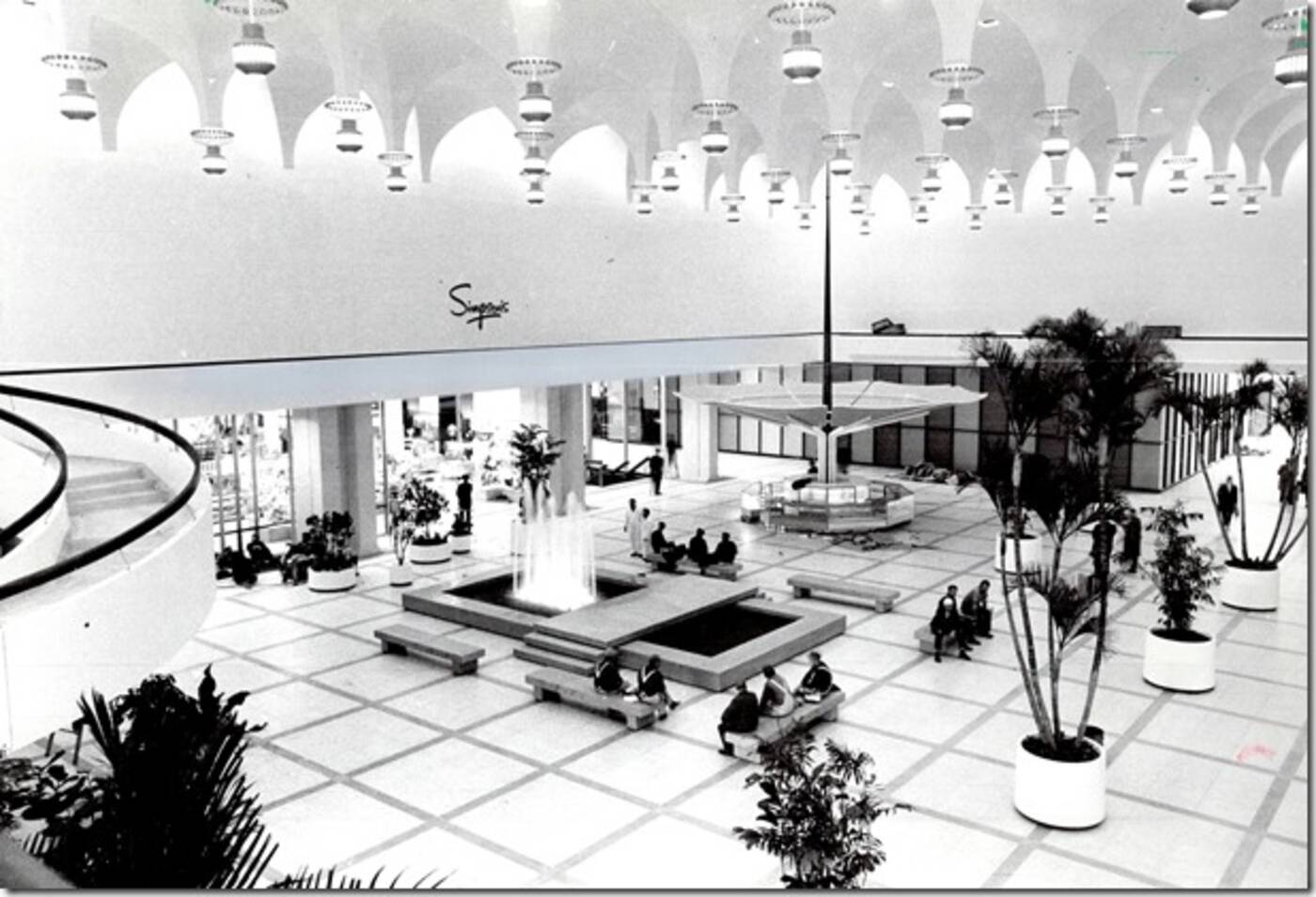
View of the three-storey court on the south side of the Simpsons store. The curved staircase on the left leads to Simpsons Court restaurant. The photo is undated, but it is likely c. 1964. Toronto Public Library, tspa 0014666f.

Yorkdale had over 1.2 million square feet of space, containing 61 retail shops, several restaurants, and multiple services.

The Dominion (today their stores are named Metro) was the largest the company had ever built, containing 17 checkout counters.

The week the plaza opened, some of the shops were not yet occupied, but it was still an impressive sight. For a short period of time, Yorkdale was the largest indoor shopping mall in the world. Though its size was impressive, its importance was perhaps due to another factor.

Yorkdale set the pattern for future malls across Canada. It demonstrated the advantages of locating malls near transportation hubs, which allowed shoppers access from nearby arterial roadways.

As well, it showed that if retail enterprises of this size were to be successful, more than one large-scale store was required. Yorkdale actually possessed three—Simpsons on its west side, Eaton's on its east, and a Dominion Store on the south.

It was the first time that Canada's two largest department store chains—Eaton's and Simpsons—were under one roof. This was accomplished, even though they had been competitors across Canada for many decades.

Prior to the opening of Yorkdale, many people living in the suburbs had continued to shop downtown or visited local strip malls. Neither of these options was truly convenient.

When suburbanites drove downtown, even then, parking was becoming a nightmare. Strip malls were also at a disadvantage as they were exposed to the vagaries of the Canadian weather.

The appeal of Yorkdale was obvious. It offered numerous retail outlets that were closer to home than the downtown, were impervious to the weather, and possessed plenteous free parking.

Torontonians were able to drive to the mall to shop indoors, enjoy a meal or snack, and attend a movie theatre, all at one destination.

The configuration of the Yorkdale Plaza was basically an "L-shape." The top of the "L", the bottom, and elbow of the "L" were anchored by one of the large stores.

The corridors that connected the big stores resembled indoor shopping streets, one-third of a mile long, 40 feet wide, the ceiling above them two storeys in height.

The three large retailers had large open spaces in front of them, similar to a courtyard or piazza, which were three-storeys high.

Since the mall was climate controlled, shoppers were able to enjoy strolling along the wide avenue-like areas and courtyards in comfort, immune to the weather outside.

The curtains in the spacious windows, located high above the shops, could be automatically adjusted to allow the proper amount of light to enter the interior of the plaza.

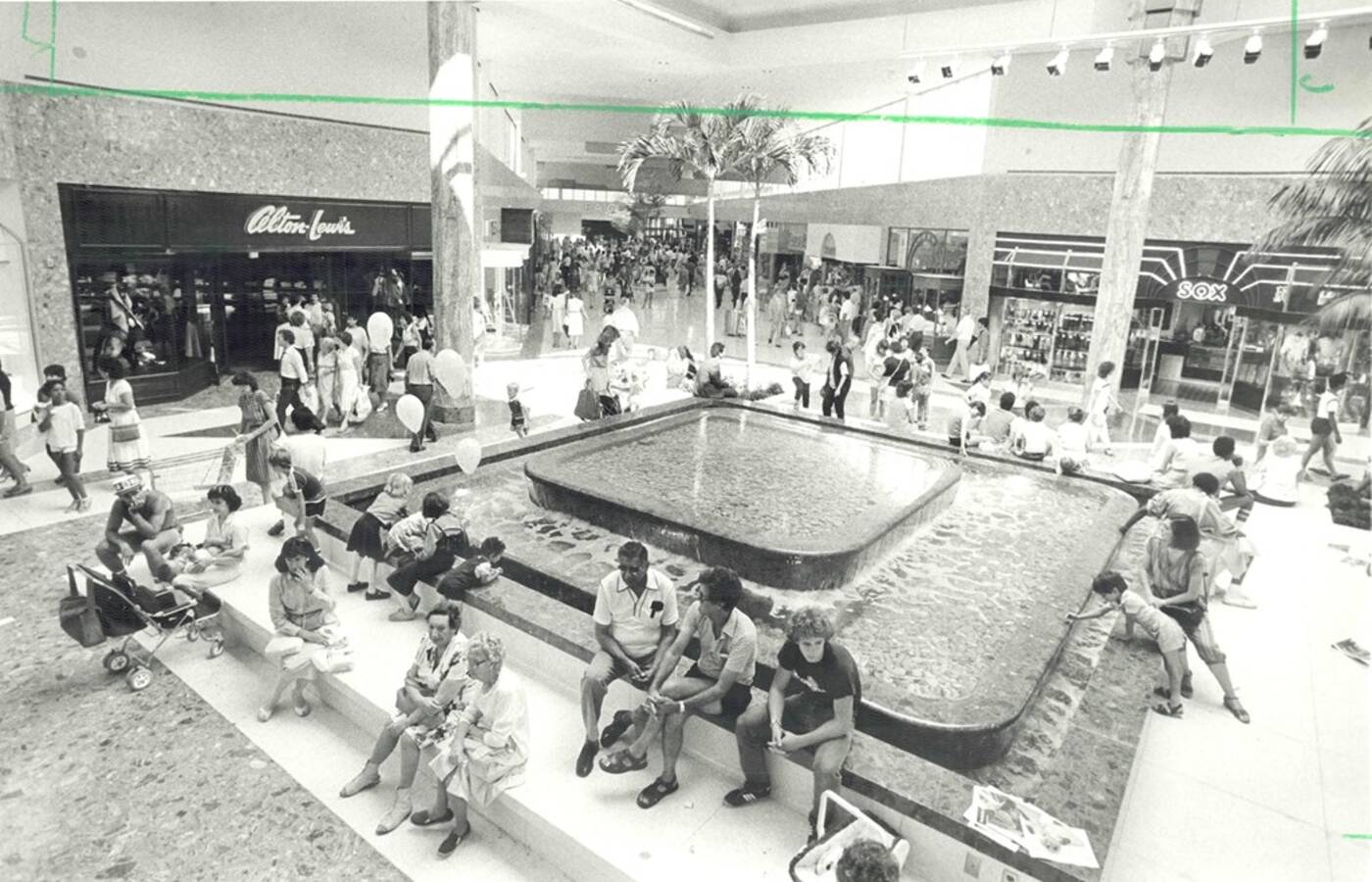
Other pleasing features were the two large fountains as well as numerous 20-foot trees, some of them palm trees.

In 1964, Yorkdale had many popular stores — Reitman's, Collyer Shoes, Peoples Credit Jewellers, Laura Secord Candies, Hunts Bakery, Jordan Wines, Henry Birks and Sons Jewellers, Jack Frasers Men's and Boy's Wear, Toy World, Kresge's and Eddie Black's Camera Store.

I vividly remember Coleman's Delicatessen and its delicious corned beef sandwiches, the restaurant located near the Dominion Store.

There was a Smitty's Pancake House, which also served small steaks (the site later became "Obies"). The Encore Noshery was reputed to be the largest restaurant in Canada in a shopping centre.

The beauty parlour, "Ponytails," which catered to the needs of small children, had hobbyhorses instead of regular chairs.

Yorkdale had a cinema with two auditoriums, with combined seating for 1200 patrons. I remember seeing Mel Brook's zany film Blazing Saddles at the Yorkdale Cinema in 1974.

It was an afternoon matinee, attended mostly by seniors. I was one of the few persons in the audience that did not have purple-tinted hair. As a matter of fact, even then, I did not have much hair at all.

As the screening progressed, I discovered that I was also one of the few that was laughing. I admit that the humour was a little off-colour— typically Mel Brooks.

Eaton's and Simpsons both had restaurants. The Simpson's Court restaurant overlooked the cathedral-like interior courtyard with its three-storey ceiling.

I remember visiting it numerous times for lunch, usually ordering the daily special of soup, chicken-pot pie, and a salad.

Eaton's Vista restaurant was on the second floor, at the northwest corner of the store, overlooking the mall where there was a fountain. In the evenings, the Vista featured all-you-can-eat buffet, which included roast beef.

I sometimes visited it on a Friday for dinner. I seem to remember that Eaton's restaurant was later renamed "The Loft," but I cannot find any proof of this. Memory sometimes plays strange tricks.

Though Yorkdale was located quite a distance north of the downtown, it was connected by several arterial roadways—Highway 401, Wilson Avenue, and Dufferin Street.

Market research conducted by Eaton's had shown that the mall was likely to attract shoppers from within a 30-minute drive. This meant that people as far away as Brampton and Whitby could easily drive to Yorkdale, as well as those living north of Bloor Street.

This was a potential market of almost a million shoppers. In 1966, the location became even more advantageous when the interchange at the Allen Expressway and the 401 was completed, and in January 1978, when the mall was connected to the University/Yonge subway line.

The architect of the Yorkdale Mall and the Eaton's Store was John Graham Consultants. The store Graham created for Eaton's had a striking exterior, with off-white bricks containing three-dimensional patterns that accented the vertical elements of the design.

Another added feature of the plaza was the underground truck tunnel that delivered goods to the retail outlets. The gigantic Dominion Store featured an underground conveyor belt that delivered customers' purchases to a station in the south-west parking lot, where they could pick up their groceries.

yorkdale shopping centre

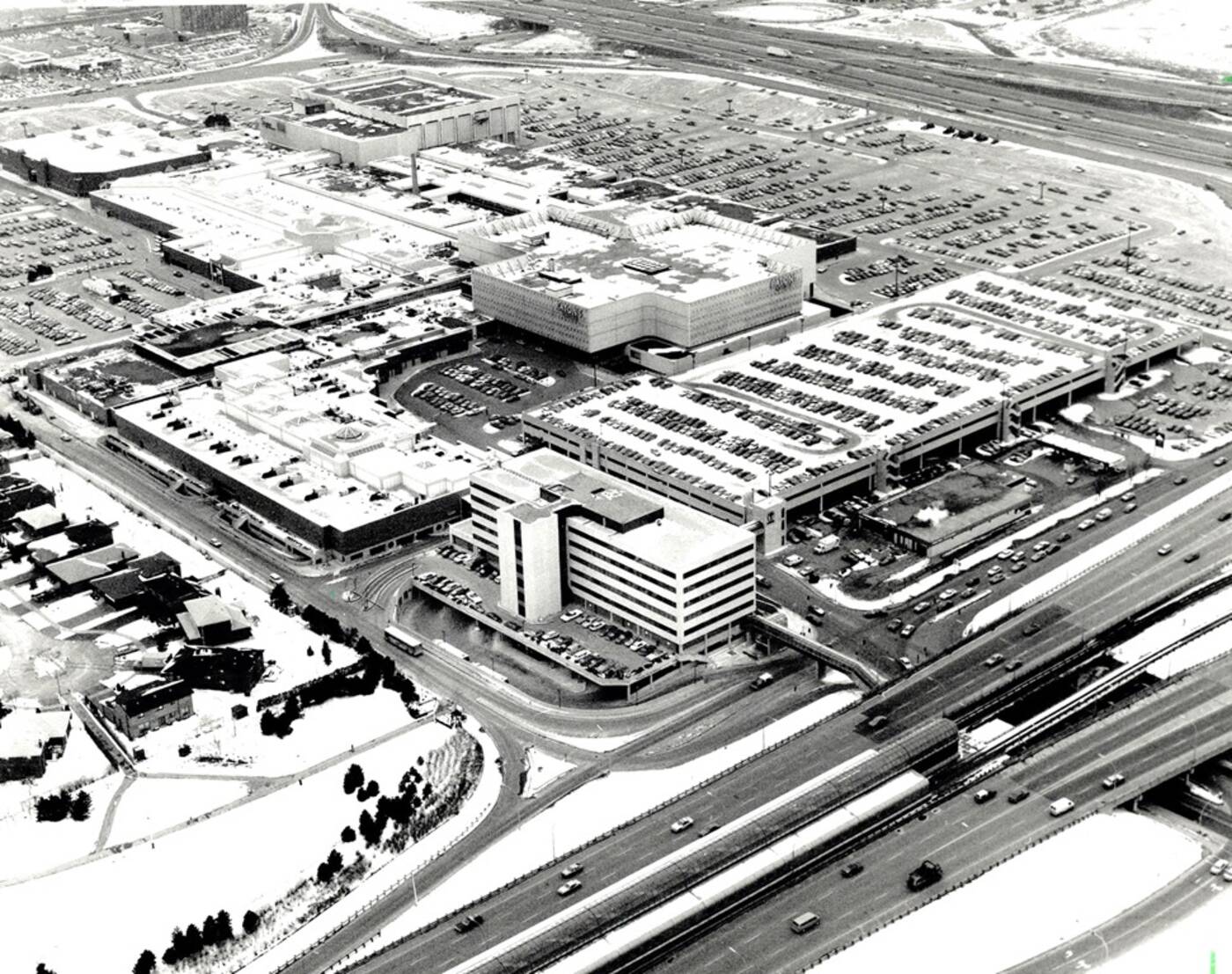
Aerial view of Yorkdale in 1989, looking toward the the northwest. The Eaton’s and Simpsons stores are visible, as well as the 1984 extension added to the plaza. Toronto Public Library, tspa 0014664.

John B. Parkin Associates were hired to design the Simpsons store, the architect within the firm who was assigned the work being John Andrews, a Harvard-educated Australian.

During the years ahead, Andrews opened his own firm and won the contracts for the University of Toronto's Scarborough Campus and the CN Tower.

I recall attending Boxing Day sales at Yorkdale during the 1970s; I visited early in the morning to avoid the enormous crowds, even though compared to today, they were considerably smaller.

Yorkdale was where I first experienced the frustration of losing my automobile in a parking lot. I soon learned to memorize the row or section number where it was located.

During the 1980s, I visited the mall to attend the Yorkdale Antique Market. It was usually held each February and continued consecutively for three or four years.

It was a large display, which fully occupied all of the "L"-shaped space. The mall also held fashion and automobile shows.

On frigid winter days, for exercise, I drove to the mall in the early morning to walk within the enclosed area. When the shops opened, I enjoyed a coffee and then drove home.

yorkdale shopping centre

Yorkdale after the new section opened in 1984. Toronto Public Library, 0014662.

In 1984, Yorkdale was expanded by an additional 153,000 square feet, with 75 new stores, at a cost of $14 million.

In 1991, Sears Department store opened in the plaza. In 1999, the Rainforest Cafe began serving food in a tropical atmosphere (it closed in 2014).

In 2012, an addition was erected on the southwest side of Yorkdale. It included a relocated and expanded Holt Renfrew Store, situated where the Dominion store had been.

In 2015, the Sears Store on the west side of the plaza was demolished and replaced with the 70,000 square-foot Restoration Hardware, which opened in 2017. It resembled an impressive mansion with indoor and outdoor shops, a courtyard cafe and rooftop conservatory/park.

In 2016, another section was built on the east side, with a Nordtrom Department Store, Uniqlo, as well as 30 more retailers.

yorkdale shopping centre

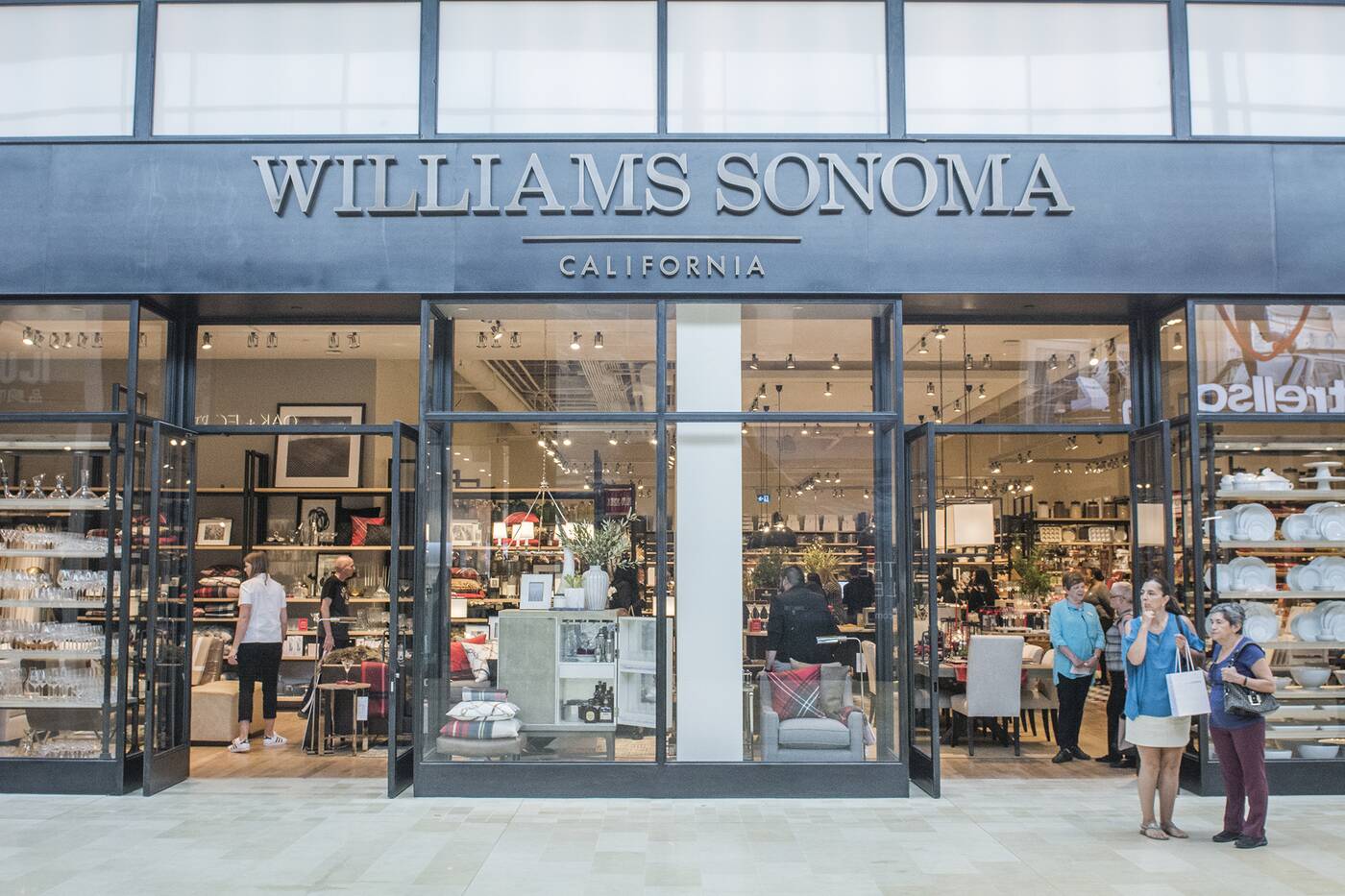
Williams Sonoma was one of the shops that opened during the 2016 expansion. Photo by Hector Vasquez.

In 2017, the The Cheesecake Factory restaurant commenced operation. More expansions have continued since.

Visiting Yorkdale in recent times, I lament the loss of the fountains and the large trees, particularly the palm trees. However, I thought that the massive skylights in the ceilings of the new sections were amazing.

Creative in design, they allow plenteous daylight to enter the interior walking areas. In some instances, I felt I was strolling up the nave of a great cathedral.

Please share this

Tuesday, January 18, 2022

Rodger Kotanko: Toronto police killed Ontario gunsmith in raid over handguns with scrubbed serial numbers, search warrant docs reveal

Toronto police killed Ontario gunsmith in raid over handguns with scrubbed serial numbers, search warrant docs reveal

Police raided Rodger Kotanko’s Simcoe, Ont., workshop over two seized handguns they believed he had transferred after illegally removing their serial numbers. On Tuesday, Kotanko’s family launched a $23 million lawsuit arguing in part that this claim makes no sense.


Rodger Kotanko had just returned to his rural home and workshop in Simcoe, Ont., a short drive west of Port Dover, near Lake Erie, after doing some shopping with his wife, Jessie. She’d just failed a driver’s test and needed some cheering up.

The gunsmith’s workshop, a detached garage, was where Kotanko tended to the firearms of loyal customers — police officers and soldiers among them. The garage sits at the end of a driveway, lined on one side during summer with towering sunflower plants Kotanko would never see again.

On Nov. 3, just before noon, a customer was waiting as Kotanko made his way into the workshop, likely unaware Toronto police were watching him.

Until now, what was known through official channels through Special Investigations Unit press releases is that officers were there to execute a search warrant, and Kotanko was shot dead by one officer. Seven other officers have been designated as witnesses to the events that have raised many questions in a community where Kotanko was respected.

Among them, what were Toronto police so interested in that they had honed in on a 70-year-old father of three, some two hours and a great lake away from the big city?

Search warrant documents unsealed at the request of the media reveal why.

In short, police believed Kotanko had milled off the serial numbers on two restricted handguns registered to his company, and, without authorization, transferred their ownership, with the guns ultimately ending up in the hands of two young Toronto residents.

Kotanko’s family has also obtained the search warrant documents, and on Tuesday announced a $23 million wrongful death lawsuit, alleging, the family said in a press release, that Toronto police “unlawfully executed a search warrant and used excessive force ... in a military-style take down,” shooting him four times.

The family alleges in their lawsuit that the search warrant was not presented on the day of the raid, that the information used to get the warrant “was obtained using irrelevant and prejudicial information” and was “designed to undermine (Kotanko’s) credibility and standing before the judge or justice of the peace and the public.”

Police “recklessly targeted” Kotanko and the operation was “negligently planned,” the family said in the press release.

The family also alleges Kotanko’s wife was unlawfully detained and restrained by police and prevented from “providing him with comfort after he was shot and was dying.”

The family’s statement of claim, filed this week, names five unidentified officers with the Toronto police Integrated Gun and Gang Task Force, an inspector in charge of the task force, Chief James Ramer and the Toronto Police Services Board as defendants.

“The Kotanko family is holding Toronto police to account, so this doesn’t happen to someone else,” the family’s lawyer, Michael Smitiuch, said in the press release. “Rodger Kotanko wasn’t able to defend himself, or his reputation, but his family will.”

The allegations have not been proven in court and police have not yet filed a defence document.

Toronto police on Tuesday acknowledged receiving a copy of the statement of claim from the media but a police response was not immediately available. The police board did not immediately respond Tuesday to a request for comment.

Once a civilian-led SIU investigation is underway, police typically do not comment on a case.

The 28-page search warrant application, called an “information to obtain,” or ITO — a document put before a judge to seek authorization for a search warrant — offers a very lightly redacted account of the reasons for the police raid. The media is scheduled to appear in court in late February to contest a police request to have names of officers and civilian employees redacted from the materials.

Otherwise, the media is free to report its contents, which include details of the investigation that led police to Rodger Kotanko’s garage.

Rodger Kotanko's locked garage. The gunsmith was working in the garage when he was shot by Toronto police executing a warrant.


The handguns

In late August 2021, a young person crashed a stolen Mercedes at Victoria Park Road and Finch Avenue East in Toronto, resulting in an arrest and the seizure of a Norinco 1911A1 .45 calibre handgun, according to the ITO.

Two months later, on Oct. 10, officers with North Bay Police Service were investigating a “possible kidnapping” when they pulled over a vehicle with three males, all with Toronto addresses. One of the males, a youth, was allegedly found to be in possession of the same brand of handgun.

In both cases, the document states, the guns’ serial numbers appeared to have been removed by a milling machine, as had other markings on the firearms’ slides.

According to the ITO, police were able to restore the serial numbers, finding the weapons had been registered to D.A.R.K. International Trading Company, one of two businesses owned by Kotanko, the other business being R.K. Custom Guns.

The markings on the slides were also restored to reveal cursive “RK” letters on both, and “RK Custom” on the North Bay gun.

A gun ‘savant’

In 1970, when Rodger Kotanko was just 19, he got a criminal record for “possessing a narcotic” for the purposes of trafficking and for possessing a “restricted unregistered firearm,” for which he served nine months, according to police database searches detailed in the ITO.

After that, Kotanko had no other criminal record.

For its part, Kotanko’s family says the “narcotic” was cannabis and the gun, a black-powder gun Kotanko had made — the kind, said brother Jeff Kotanko, that you would see in “Pirates of the Caribbean” movies.

“I’m not even sure the gun fired,” said younger sister Suzanne Kantor.

Kotanko had been attending forestry school at the time. The charges interrupted that. But, he clearly had a gift with firearms.

Kotanko gained a reputation for custom builds and reliability. He could charge as much as $7,000 for a custom handgun, and customers lined up for them, including competitive shooters and military clients, said Jeff, who also worked with this brother.

“He was a gun savant,” he said.

Rodger Kotanko also loved adventure, and for a time was a competitive skydiver and taught at the Simcoe airstrip.

Lately, Kotanko — who Kantor said stood maybe five-foot-six, moved “like a sloth,” and loved to talk — was working on his diet. He lived for family and family dinners, including Christmas time. While wife Jessie, who came to Canada from China four years ago, tended to the garden behind the house, Kotanko would can and make pickles of whatever Jessie grew.

“He’s not someone that you would even fear. He’s a 70-year-old man who was on the never-ending diet trying to live healthy, had had bypass heart surgery,” said Kantor. “He loved pickled beets. He loved pickled peppers. The hotter the peppers, the better they were.”

Rodger Kotanko was shot and killed on Nov. 3, 2021, in a Toronto police raid on his Simcoe, Ont., home and gunsmith workshop.


Twenty-five handguns

According to the police ITO, Kotanko — an experienced and licensed gunsmith with a certificate to acquire non-restricted, restricted and prohibited firearms — notified the Ontario Chief Firearms Office in March 2009 that he was importing 25 Norinco 1911A1 .45 calibre pistol frames that he would make into working firearms, with new serial numbers, which he properly reported.

The guns’ serial numbers ranged from RKC01 to RKC025. The “RKC” stood for Rodger Kotanko Custom, and cursive branding was also added to the slides.

After the two seizures, police checks with the firearms office showed 14 of the 25 weapons were still registered to D.A.R.K., including the seized guns, which bore the serial numbers RKC04 and RKC014, and were to be stored at Kotanko’s address.

In the search warrant material, the officer who prepared the document noted the length of Kotanko’s career in firearms and that he had “legally bought, sold, manufactured and successfully transferred hundreds of firearms over the years,” and that he would well know all the rules around reporting of lost or stolen firearms and transfers.

Also, being a gunsmith, the officer said Kotanko would have access to tools, including possibly a milling machine. The officer also believed Kotanko “would also be one of the few people who would have an interest in milling off the name of his company from a firearm sold to the criminal market, along with the serial number.”

Based on that, the officer formed the belief that Kotanko transferred the guns without authorization. That belief formed the basis for the search warrant. On Nov. 3, Ontario court judge James Chaffe authorized a three-week period to search Kotanko’s home, beginning that same day.

Kotanko’s brother Jeff questions the logic of police thinking. First, he said, Kotanko, of all people, would have known that you cannot effectively remove a serial number unless you remove a chunk of metal. Second, why would his brother create a crime gun when he can fetch $7,000 for a custom gun?

Jeff’s theory is that the handguns had recently been legally transferred and that the firearm computers had not caught up to the transactions. He recalled his brother mentioning a man was looking to buy a pair of the handguns for him and his son. A logbook Kotanko kept was seized in the raid and would be where his brother kept information about authorized transfers, said Jeff.

As well, every couple of years, said Jeff, the Chief Firearms Officer conducted checks to ensure all of the many firearms Kotanko kept on-site were accounted for. The last check, conducted pre-pandemic, found nothing amiss, said Jeff.

The raid

Kotanko’s wife failed her driver’s licence test on the morning of the raid. Kotanko had bought her a car to help her socialize, and he was working on his Cantonese. Disappointed by the failure, the two went out shopping.

While out, a customer called and said he was coming by the shop.

Police were nearby upon Kotanko’s return home and the customer and Kotanko were in the garage when the raid went down. Police, note the family in their statement of claim, arrived with their own ambulance in tow.

The gunsmith was killed in a place where Kotanko, in the words of sister Kantor, loved to “shoot the s---” with customers over Tim Hortons coffee while he worked on their guns. It was also a pace where he had loved to debate with Kantor’s daughter, who had died suddenly of a heart problem just nine months earlier.

Among the family’s questions: Why wait until Kotanko had returned to his shop, where his hands are on guns almost all the time?

“We don’t get it,” said Kantor. “It wasn’t like he was some evil person. He just wasn’t. We just want answers. It’s terrifying to think that this can happen.”

The SIU investigation into the killing continues. 

Please share this